
A sweet, syrupy smell in your car most often means engine coolant (antifreeze) is leaking somewhere and burning off or turning to vapor. Car and Driver lists a sweet aroma after driving, colorful puddles under the car after parking, and a car that runs hot as the classic clues. If the smell is strongest inside the cabin when the heat or defroster is on, the heater core is the usual suspect. Either way, it is worth having checked soon, and at Kwik Kar of Midlothian you can call (972) 775-5945 to schedule that inspection.
TL;DR
- A sweet, maple-syrup-like smell almost always points to coolant. Ethylene glycol, the main ingredient in most antifreeze, is what you are smelling.
- Smell outside the car after driving suggests a leak in the engine bay. Smell inside that gets stronger with the heater or defroster suggests a heater core leak.
- Watch the temperature gauge. If it climbs toward the red, pull over safely and shut the engine off.
- Antifreeze is toxic to people and pets, so wipe up puddles and keep children and animals away from them.
- Less common sweet smells come from spilled drinks, washer fluid, A/C oil or other fluids, so the location and the fluid you can find help sort it out.
Table of Contents
- Why coolant smells sweet
- Where the smell is strongest tells you a lot
- Signs of a heater core leak
- A simple at-home check
- Is it safe to keep driving?
- Antifreeze safety for your family and pets
- What else can smell sweet?
- When there is no puddle at all
- What a shop visit looks like
- Get the smell checked at Kwik Kar
- Our perspective on sweet smells
- Frequently asked questions
- Sources
Why coolant smells sweet
Coolant circulates through your engine, radiator and heater to carry heat away and keep the engine at a steady temperature. Most of it is based on ethylene glycol, which has a noticeably sweet, almost candy-like odor when it gets hot.
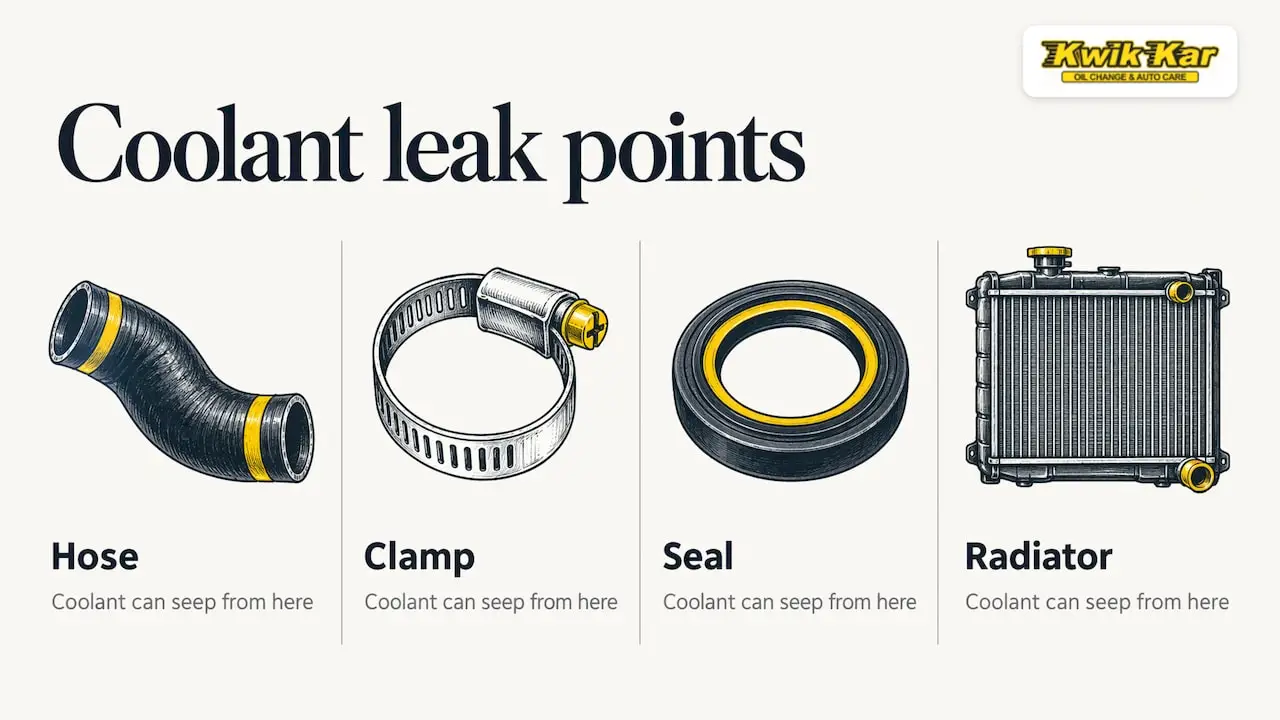
When coolant seeps from a hose, a clamp, a seal or the radiator and lands on a hot engine part, it turns to vapor almost at once. That vapor is the sweet smell. Because the cooling system runs under pressure when hot, a small crack or weak seal may only leak after the engine warms up and may look dry when you check it cold.
That is why the smell can show up before you ever see a puddle. It is an early warning, and the earlier you act on it, the smaller the repair tends to be.
Where the smell is strongest tells you a lot
Before you spend any time guessing, notice when and where you smell it.
Outside the car, or when you first step out
If the sweet smell hits you after you park and open the door, or you catch it near the front of the vehicle, the leak is probably in the engine bay. Common spots include:
- Radiator hoses and clamps. Rubber hoses age and clamps loosen, which lets coolant weep out.
- The radiator itself. Cracks, corrosion or a damaged seam can drip coolant.
- The water pump. A worn seal can let coolant escape around the pump.
- The radiator cap. A weak cap seal can let hot, pressurized coolant vapor escape.
- The coolant reservoir. Cracks in the plastic tank can leak, especially as it ages.
Inside the car, strongest with the heater or defroster
If the smell fills the cabin and gets stronger when you turn on the heat or defroster, coolant vapor is likely being pushed through your vents. Your heater uses a small radiator-like part called the heater core, which sits behind the dashboard. Hot coolant flows through it, and the blower sends air across it to warm the cabin.
When that core or its hose connections weep, the blower carries the vapor straight to you. Car and Driver notes that because the heater sits behind the instrument panel, heater core leaks are hard to find and harder to fix, which is why most owners should see a technician.

Signs of a heater core leak
A sweet smell alone is not enough to name the heater core. Look for several of these together:
- A sweet smell inside that grows with the heat on. It tends to linger and build over time.
- A greasy film on the inside of the windshield. Coolant vapor can leave a haze that smears when you wipe it. Try running a finger across the glass in sunlight.
- Damp carpet, especially on the passenger side. The heater core usually sits on that side, so leaking coolant can soak the floor mat.
- Coolant that keeps disappearing. If you top off the reservoir regularly and never see a drip under the car, the coolant may be going somewhere inside.
- Weak or lukewarm heat. Less coolant in the core means less warmth from the vents.
- Fogging windows you cannot clear. Steam from a leaking core can cloud the glass, which is a visibility problem when you are driving.
- A temperature gauge reading higher than normal. Low coolant affects the whole system.
If you see two or three of these, treat the leak as likely and get it inspected instead of waiting for the car to get worse.
A simple at-home check
You can gather useful details in a few minutes. Do this with the engine cold, and never open a radiator cap on a hot engine, because the system is under pressure and the coolant can scald.
- Check the level. Look at the coolant reservoir and the MIN and MAX marks on its side. Note where the level sits.
- Mark it and drive. Note the level, take a normal 20-minute drive, let the engine cool fully and compare.
- Look under the car. After parking overnight, check the ground for puddles. Coolant can be green, orange, pink or blue-green.
- Check the passenger floor. Press the carpet under the dash with your hand. A damp or spongy feel is a clue.
- Wipe the inside of the windshield. A greasy film that smears points to vapor in the cabin.
These checks give your technician a head start. They do not replace an inspection. If you want to know more about the cooling system behaving oddly, our guides on coolant reservoir bubbling and engine overheating causes cover related symptoms.
Is it safe to keep driving?
A faint smell with a normal gauge and a full reservoir is not an emergency, but it is not something to ignore for weeks either. A heavy sweet odor deserves faster action. AAA advises watching the temperature gauge so it does not rise dangerously high and heading to a service station as soon as possible, because an ignored coolant leak can cause overheating and a roadside breakdown.
Here is a practical way to think about it:
- Gauge normal, smell faint: Schedule an inspection soon, and keep an eye on the gauge on every drive.
- Coolant low, smell strong: Once the engine is cold, top off with the correct coolant mix for your vehicle and head straight for service. Check your owner’s manual for the right type.
- Gauge climbing toward hot, steam from the hood, or a warning light: Pull over safely and turn off the engine. Driving an overheated engine can cause serious and expensive damage.
- Windows fogging and you cannot see: Stop where it is safe. Visibility matters more than getting there.
Hot Texas summers add to the urgency. In stop-and-go traffic, a car low on coolant heats up faster, and an engine that overheats can damage the head gasket or cylinder head. If you have already noticed the temperature creeping up, our page on engine overheating explains what is going on and what to do. A cooling fan that is not running can also cause heat buildup, and our cooling fan checks can help you sort that out.
Antifreeze safety for your family and pets
This is the part many drivers do not think about. Antifreeze usually contains ethylene glycol, and the Connecticut Poison Control Center states that as little as one tablespoon can cause kidney failure or death. Its sweet taste is the reason animals sometimes drink it from driveway puddles.
If you find a leak:
- Clean up puddles right away, and keep children and pets away from the area.
- Store coolant containers sealed and out of reach.
- If a person or pet may have swallowed any, call Poison Control at 1-800-222-1222 or a veterinarian immediately. Effects may not show for hours, so do not wait and see.
Breathing a lot of coolant vapor in a closed cabin can also cause headaches and nausea. If you feel that way while driving, open the windows, stop somewhere safe and get the car looked at before driving it again.
What else can smell sweet?
Coolant is the most likely cause, but it is not the only one. Before you assume the worst, consider these:
| Possible source | What it smells and looks like | Clue that points to it |
|---|---|---|
| Coolant | Syrupy, candy-like, stronger when hot | Low reservoir, puddles, hot gauge |
| Heater core | Sweet smell inside, strongest with heat | Greasy windshield film, damp passenger carpet |
| A/C system oil or chemicals | Sweet or chemical odor | Weak cooling, oily residue at A/C fittings |
| Washer fluid | Thin, alcohol or cleaner smell | Wetness near the washer reservoir |
| Spills, air fresheners, cleaners | Sugary or perfumed | Smell stays even with a cold, unused engine |
| Power steering fluid or transmission fluid | Slightly sweet when warm | Greasy stain rather than watery drip |
Ford’s own workshop documentation classifies coolant as a sweet-smelling chemical odor and lists other sweet sources such as adhesives, perfuming agents and food or drink. A spilled soda under a seat can smell a lot like a leak, so check the obvious first.
If the odor shows up only when the A/C runs and the heater is off, it may not be coolant at all. Our guides on air conditioning smells and A/C refrigerant leak symptoms walk through that case.
When there is no puddle at all
No puddle does not mean no leak. Coolant that drips onto a hot engine or exhaust part evaporates before it hits the ground. A heater core leak drips inside the car or vaporizes into the vents. And a few leaks happen only under pressure when the engine is hot.
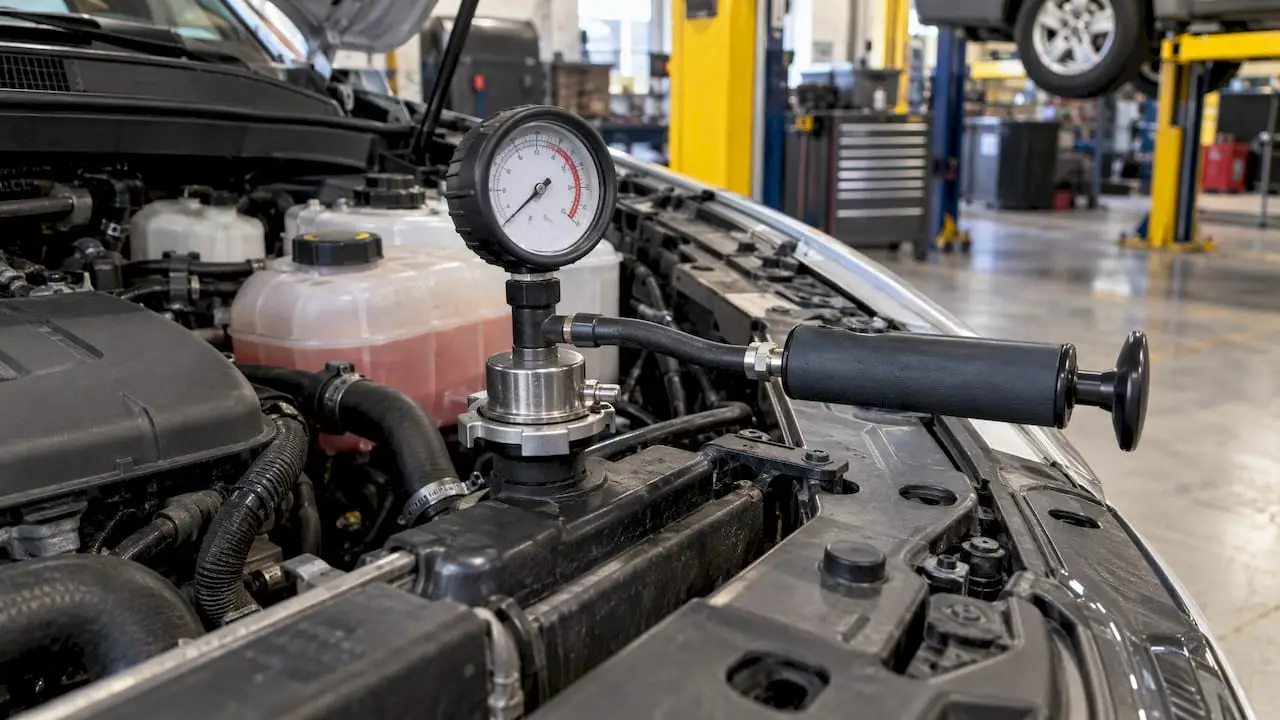
A more serious possibility, though less common, is an internal leak such as a failing head gasket. Warning signs include coolant loss with nothing to see, repeated overheating, bubbles in the coolant reservoir after warmup and white exhaust smoke. If you see bubbles, read our page on coolant reservoir bubbling. A technician can pressure test the system to find where the pressure is going.
Old coolant can also change the smell. Coolant that has aged and picked up corrosion may smell stale or burnt rather than sweet, so a smell that has shifted is still worth checking.
What a shop visit looks like
When you bring in a car with a sweet smell, the goal is to find where the coolant is going and fix that source. Our certified mechanics are ASE-certified, and we aim to explain what we find in plain terms before any repair begins, so you know what is wrong and what it will take.
A typical diagnosis for a coolant smell includes:
- Asking when you notice the smell and what else has changed, such as heat, fogging or coolant top-offs.
- Inspecting hoses, clamps, the radiator, the cap, the water pump and the reservoir for leaks and residue.
- Pressure testing the cooling system to find leaks that only show up under load.
- Checking the cabin side for signs of a heater core problem.
- Reviewing the results with you and explaining the repair options.
Heater core work usually means getting into the dashboard, so the job can be bigger than a hose swap. Knowing that early helps you plan, and it is one more reason to act on a smell before the leak grows. Our radiator and cooling system service covers the engine-bay side, and our A/C and heating repair page covers the heating and cabin side.
If the heat is weak because of airflow rather than coolant, the blower may be the issue instead. See our page on blower motor problems if the fan itself seems to be failing.
Get the smell checked at Kwik Kar
We handle radiator services, A/C and heating repair, fluid exchanges, check engine light diagnosis and maintenance and repair for most vehicles. If your car smells sweet, you can bring it to us for a look at the cooling system, from the hoses and radiator to the cabin side of the heater.
Our positioning is simple: ASE-certified mechanics, clear communication through the repair, honest recommendations and warranty-backed repairs. You can see everything we offer on our services page, or call (972) 775-5945 to talk through what you are noticing.

Our perspective on sweet smells
A sweet smell is one of the easier warning signs to catch, and one of the easiest to put off. It does not hurt, it does not make a noise, and it often comes and goes. That is exactly why people wait.
We would rather you came in when the smell is faint. A small leak at a hose or clamp is a straightforward fix. A leak that was allowed to run until the engine overheated is a different conversation, for your car and for your budget.
Our approach is to find the source, show you what we found and explain your options in everyday language. Our mechanics are ASE-certified, and we stand behind our repairs with a warranty. If your cooling system is fine, we will tell you that too.
If you have kids or pets, treat any coolant smell with extra care. Clean up spills, keep them away from the driveway where you park, and call us when you are ready to have it looked at.
Kwik Kar
Frequently asked questions
Why do I smell something sweet in my car when the heat is on?
The most likely reason is a heater core leak or a leaking hose connection near it. The blower pushes air across the core, so any coolant vapor gets carried straight into the cabin. A greasy windshield film, damp passenger carpet or falling coolant level supports that diagnosis.
Is antifreeze really sweet smelling?
Yes. Most antifreeze is based on ethylene glycol, which smells sweet and syrupy, often compared to maple syrup. That same sweetness is why it is dangerous to pets and children, so clean up spills at once.
Can a refrigerant leak smell sweet too?
It can, in some cases. Refrigerant itself is hard to smell, but leaking A/C oil or chemicals can leave a sweet or chemical odor, usually with weak cooling. If the smell appears only with the A/C on and not with the heat, our A/C and heating repair team can check the system.
Can I keep driving with a coolant leak?
Only briefly and carefully. If the gauge is normal and the reservoir is full, drive straight to a shop and watch the gauge. If the temperature rises into the red zone or steam appears, pull over safely and turn the engine off. Call us at (972) 775-5945 and we can help you figure out the next step.
Does a sweet smell mean a blown head gasket?
Usually not, since hoses, clamps, the radiator and the heater core are more common sources. A head gasket becomes more likely with unexplained coolant loss, repeated overheating, bubbles in the reservoir and white exhaust smoke. A pressure test can confirm what is happening.
Sources
- How to Recognize and Locate an Antifreeze Leak, Car and Driver
- What does that strange car smell or weird noise mean? AAA
- Antifreeze and Windshield Wiper Fluid, Connecticut Poison Control Center
- Climate Control System General Information and Diagnostics, Ford workshop manual