



A musty smell means moisture and mold on your evaporator or cabin filter, usually fixed with cleaning and a filter swap. A sweet, syrupy smell points to a coolant leak, which needs a shop visit. A burning or chemical smell means stop using the AC and get it inspected before you drive again. Note when the smell shows up, then work through the checks below.
TL;DR:
- Musty smells are typically caused by mold growth on the evaporator or cabin filter, which can often be fixed by cleaning or replacing the filter.
- A sweet or syrupy odor indicates a coolant leak, requiring a professional inspection rather than a DIY fix.
- Burning or chemical odors suggest electrical or mechanical issues that necessitate immediate shop evaluation before further use.
- Persistent odors despite cleaning may mean deep-seated contamination or saturated insulation, demanding professional cleaning or part replacement.
- Regular maintenance like replacing the cabin filter, cleaning the cowl, and running the blower with the compressor off can prevent recurring odors.
Table of Contents
- Why Does My AC Smell? Quick Checks To Narrow It Down
- How To Fix a Musty AC Smell Yourself
- When Does an AC Smell Mean a Bigger Problem?
- Simple Habits That Keep Your AC Smelling Fresh
- A Shop’s View on Stubborn AC Odors
- Get Your AC Smell Checked at Kwik Kar Lube & Tune of Midlothian
- Sources
Why Does My AC Smell? Quick Checks To Narrow It Down
Before you spend money on a fix, spend five minutes on diagnosis. The smell itself is a clue, and where and when it hits you tells you almost as much as popping the hood.
Here’s how to work through it:
- Note the timing. A smell that hits hard at startup and fades is usually mold spores that built up while the system sat idle and got kicked loose the moment the blower spins up.
- Check for a puddle under the car. Your AC should drip condensate onto the pavement while running. No puddle usually means the evaporator drain tube is clogged by leaves, sludge, or debris, and water is backing up inside the housing instead of draining out.
- Pull the cabin air filter. Look for damp, dark, or moldy buildup. A filthy filter is one of the most common sources of a musty smell, and it’s the cheapest thing on this list to fix.
- Inspect the cowl at the base of your windshield. This is where outside air enters the system, and a cowl packed with leaves and debris holds moisture that seeds mold growth further into the evaporator.
- Pay attention to airflow strength. Weak airflow along with a bad odor often means the filter or evaporator fins are fouled enough to restrict air, not just smell bad.
- Classify the smell itself. Musty or like dirty socks usually means mold. Sweet or like maple syrup usually means coolant. Burning or like hot plastic means an electrical or mechanical issue. Rotten egg or sulfur can mean a failing catalytic converter, which isn’t an AC problem at all but gets sucked in through the intake.
How To Fix a Musty AC Smell Yourself
If your checks point to mold or a dirty filter rather than coolant or burning, you can usually knock this out yourself in under an hour. Work through these steps in order, and don’t skip ahead.
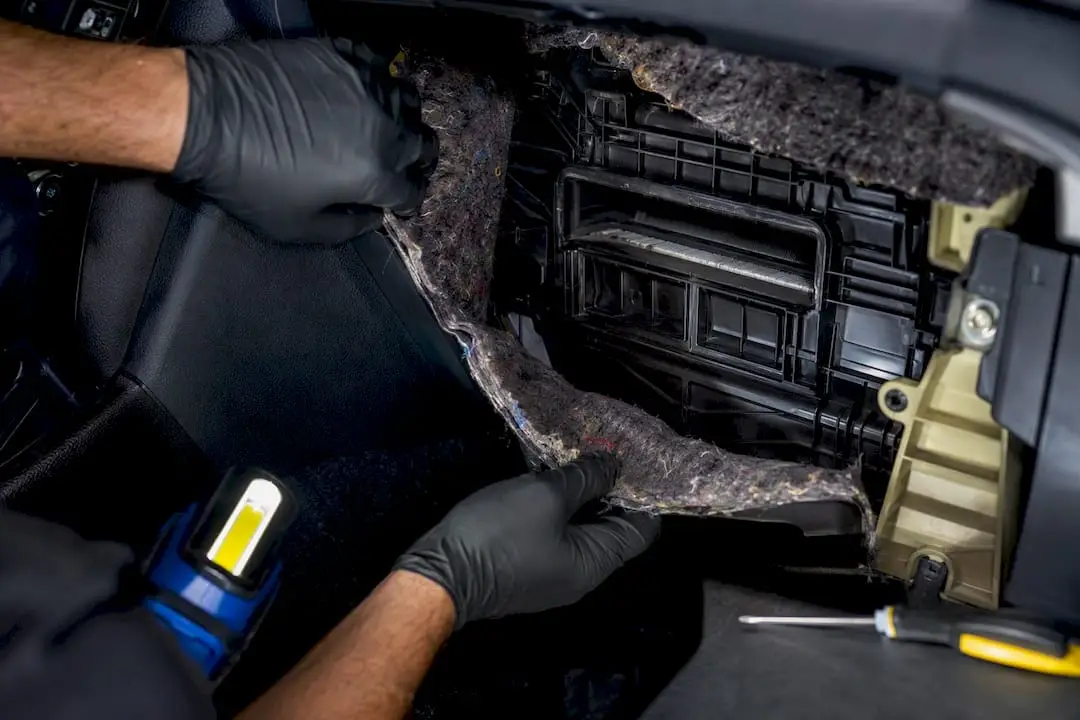
- Replace the cabin air filter first. Most owner’s manuals recommend replacing the cabin air filter periodically, but a filter that smells or looks moldy needs to go now regardless of mileage. It’s usually behind the glovebox, held by a simple latch or a couple of clips.
- Find and clear the evaporator drain. It’s a small tube, often rubber, that exits underneath the car near the firewall on the passenger side. A length of stiff wire or a zip tie worked gently into the opening can dislodge a clog. Don’t force anything hard or sharp in there, since the evaporator housing above it is plastic and easy to puncture.
- Apply an automotive AC disinfectant. Consumer Reports recommends removing the cabin filter first, then spraying the disinfectant into the plenum intake (the vent opening where the filter normally sits) while the blower runs on high with a window cracked. Skipping the filter removal traps the treatment against a contaminated filter instead of letting it reach the evaporator.
- Run the fan with the compressor off before you park. Two or three minutes of blower-only operation at the end of a drive dries the evaporator core, which starves mold of the moisture it needs to grow back.
Pro Tip: Replace the cabin filter again a day or two after using disinfectant. The old filter can hold residual moisture and dead spores that undo the treatment you just paid for.
If the smell is still there after all four steps, you’re likely dealing with saturated insulation or contamination too deep in the HVAC box for surface treatment to reach. That’s the point to stop DIY-ing it and get a second opinion from a shop.
When Does an AC Smell Mean a Bigger Problem?
Some odors are worth a quick DIY pass. Others are your car telling you to stop and get it looked at before you drive it again.
- Sweet, syrupy smell with a shrinking coolant level or foggy windshield. This usually means a heater core or evaporator coolant leak, and no filter change or disinfectant fixes a leak in the cooling system. Leaking coolant vapor is also unhealthy to breathe in an enclosed cabin.
- Burning or chemical smell, especially with smoke or a hot-plastic odor. This can point to an overheating blower motor, scorched debris in the blower housing, or a slipping compressor clutch. Turn the AC off and get it inspected before you run it again.
- Exhaust or gasoline smell coming through the vents. This suggests an exhaust leak or fuel vapor getting drawn into the cabin intake, a safety issue that has nothing to do with the AC itself but needs immediate attention.
- A musty smell that survives filter replacement, drain clearing, and disinfectant treatment. That pattern usually means contamination has soaked into insulation or built up heavily on the evaporator fins, and it needs a shop’s tools to clean or replace the affected parts.
Simple Habits That Keep Your AC Smelling Fresh
Prevention here is mostly about moisture management, since mold needs a damp surface to grow on and your evaporator is the dampest surface in the car.
- Replace the cabin filter on the schedule your owner’s manual specifies, and sooner if you drive in dusty or heavily wooded areas.
- Clean out the cowl and fresh-air intake at the base of the windshield once or twice a year, especially after fall leaf drop.
- Run the blower with the compressor off for the last two to three minutes of every drive. This one habit does more to prevent recurring musty smells than almost anything else on this list.
- If you live somewhere humid, short trips and high humidity make it harder for the evaporator to fully dry between drives, so consider an annual disinfectant treatment or a shop-performed evaporator cleaning as routine maintenance.
Pro Tip: Set a reminder tied to your oil change interval to check the cabin filter and cowl. You’re already popping the hood, so it costs you five extra minutes.
A Shop’s View on Stubborn AC Odors
Most of what walks through our doors for AC smells traces back to a clogged drain, a saturated cabin filter, or heavy evaporator contamination that built up over months of short trips. Heater core leaks are rarer, but they’re the ones that turn into bigger jobs, since reaching the core often means partial dash disassembly, which affects both cost and turnaround time.
When a smell doesn’t resolve with basic cleaning, our certified mechanics document what they find with photos and clear notes, then walk you through repair versus replacement options before any work starts. No guessing, no surprise line items.
— Kassem
Get Your AC Smell Checked at Kwik Kar Lube & Tune of Midlothian
If your checks point to a coolant leak, burning smell, or a musty odor that won’t quit after cleaning, that’s exactly where a shop visit earns its cost back in time saved and problems caught early. A shop can run a full HVAC inspection that covers drain verification, cabin filter condition, evaporator contamination, and leak or electrical checks that go beyond what you can see from the driver’s seat.

A diagnostic visit typically starts with a visual inspection and airflow check, confirms whether the drain and intake are clear, and ends with a straightforward quote if repairs are needed, no pressure to fix anything you didn’t ask about. Mechanics typically walk you through what they found and what your options are before starting any work. Browse our air conditioning and repair services or check current specials to see if a seasonal offer applies, then book your visit and get the smell sorted before your next long drive.
Sources
- Why Does My Car AC Smell Bad? – Family Handyman
- Get rid of musty smell from car’s air conditioner – Consumer Reports
- Your car’s AC stinks when you turn it on. Here’s why – Motor1
Recommended
Created with BabyLoveGrowth to grow search and AI visibility