




A car that shakes while you drive is telling you something, and where and when you feel it narrows the cause quickly. Shaking at highway speed usually points to the wheels and tires. Shaking only when you brake usually points to the brakes. Shaking when you accelerate or sit at idle often points to the engine or drivetrain.
Most causes are fixable and not dramatic. A few are not safe to drive on. This guide helps you sort out which is which, so you can describe the problem clearly and decide how fast to act.
TL;DR
- Shaking that builds with speed, often felt in the steering wheel or seat, is most commonly an unbalanced tire, a bent wheel or uneven tread wear.
- Shaking only while braking usually means worn pads or uneven rotors.
- Shaking while accelerating or idling can come from the engine (spark plugs, misfires) or the transmission.
- A sudden change in how the car handles, or a flashing or red warning light, means stop driving and get it checked.
- Note when it happens (speed, braking, cold start) before you call a shop. It speeds up the diagnosis.
Table of Contents
- Start With When the Shaking Happens
- Shaking at Highway Speed: Tires and Wheels
- Shaking When You Brake
- Shaking When You Accelerate or Idle
- Is It Safe to Drive a Car That Shakes?
- What We Do When a Shaking Car Comes In
- Our Perspective: Do Not Treat a Shake as Background Noise
- Does Texas Require an Inspection for a Shaking Car?
- Ways to Prevent Shaking Before It Starts
- Get a Shaking Car Checked at Kwik Kar
- FAQ
- Schedule Your Visit
- Sources
Start With When the Shaking Happens
Before you guess at parts, pay attention to the conditions. Technicians diagnose by pattern, and the pattern is the most useful thing you can bring in. AAA’s transmission guidance says the same: note whether the problem shows up on cold starts, in certain gears or only at highway speeds.
Here is a quick way to match symptom to likely cause.
| What you notice | Where you feel it | Most likely area |
|---|---|---|
| Shaking that grows above roughly 45 mph | Steering wheel or seat | Tire balance, bent wheel, worn tires |
| Shaking only when you press the brake pedal | Steering wheel or brake pedal | Brake pads, rotors |
| Shaking or hesitation when you press the gas | Whole car | Spark plugs, engine misfire, drivetrain |
| Shaking at a stop, engine running | Whole car, rough idle | Spark plugs, fuel or air delivery, engine mounts |
| Pulling to one side plus vibration | Steering wheel | Alignment, tires, steering or suspension wear |
| Jerking or slipping between gears | Whole car | Transmission |
This table is a starting point, not a diagnosis. Several of these overlap, and a short test drive and inspection is the only way to be sure.
Shaking at Highway Speed: Tires and Wheels
If the vibration shows up as you pass about 45 mph and gets stronger from there, start with the tires. AAA identifies improper wheel weight distribution as a leading cause of vibration felt in the steering wheel or seat at higher speeds.
1. Unbalanced tires. Each tire and wheel assembly needs to carry its weight evenly around the circle. Small weights are added to the wheel to make that happen. Wheel balancing corrects uneven weight distribution. Weights can fall off, and tires change as they wear, so a car that was smooth last year can start to shimmy.
2. Uneven or worn tread. Tires that have worn unevenly, or that are simply old, can create vibration. If your tires look cracked or weathered, our guide on spotting tire dry rot walks through a quick check you can do in your driveway.
3. A bent wheel or damaged tire. A pothole or curb strike can bend a wheel or cause a bulge in the sidewall. You may feel a steady wobble that gets worse with speed. A bulge in a tire is a safety concern, so do not wait on it.
4. Loose lug nuts. If you had tires recently installed or rotated and now feel a wobble, have the lug nuts checked right away. This is not something to put off.
5. Worn steering or suspension parts. Parts such as ball joints and tie rods wear over time. AAA notes that leaving a simple issue like an unbalanced tire alone can wear out expensive suspension components sooner than they should.
Balance vs. alignment
People often use these words interchangeably, but they fix different problems. Balancing deals with weight distribution in the wheel and tire. Alignment deals with the angles of the wheels relative to the car and the road.
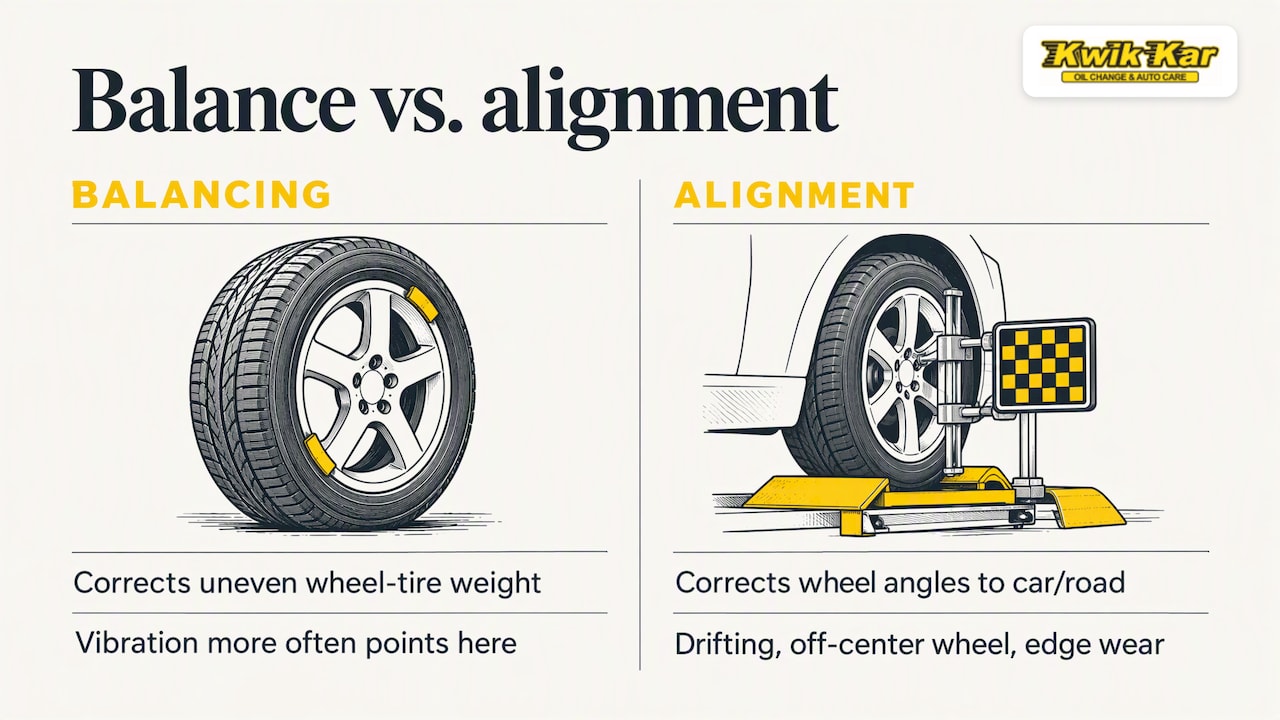
Signs that point toward alignment include the car drifting to one side, a steering wheel that sits off-center when you drive straight, and tires wearing more on one edge. Vibration alone is more often a balance issue, though the two can show up together. You can read more about what an alignment involves on our wheel alignment service page, and our alignment cost breakdown explains why an inspection comes first.
Shaking When You Brake
If the car runs smooth until you press the brake pedal, the brakes are the first suspect. AAA says shaking that occurs when applying the brakes typically points to the braking system, such as worn pads or unevenly worn rotors.
You may feel a pulse in the pedal, a shudder through the steering wheel, or both. You may also hear grinding or squealing.

A grinding sound is the one to take seriously. It can mean the pads are worn down far enough that metal is touching metal. If you hear that, read what to ask for when brakes grind and have the brakes inspected before driving much further. Our list of five signs your brakes may need service covers the other symptoms to watch for.
Brake fluid matters too, since old fluid affects how the system performs. See our note on the brake fluid change interval if you are not sure when yours was last done. If a brake or ABS warning light is on along with the shaking, the pages on the ABS light and the brake light on the dash explain what shops check.
Shaking When You Accelerate or Idle
When the vibration comes with the gas pedal, or while the engine runs at a stoplight, the cause is more likely under the hood than at the wheels.
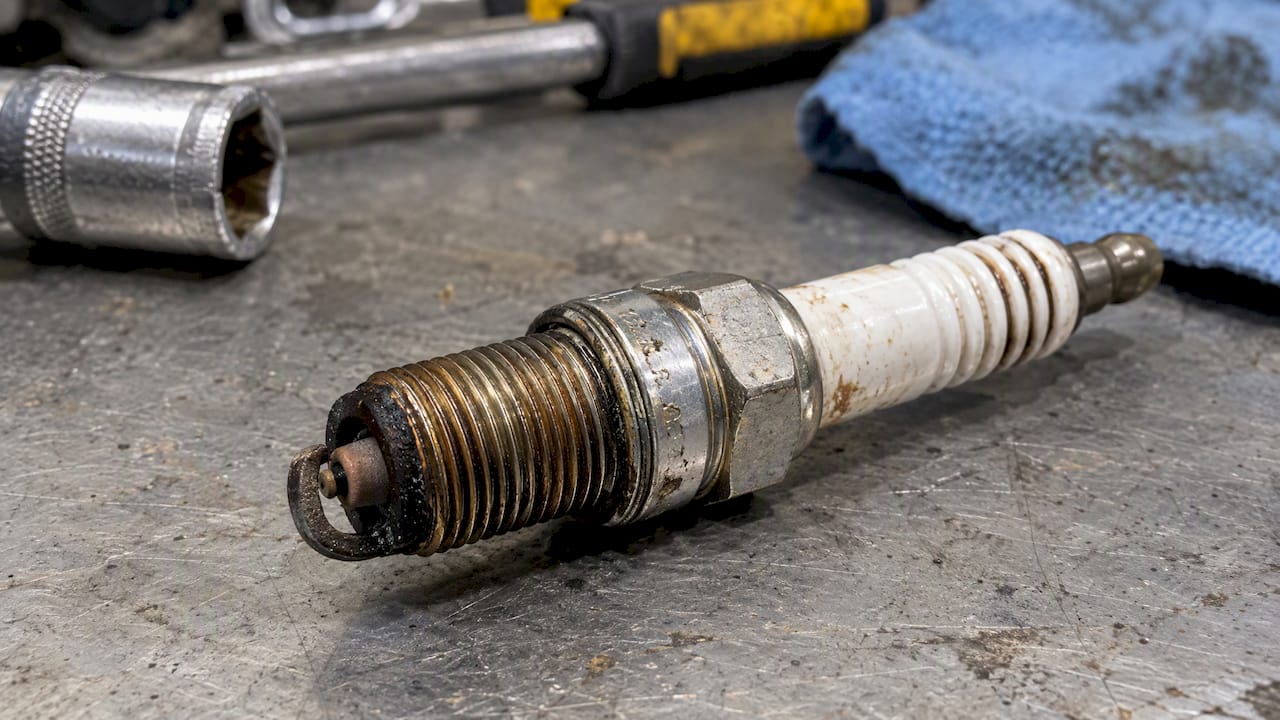
1. Worn spark plugs. Spark plugs can wear out and cause misfires. Warning signs include difficulty starting, shaking while idling, decreased fuel economy, misfiring and slow acceleration. The same AAA guidance mentions replacement around every 30,000 miles as a common figure, but your owner’s manual sets the real interval for your engine.
2. Fuel, air or ignition problems. A dirty air filter, a clogged fuel injector or a failing coil can all make the engine run unevenly. You feel it as a stumble or shudder.
3. Transmission trouble. If the car jerks, hesitates or has trouble shifting, AAA calls it a red flag. Transmission issues tend to get worse over time rather than going away. Slipping feels like the engine revving higher than it should for your speed.
4. Worn belts, mounts or axle parts. A worn engine mount lets normal engine movement reach the cabin. A worn CV joint, the part that delivers power to the wheels, often shows up as shaking or clicking when you accelerate or turn.
If the car stumbles when you press the gas, our page on hesitation on acceleration lists some safe checks to run first. For a tune-up background, AAA explains what a tune-up is and what it covers.
What the check engine light is telling you
A lit check engine light alongside shaking is a strong clue that the engine is misfiring. AAA’s guidance is simple: if the light is yellow, schedule an inspection; if it is red, turn off the engine immediately. A flashing light while the car shudders is also a reason to stop driving and have it towed or looked at promptly, since a severe misfire can damage the catalytic converter.
We read the codes and diagnose the cause on our check engine light diagnostics page.
Is It Safe to Drive a Car That Shakes?
It depends on what you feel. Use these as practical guides.
Pull over and call for help if:
- The shaking starts suddenly and violently.
- The steering feels loose, or the car pulls hard to one side.
- A red warning light comes on, or the check engine light is flashing.
- You hear grinding, clunking or banging along with the shaking.
- You smell burning or see smoke.
Drive carefully to a shop soon if:
- The vibration is steady, mild and tied to speed.
- It shakes only when braking, with no grinding.
- The engine idles roughly but runs otherwise normally.
AAA’s advice is that any abrupt change in handling, such as sudden shaking or pulling to one side, should be inspected promptly. When you are unsure, a professional diagnosis is safer than guessing.
What We Do When a Shaking Car Comes In
Our approach is simple: find the cause first, then explain it to you before any work starts. That means we ask when it happens, test drive when appropriate, and inspect the tires, wheels, brakes, steering and suspension, and engine as the symptoms point.
Here is what helps us most when you arrive:
- The speed range where it shakes.
- Whether it happens braking, accelerating, coasting or idling.
- Where you feel it: steering wheel, seat, pedal or the whole car.
- Whether any warning lights are on.
- Recent work such as new tires, a wheel strike or a pothole hit.
The fix then depends on what we find. It may be as simple as balancing a tire, or it may involve brake service, an alignment, spark plugs, or steering and suspension work. We will tell you what we see and what we recommend.
Our Perspective: Do Not Treat a Shake as Background Noise
We see this pattern often. A driver notices a light vibration, decides it is nothing, and drives on it for months. Meanwhile, the tires wear unevenly, and suspension parts take extra load. What could have been a quick balance becomes a larger repair.
Our view is that the shake is useful information, and the sooner someone looks at it, the more options you have. We would rather you come in for a vibration that turns out to be minor than wait on one that is not. Our ASE-certified mechanics explain what they find in plain words, make fair recommendations, and stand behind repairs with a warranty.
We also think you should never feel pressured. If a repair can wait, we will say so. If it cannot, we will explain why.
— Kwik Kar
Does Texas Require an Inspection for a Shaking Car?
This question comes up, so here is the accurate version. The two kinds of inspection are separate, and neither one diagnoses a vibration.
The Texas Department of Public Safety says that as of January 1, 2025, Texas no longer requires a safety inspection on non-commercial vehicles. So an ordinary passenger car does not need an annual safety inspection, and a shake will not be flagged by one.
Emissions are a different matter. Vehicles registered in an emissions county still need an annual emissions inspection, and Ellis County is on the affected list along with Dallas, Tarrant, Johnson and others. Commercial vehicles are still subject to their own required inspections.
If you need either one, see our page on Texas emissions and commercial inspections. A misfire that causes shaking can also trigger a check engine light, which is worth sorting out before an emissions test.
Ways to Prevent Shaking Before It Starts
You cannot avoid every pothole, but a few habits lower the odds.
- Rotate and inspect your tires on the schedule in your owner’s manual, and look for uneven wear.
- Have balance checked when you get new tires or notice a faint vibration.
- Watch for alignment signs, such as drifting or an off-center steering wheel.
- Replace spark plugs and filters at the intervals your manufacturer lists.
- Keep up with brake service, including fluid.
- Stay on top of oil changes. Our guide on how often to change oil in Midlothian covers it.
Get a Shaking Car Checked at Kwik Kar
We handle the services that most often sit behind a shake: tire sales and service, wheel alignment, brake repair, tune-ups, steering and suspension repair, and check engine light diagnostics. You can see everything on our services page. If you want to know about current offers, check our specials page.
FAQ
Why does my car shake only at highway speeds?
The most common cause is a tire and wheel assembly that is out of balance. The vibration usually builds as speed increases and is felt in the steering wheel or seat. Bent wheels, uneven tire wear and worn suspension parts can cause the same symptom.
Can I still drive my car if it is shaking?
It depends on the symptoms. A mild, steady vibration at speed can usually be driven carefully to a shop. Sudden violent shaking, a flashing check engine light, grinding or a pull to one side are reasons to stop and get help.
Why does my car shake when I brake?
This usually points to the brake system, most often worn pads or unevenly worn rotors. If you also hear grinding, have the brakes inspected before driving much more. Metal-to-metal contact can damage parts that cost more to replace.
Why does my car shake when I accelerate?
Common causes include worn spark plugs, an engine misfire, a worn axle joint or a transmission problem. If the check engine light is on, that is an extra clue. Tell the technician at what speed and in which gear it happens.
Does a wheel alignment fix shaking?
Sometimes, but not always. Alignment mostly addresses pulling and uneven tire wear, while balance is the usual fix for speed-related vibration. A quick inspection shows which one your car needs.
Schedule Your Visit
If your car is shaking, do not wait for it to get worse. Call Kwik Kar Lube & Tune of Midlothian at (972) 775-5945 and tell us what you feel and when. We will take a look, explain what we find, and help you get back on the road with confidence.
Sources
- Why Your Steering Wheel Shakes: 6 Possible Causes, AAA Club Alliance
- How to Catch Transmission Problems Before They Get Expensive, AAA Club Alliance
- Wheel Balance vs. Alignment, AAA Automotive
- Best Preventive Maintenance for Your Car, AAA
- What Is a Car Tune-Up?, AAA Automotive
- The What, When and Why of Car Maintenance, AAA
- Inspection Items for the Annual Inspection, Texas DPS
- Inspection Criteria for Emission Inspection, Texas DPS