




If your car hesitates when you press the gas, the most likely causes are fuel delivery problems, ignition faults, engine sensors, or transmission issues. Start with an OBD-II code read or a shop visit if the check engine light is on. If the light is blinking or you notice a real loss of power, keep driving to a minimum.
TL;DR:
- Track whether hesitation occurs at idle, under load, uphill, or at highway speed; rough idle or surging can point toward sensor trouble.
- An OBD II scan can narrow possible causes, but a test drive and targeted system checks help prevent unnecessary parts replacement.
- A blinking check engine light can signal a misfire that may damage the catalytic converter, so minimize driving and arrange prompt service.
- Before calling a shop, check the gas cap, note recent fuel purchases, and record when hesitation occurs and whether warning lights appear.
- Slipping or delayed engagement, including a CVT that revs without matching acceleration, points toward transmission diagnosis rather than an engine repair.
Table of Contents
- Common Causes of Hesitation on Acceleration
- Safe Troubleshooting Steps Before You Call a Shop
- When Hesitation Means It’s Time for Professional Service
- Preventive Maintenance That Reduces Hesitation Risk
- How We Diagnose Hesitation at Kwik Kar Midlothian
- What Most Drivers Get Wrong About Acceleration Hesitation
- Get Your Acceleration Checked at Kwik Kar Midlothian
- FAQ
- Sources
Common Causes of Hesitation on Acceleration
Acceleration hesitation can trace back to several systems, and knowing which one may be acting up helps you describe the problem accurately when you call a shop.
Fuel system. Bad gas, a clogged fuel filter, a weak fuel pump, or dirty injectors can all starve the engine of the steady fuel flow it needs under load. AAA notes that poor fuel quality can make acceleration delays worse, especially at higher speeds, which is a sign to address the issue soon rather than wait it out.
Ignition system. Worn spark plugs or a failing ignition coil cause misfires that show up as roughness or a stumble, often more noticeable as engine RPM climbs.
Air intake and sensors. A faulty mass airflow sensor, throttle position sensor, or manifold pressure sensor can feed the engine computer bad information, leading to rough idle, surging, or a flat spot when you press the gas. AAA Automotive explains that a failing mass airflow sensor specifically can reduce performance and fuel economy, and sometimes just needs cleaning rather than replacement.
Transmission and drivetrain. Slipping, delayed engagement, or odd behavior from a CVT can feel like engine hesitation but point to a different repair path entirely.
A quick way to narrow things down:
- Hesitation at low speed or idle may point to ignition or fuel delivery.
- Hesitation under load, going uphill, or at highway speed may point to a fuel or transmission issue.
- Hesitation paired with a rough idle or surging may point to a sensor problem.
AAA Northway lists low fuel pressure, dirty injectors, ignition failures, defective sensors, and torque converter clutch problems among the common culprits technicians check first, which is why a structured diagnostic process matters more than guessing.
Safe Troubleshooting Steps Before You Call a Shop
A few minutes of checking at home can save time and help a technician zero in on the problem faster.
- Make sure your gas cap is tight. A loose cap can trigger a check engine light and affect fuel system pressure.
- Think back on your last fill up. If you suspect bad gas, note the station and date.
- Check for a fuel smell near the engine bay, which can signal a leak worth mentioning to your technician.
- Scan for OBD-II codes using a home scanner or a free check at most auto parts stores.
- Write down when the hesitation happens: cold start, warm engine, low speed, highway speed, or under load.
A steady check engine light usually means the onboard diagnostic system has flagged an issue that affects performance or fuel economy. EPA guidance explains that a blinking check engine light is more serious, often pointing to a misfire that can damage the catalytic converter, and recommends minimizing driving until the vehicle is checked.
Pro Tip: Avoid long highway drives if you suspect a misfire. Driving at sustained high RPM with a misfire can turn a simple repair into a more expensive one.
When Hesitation Means It’s Time for Professional Service
Some symptoms are worth a same-day call rather than a wait-and-see approach.
- A blinking check engine light, which EPA guidance ties to active misfires that risk catalyst damage.
- Transmission slipping or a noticeable delay before the car engages, which AAA Club Alliance notes can look similar to engine hesitation but needs different diagnostic tools, including a CVT that may rev without matching acceleration under normal conditions.
- Hesitation that worsens over days or appears alongside other warning lights on the dash.
- Loss of power that makes merging or hill climbing feel unsafe.
Once you’re at a shop, expect a code read, a test drive to reproduce the symptom, and targeted tests like fuel pressure checks, injector flow tests, or live sensor data readings. These checks need equipment most driveways don’t have, which is where a trusted repair shop earns its keep.
Preventive Maintenance That Reduces Hesitation Risk
Routine care goes a long way toward keeping your engine responsive and your acceleration smooth.
- Replace spark plugs and ignition components on your manufacturer’s schedule rather than waiting for symptoms.
- Swap out a clogged fuel filter and stick with fuel from reputable stations.
- Replace your engine air filter and have your mass airflow sensor cleaned during routine service.
- Address a persistent check engine code promptly instead of letting it linger.
| Maintenance item | Why it matters |
|---|---|
| Spark plugs and coils | Worn plugs cause misfires that feel like hesitation under acceleration |
| Fuel filter | A clogged filter restricts flow, starving the engine under load |
| Air filter and MAF sensor | Dirty sensors send bad data, causing surging or flat spots |
| Fuel quality | Poor fuel can worsen acceleration delay, especially at speed |
Keeping up with oil changes and preventive maintenance alongside these items gives your engine the best chance of staying responsive between visits. If fuel delivery looks like the culprit, a look at fuel system cleaning needs is a reasonable next step before bigger repairs are considered.
How We Diagnose Hesitation at Kwik Kar Midlothian
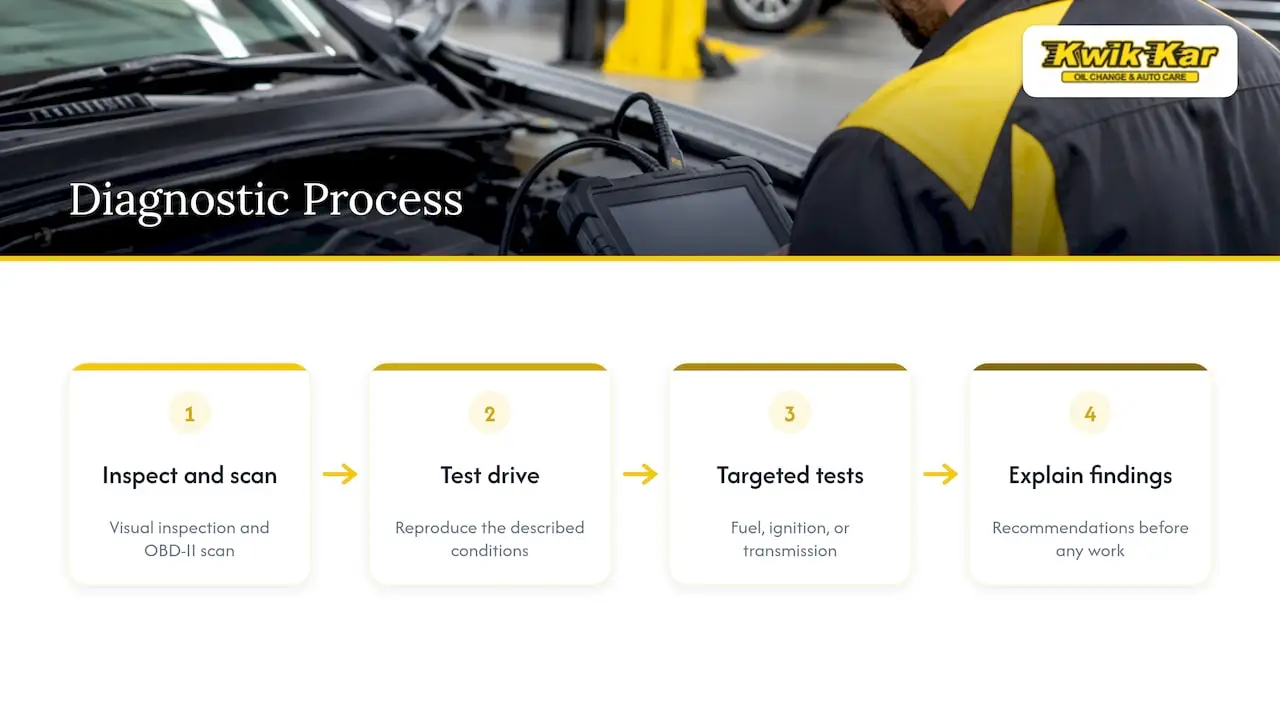
When a vehicle comes in for hesitation, we start with a visual inspection and an OBD-II scan to see what the computer has already flagged. From there, we take the car on a guided test drive to try to reproduce the symptom under the same conditions you described.
Depending on what we find, we move into targeted tests on the fuel system, ignition components, or transmission rather than replacing parts on a guess. Our ASE-certified technicians walk you through what we found and what we recommend before any work begins, so you know exactly what you’re paying for and why.
Before your visit, it helps to tell us when the hesitation happens, whether any dash lights came on, and whether you’ve had recent fuel fill ups or repair work done. That context often points us to the right test faster.
What Most Drivers Get Wrong About Acceleration Hesitation
The biggest mistake we see is treating hesitation as a single problem with a single fix. It’s a symptom, not a diagnosis, and four completely different systems can produce a nearly identical stumble off the line.

Conventional advice tends to jump straight to “check your spark plugs” or “clean your sensors,” which sometimes works and sometimes just delays a real diagnosis. The more useful habit is paying attention to when the hesitation happens: cold versus warm, idle versus load, steady versus getting worse. That pattern tells a technician more than the hesitation itself does.
Our honest take: an OBD-II scan is a useful starting point. It can help narrow down possible causes, saving diagnostic time and money compared to replacing parts based on a guess.
— Kwik Kar
Get Your Acceleration Checked at Kwik Kar Midlothian
A hesitation that keeps showing up is worth a real diagnosis, not a guess from the internet. We offer the diagnostic and repair work that covers the systems behind most hesitation complaints, backed by clear communication about what we find and why.

Services relevant to a hesitation diagnosis include:
- Check Engine Light diagnostics to read and interpret stored codes
- Tune Ups to address worn spark plugs and ignition components
- Fluid Exchange and Filters service for fuel delivery issues
- Maintenance and Repair for sensor and drivetrain concerns
Our ASE-certified technicians walk you through the findings before any repair starts. Visit our services page to see the full list, or contact Kwik Kar Midlothian to schedule a diagnostic visit and get a straight answer about what’s causing the hesitation.
FAQ
Can a bad fuel filter cause slow acceleration?
Yes. A clogged fuel filter restricts fuel flow to the engine, and that restriction becomes most noticeable under load, such as accelerating or climbing a hill. Replacing the filter on schedule is one of the simpler fixes for fuel-related hesitation.
How can I improve my car’s acceleration?
Routine maintenance makes the biggest difference: fresh spark plugs, a clean air filter, a working mass airflow sensor, and good fuel quality all keep the engine responding the way it should. Addressing a lingering check engine code instead of ignoring it also helps restore normal throttle response.
Why does my accelerator pedal feel hard to press?
A stiff pedal is usually a mechanical or cable issue rather than the sensor and fuel problems that typically cause hesitation, so it points toward a different kind of inspection. A technician can check the throttle linkage or electronic throttle system to find the specific cause.
Why does my diesel engine hesitate when I accelerate?
Diesel engines can hesitate for reasons similar to gas engines, including fuel delivery restrictions, clogged filters, or sensor faults, though diesel-specific components like glow plugs and fuel injectors add their own failure points. A code scan is still the right first step to narrow down the cause.
Sources
- Do you drive a 1996 or newer car or light truck? (EPA-420-F-02-016, August 2002) (Rev September 2012)
- Tracking Down a Repair Problem | AAA Northway