




If your ABS light is on, your vehicle has detected a fault in the anti-lock braking system, and that function may be disabled until the issue is fixed. Your regular brakes will usually still work, as long as the separate brake warning light is off. If you notice a soft pedal, extra warning lights, or reduced stopping power, pull over safely and arrange service soon.
TL;DR:
- Most ABS warnings are caused by wheel speed sensors, wiring issues, or low brake fluid, which can often be fixed within an hour.
- Driving with only the ABS light on remains safe as long as the brake warning light is off, but you should increase following distance and brake gently in slippery conditions.
- Sensor calibration may be needed after repairs like windshield replacements or collisions, and skipping this step can leave the warning light on.
- Repair costs vary from simple sensor cleaning or replacement to more expensive pump or module fixes, depending on the failed component.
- Regular maintenance, including tire inflation, brake inspections, and sensor checks, helps prevent false ABS warnings and maintains braking performance.
Table of Contents
- What ABS does and how it connects to traction control
- Common causes for the ABS light coming on
- Can you keep driving with the ABS light on?
- How a shop diagnoses an ABS fault
- Repair options and what affects the cost
- Preventive maintenance that helps avoid false warnings
- What we check when your ABS light comes on
- Get your ABS light checked at Kwik Kar Midlothian
- FAQ
- Sources
What ABS does and how it connects to traction control
ABS keeps your wheels from locking up during hard braking so you can keep steering the car instead of sliding in a straight line. It works through wheel speed sensors mounted near each wheel, a toothed tone ring that spins with the wheel, and a control module that reads the signals and pulses brake pressure when it detects a wheel slowing faster than the others. When ABS kicks in, you should hold firm, steady pressure on the pedal and steer where you need to go rather than pumping the brake, according to My Car Does What?
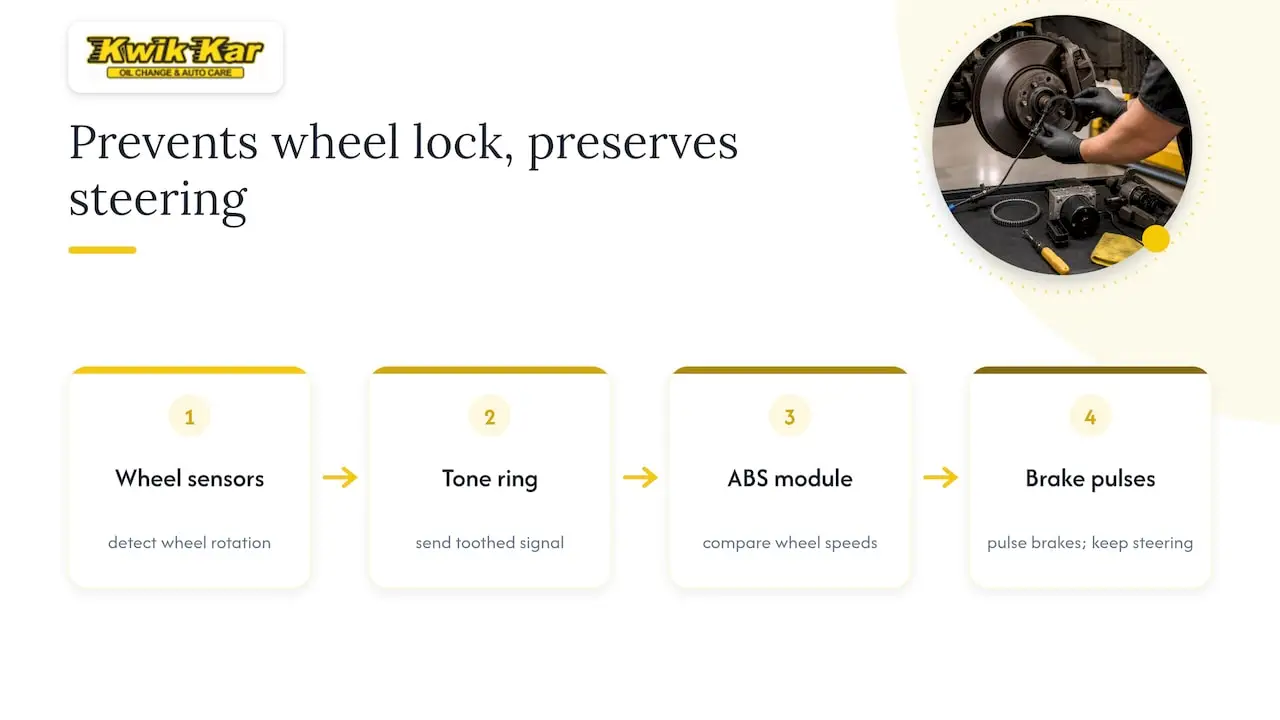
Electronic stability control and traction control both lean on the same wheel speed sensors and the ABS module to do their jobs. When ABS malfunctions, ESC’s ability to help stabilize the vehicle in a skid can be limited, which is why you often see the ABS, ESC, and traction control lights come on together, per My Car Does What?
A steady ABS light usually points to a stored fault code somewhere in the system. A flashing light, especially paired with other warnings, often signals an active problem and deserves quicker attention.
Common causes for the ABS light coming on
Most ABS warnings trace back to a short list of usual suspects, and a scan tool narrows it down fast.
- Wheel speed sensor: a dirty, damaged, or failing sensor, or a chipped tone ring, is one of the most frequent triggers, as noted by Cars
- Wiring and connectors: loose plugs, corroded contacts, or chafed wires near the wheel wells can interrupt the signal.
- Brake fluid: low or contaminated fluid can affect hydraulic pressure and trip the warning.
- Electrical faults: a blown fuse or failed relay is a simple, inexpensive cause worth ruling out early.
- ABS pump or module failure: less common, but possible, and usually the costliest fix on the list.
- Post-repair issues: a recent brake job, wheel bearing replacement, or collision repair can leave a sensor disconnected or miscalibrated.
Pro Tip: Note whether the light came on right after a repair, a pothole hit, or a car wash in freezing weather. That timing often points technicians straight to the cause.
Can you keep driving with the ABS light on?
If only the ABS light is on and the separate brake warning light stays off, your conventional brakes should still work, though you are driving without the extra stability ABS provides, according to Mopar’s owner manual guidance Here is how to handle it until you can get it checked:
- Brake normally, not in pumps. If your car has ABS, keep steady pressure on the pedal in a panic stop rather than pumping it, since pumping defeats the system’s design.
- Add following distance. Give yourself more room than usual since you cannot count on ABS to help you avoid locking a wheel.
- Slow down in wet or icy conditions. Reduced traction control support makes slippery roads riskier than normal.
- Avoid hard or sudden braking when you can plan ahead instead.
- Get it scanned soon, ideally within a few days, rather than waiting for a routine service interval.
Stop driving and arrange a tow if you notice a spongy or sinking pedal, the ABS light paired with the brake warning light, or any real loss of stopping power. Those signs point to a braking problem beyond the anti-lock system alone.
How a shop diagnoses an ABS fault
A proper diagnosis starts with data, not guesswork, so a technician can confirm the fault before touching a wrench.
- Scan the ABS control module for stored trouble codes, which point toward a specific sensor, circuit, or component.
- Inspect wheel speed sensors and tone rings for physical damage, debris, or wear.
- Check wiring harnesses and connectors at each wheel for corrosion or chafing.
- Verify brake fluid level and condition, since low or dirty fluid can mimic other faults.
- Test the ABS pump and module directly when sensor and wiring checks come back clean.
Diagnosis for a simple sensor or wiring issue often wraps up in under an hour. Faults tied to vehicles with advanced driver-assistance features sometimes need sensor calibration or dealer-level software, which can complicate repairs and add time, according to IIHS research on crash-avoidance technology
Pro Tip: Ask whether your vehicle needs a calibration step after any sensor replacement. Skipping it can leave the warning light on even after the part is fixed.
Repair options and what affects the cost
Repair cost depends heavily on which component failed and how your specific vehicle is built, so estimates vary case by case.
- Simple fixes include cleaning or replacing a wheel speed sensor, swapping a blown fuse, or reseating a loose connector, usually the least expensive path.
- Mid-range repairs cover a damaged tone ring, a brake fluid flush, or wiring repair.
- Larger repairs involve replacing the ABS pump or control module, which carries higher parts and labor cost.
- Calibration needs can raise the price further on vehicles with advanced sensors tied to crash-avoidance systems, particularly after a windshield replacement or collision, per IIHS
Make, model, and local labor rates all factor into the final number, so the most reliable way to budget is a hands-on estimate rather than a general figure. We do not publish fixed brake or ABS repair prices since every vehicle and fault is different.
Preventive maintenance that helps avoid false warnings
A few habits go a long way toward keeping your ABS system reading accurately and your brakes performing the way they should.
- Keep tires properly inflated and in good condition, since ABS and ESC both depend on consistent traction readings, per My Car Does What?
- Schedule periodic brake inspections and fluid service rather than waiting for a warning light to prompt you.
- Confirm sensor calibration after a collision or windshield replacement, since this step is easy to overlook and often causes lingering warnings.
- Check wiring in the wheel wells visually and clean sensors after heavy mud or winter driving.
Pro Tip: If you notice brake pedal vibration, grinding, or pulling to one side, review our 5 Signs Your Brakes May Need Service guide before the ABS light even comes on.
What we check when your ABS light comes on
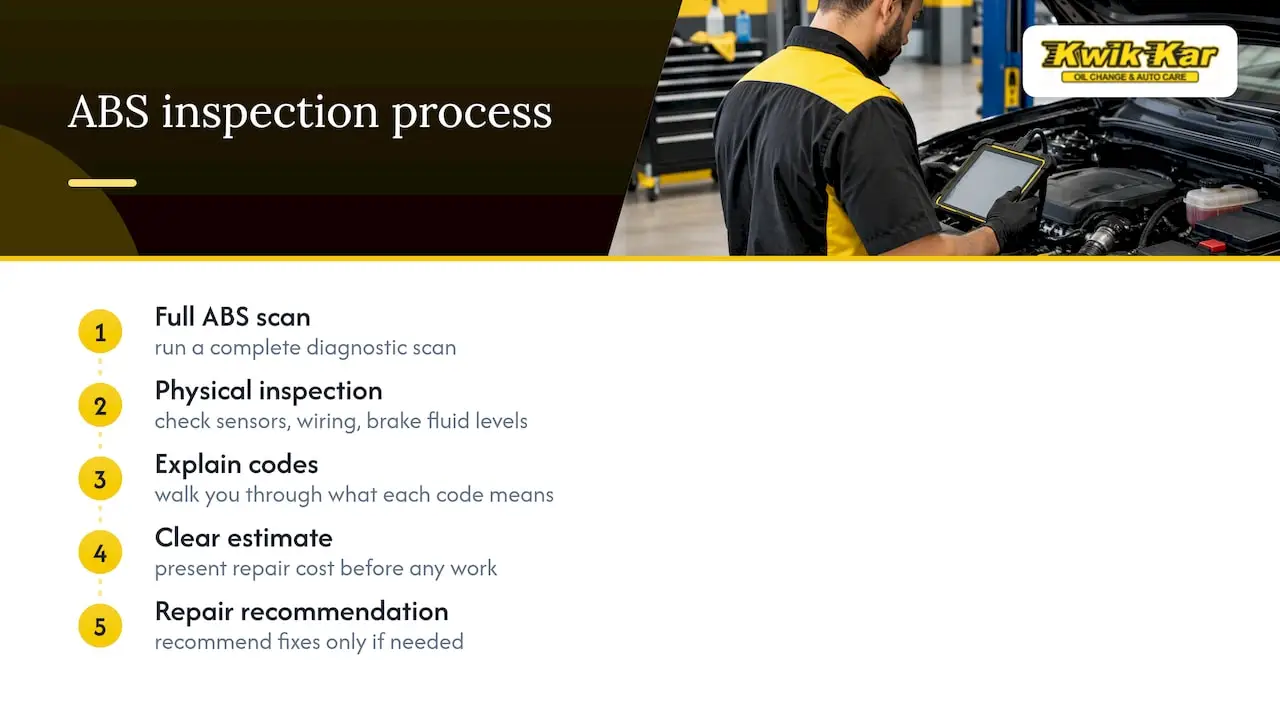
When you bring your vehicle to us, we start with a full ABS scan and a physical inspection of sensors, wiring, and brake fluid before recommending any repair. We walk you through what the codes mean and give you a clear estimate before any work begins, so you are never guessing at what comes next. You can see the full range of our brake and diagnostic services or learn more about us at Kwik Kar Lube & Tune of Midlothian.
Get your ABS light checked at Kwik Kar Midlothian

An ABS light rarely fixes itself, and driving on a guess costs more time than a proper scan. We will scan your system, explain what we find in plain language, and give you a transparent estimate before any work starts. Schedule your diagnostic appointment with us today and get back on the road with confidence.
FAQ
Is it safe to drive with the ABS light on?
If only the ABS light is on and the brake warning light stays off, your conventional brakes should still function, though without anti-lock support in a hard stop, according to Mopar’s owner manual guidance Drive cautiously and get the system scanned soon, and stop driving if the pedal feels soft or other warning lights appear.
How do I fix my ABS light?
A technician first scans the ABS control module for trouble codes, then inspects wheel speed sensors, wiring, and brake fluid to pin down the cause, per Cars.com Once the faulty part is repaired or replaced, clearing the stored code and confirming no new faults return typically resolves the light. Some repairs, especially those involving sensors tied to driver-assistance features, may also require calibration.
What is the most common cause of the ABS light coming on?
A faulty or dirty wheel speed sensor is one of the most frequent triggers for an ABS warning, often alongside wiring issues or a damaged tone ring, according to Cars.com Low or contaminated brake fluid and simple electrical issues like a blown fuse are also common.
Will the ABS light reset on its own?
The light typically stays on until the fault is repaired and the stored code is cleared with a scan tool, which is usually done after the repair is confirmed. If the light turns off briefly and returns, that often points to an intermittent sensor or wiring connection that still needs attention.
Does the ABS light mean my regular brakes are failing?
Not necessarily. The ABS light signals a fault in the anti-lock portion of the system, and your conventional brakes typically still work as long as the separate brake warning light is off, per Mopar If both lights are on, or your pedal feels different, treat it as a more urgent brake concern.
Sources
- Anti-Lock Brake System (ABS) Warning Light — Mopar owner manual excerpt
- Anti-lock braking system explainer — My Car Does What?
- Crash avoidance features improve safety but complicate repairs — IIHS