
The most common signs of a bent rim are a vibration in the steering wheel or seat that gets worse with speed, a rhythmic thumping from one corner of the car, a tire that keeps losing air for no clear reason, and a car that pulls or feels loose in turns. If you hit a pothole or curb and one of these showed up afterward, the wheel is the first thing to inspect.
Below, you’ll find each symptom explained in plain terms, how to check at home, what else can feel the same, and when to stop driving.
TL;DR
- A bent rim usually shows up as vibration that grows with speed, a thumping noise, pulling, or a tire that slowly loses air.
- Vibration can also come from unbalanced tires, worn suspension parts or a bad tire, so the wheel needs to be checked, not guessed at.
- A slightly bent wheel may be repairable. A cracked wheel must be replaced.
- Stop driving if you see a bulge, a crack, a fast air leak or severe shaking, and have the car looked at before the next trip.
- We can inspect the wheel, tire and alignment together at our Midlothian shop. Call (972) 775-5945.
Table of Contents
- The main bent rim symptoms
- Quick reference: symptom, likely cause, what to do
- How to check for a bent rim
- What else can feel like a bent rim
- Is it safe to drive with a bent rim?
- Can a bent rim be repaired?
- What happens after the wheel is fixed or replaced
- Our perspective: look at the whole corner, not just the rim
- Get the vibration checked at Kwik Kar
- Preventing bent rims
- FAQ
- Book your inspection
- Sources
The main bent rim symptoms
A rim bends when it takes a hard hit: a pothole, a curb, a rock, a ditch edge or a raised railroad crossing taken too fast. Some bends are obvious. Many are small, and the first clue is how the car feels.
1. Vibration in the steering wheel or seat
This is the symptom drivers notice first. A wheel that is no longer round spins with a slight hop, and you feel it as shaking. Vibration in the steering wheel usually points to a front wheel. Vibration you feel in your seat or the floor often points to the rear.
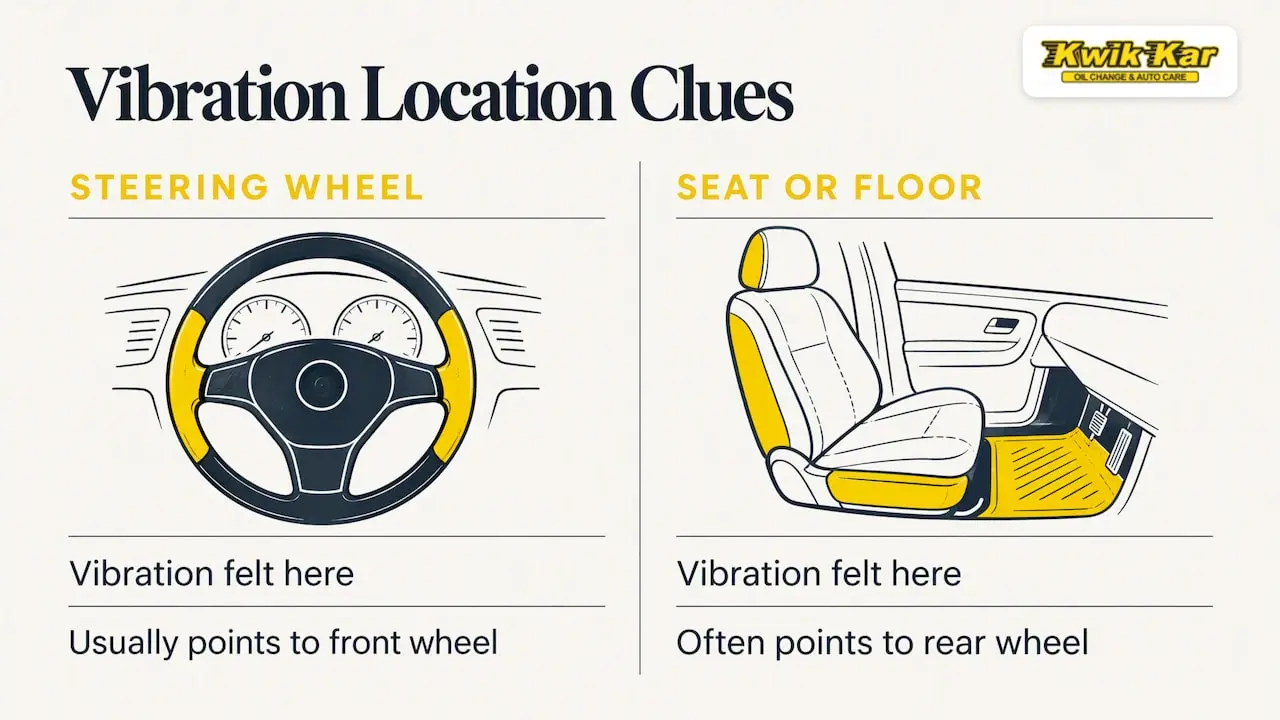
Because the wheel is out of true, it tends to get worse as speed rises. Many drivers notice it first somewhere on the highway, then feel it fade a little at higher or lower speeds.
Our guide to car shaking while driving covers the other causes in more detail.
2. A thumping or rhythmic noise
A bent wheel can produce a thump that repeats once per wheel turn. The faster you go, the faster the thumping. If the sound speeds up and slows down with the car and not with the engine, suspect a wheel or tire.
3. A tire that keeps losing air
A tire seals against the rim at the bead, the edge that sits on the wheel lip. If the lip is bent, the seal may not be perfect, and air can seep out slowly. You top the tire off, and a week later it is low again.
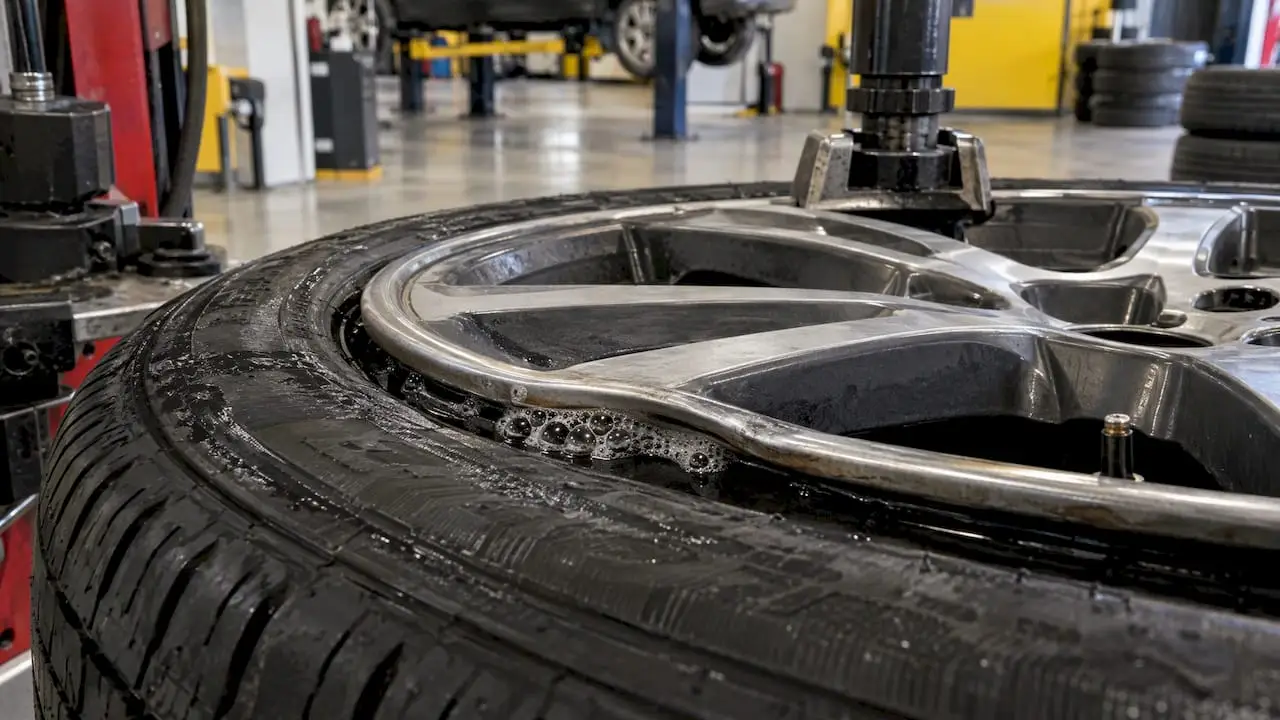
A bent rim is only one cause of this. Nails, valve stems and corroded wheel edges can do the same. Our slow tire leak guide explains how to narrow it down.
4. Pulling, drifting or loose steering
If the car drifts to one side or the steering feels less precise after an impact, the wheel may be bent, but alignment parts can be knocked out of position by the same hit. It is common for both to happen at once. A hard impact can bend a rim and change alignment angles in the same moment.
5. Visible damage
Look for a flat spot or dent on the rim edge, a ripple in the lip, scrapes from a curb, or a gap where the tire meets the wheel. Also look at the tire itself: a bulge on the sidewall or uneven wear on one edge often goes with impact damage.
6. Uneven or fast tire wear
A wheel that runs out of true can wear the tire in patches. NHTSA’s tire safety manual notes that tire failures are often preceded by vibration, bumps, bulges or irregular wear, which is why these signs deserve attention. You can read that in the NHTSA tire maintenance and safety manual.
Quick reference: symptom, likely cause, what to do
| What you notice | Likely cause | Next step |
|---|---|---|
| Steering wheel shakes at highway speed | Bent front wheel, out-of-balance tire, worn parts | Inspect wheel and balance, check suspension |
| Seat or floor vibrates | Rear wheel or tire problem | Inspect rear wheels and tires |
| Thump that speeds up with the car | Bent rim or damaged tire | Inspect wheel and tire for bulges |
| Tire loses air slowly | Bent bead seat, puncture, valve | Leak test and wheel inspection |
| Car pulls to one side | Alignment, tire or wheel damage | Alignment check after wheel inspection |
| Bulge or crack visible | Impact damage | Stop driving, have it inspected |
How to check for a bent rim
You can do a basic check in a few minutes. It will not replace a shop measurement, but it helps you describe the problem.
- Park on level ground and look closely. Check each rim lip, inside and outside if you can see it, for dents, flat spots or kinks.
- Check the tire. Look for bulges, cuts and uneven wear. If you see a bulge, read our tire sidewall bulge guide before driving farther.
- Check pressure. Use a gauge on all four tires and note any that drop over a few days.
- Note when the symptom happens. Speed, braking, turning and road surface all help narrow the cause.
- Have the wheel spun and measured. With the car raised, a technician can use a dial gauge to read how much the rim moves side to side or up and down as it turns, which is the method described by Driving.ca’s Corner Wrench column.
Please do not crawl under a car supported only by a jack. If you want the wheel spun, have a shop do it on a lift.
What else can feel like a bent rim
Shaking is a symptom, not a diagnosis. The same feeling can come from:
- Out-of-balance tires. Weights fall off or tires wear unevenly.
- A damaged or out-of-round tire. Internal belt damage can make a tire lumpy even when the wheel is fine.
- Worn suspension or steering parts. Loose parts let the wheel wobble.
- A wheel not seated properly. Loose or unevenly tightened lug nuts can cause shaking.
- Brake problems. Warped rotors often shake the steering wheel when you brake. If the shake only happens when you slow down, see our guide to brake grinding noises and our signs your brakes may need service.
This is why we check the whole wheel assembly instead of replacing parts on a hunch.
Is it safe to drive with a bent rim?
Not for long, and not at all in some cases. A small bend may feel like a minor annoyance, but a bent wheel can lead to tire damage, air loss and extra stress on bearings and suspension parts. The NHTSA manual linked above warns that tire failure from impact damage can create a risk of serious injury or death.
Stop driving and call for help or a tow if:
- The tire is going flat or you hear air escaping.
- You see a crack in the wheel.
- The tire has a bulge.
- The car shakes violently or steers unpredictably.
- A thump suddenly gets louder.
If the symptoms are mild, keep speed low, avoid the highway, and book an inspection as soon as you can. Do not wait for it to fix itself. It will not.
Can a bent rim be repaired?
Sometimes. A rim with a slight bend may be repairable, while a cracked wheel should be replaced, according to Nissan’s parts guidance on bent, cracked and dented wheels. NHTSA’s manual says the same about bent or cracked wheels: they must be replaced.
In practice, the decision depends on:
- How the wheel is damaged. A dent on the lip is different from a crack near the spoke.
- The wheel material. Steel and alloy wheels behave differently when straightened.
- Whether the wheel is for a specific vehicle. Some wheels are harder to source than others.
- The cost of repair versus replacement.
Straightening prices vary with the shop, the wheel size and finish, and whether welding or refinishing is needed, so ask for a written quote before agreeing to any work. We do not publish a price for wheel work, and we won’t guess at one here.
What happens after the wheel is fixed or replaced
A wheel repair is not finished until the tire is mounted and balanced and the car tracks straight. If the same impact moved your suspension geometry, the car can still pull or wear tires unevenly, even with a perfect wheel.
That is why alignment is part of the follow-up. Our page on wheel alignment explains what we check, and our article on wheel alignment cost in Midlothian explains why an inspection comes before a price.
Our perspective: look at the whole corner, not just the rim
When a customer comes in saying they think they have a bent rim, we start by listening. When did it start? Did you hit something? Does it shake at a certain speed, or only under braking? Those answers often point us to the right place faster than a part swap would.
Then we look at the wheel, the tire, the suspension and the alignment together, because an impact rarely affects only one of them. Our mechanics are ASE-certified, and we explain what we find and what we recommend before any work begins, so you can decide with the facts in front of you.
If the wheel is fine and the problem is something else, we will tell you that. A shake that turns out to be tire wear or a worn part is better fixed correctly than treated as a rim problem.
— Kwik Kar
Get the vibration checked at Kwik Kar
If your car has been shaking, pulling or losing air since a pothole or curb hit, bring it in. We can look over the tires, wheels, alignment and related parts and explain what the next step should be. Our tire sales and service team handles tire concerns, and you can see everything we do on our services page.

Check our specials page for current coupons before your visit.
Preventing bent rims
You can’t avoid every pothole, but some habits lower the risk:
- Keep tires properly inflated. Check pressure monthly and before long trips. Low pressure leaves less cushion between the rim and the road.
- Slow down for rough pavement. Railroad crossings, construction zones and broken road edges are common culprits.
- Leave room at the curb. Scraping a curb when parking can dent the lip.
- Watch low-profile tires. Less sidewall means less protection for the rim.
- Inspect after any hard hit. Check the tires and wheels the same day, and note any change in how the car drives.
- Check tire condition. Aged or cracked rubber is more likely to fail. Our tire dry rot guide shows what to look for.
FAQ
How do you tell if your rims are bent?
Look for dents or kinks on the lip, feel for vibration that grows with speed, and listen for a thump that follows wheel speed. The reliable way is to have the wheel spun on a lift and measured with a dial gauge. If the car also pulls, have the alignment checked.
Can a bent rim cause a tire to lose air?
Yes. A bend in the lip can stop the tire bead from sealing evenly, which lets air escape slowly. Other causes, such as nails, bad valve stems and corrosion, look the same from the driver’s seat, so the tire should be checked by a shop before anyone replaces the wheel.
Can I drive on a slightly bent rim?
It is not a good idea. Even a small bend can wear the tire unevenly and add stress to suspension and bearing parts. If you must drive, keep speeds low, avoid the highway and get it inspected soon. Stop at once if the tire loses air quickly or shows a bulge.
Can a bent rim be fixed, or does it need to be replaced?
A slightly bent rim may be repairable, but a cracked one should be replaced. A technician has to inspect the wheel to know which applies. Ask for the finding and the options in writing before approving work.
Does a bent rim throw off alignment?
The wheel itself is not an alignment angle, but the impact that bent it can also move suspension parts. A car that pulls after a hard hit should be checked for both wheel damage and alignment.
Book your inspection
A bent rim is much easier to deal with when you catch it early. If something feels off, call us at (972) 775-5945 and we will get you scheduled to have it looked at and explained clearly.
Sources
- TIRE MAINTENANCE, SAFETY and WARRANTY MANUAL, NHTSA
- Bent, Cracked, or Dented: When to Replace Car Rims, Nissan Parts
- Corner Wrench: Is your wheel bent or out of balance?, Driving.ca