




A tire sidewall bulge means the tire’s internal structure is compromised. Do not drive on it at normal speed. The cords or plies inside the sidewall have broken, and the only safe fix is a full tire replacement. If you spot one, get off the road at low speed, switch to your spare, or call for roadside help rather than risking a highway drive.
TL;DR:
- A sidewall bulge indicates internal cord or ply damage, requiring immediate tire replacement to prevent sudden failure during driving.
- Even a small bulge can cause a blowout, as the internal structure is compromised, and speed or heat increases the risk of rupture.
- Professional inspection involves removing the tire from the rim to verify internal damage, as external appearance can be misleading.
- Proper maintenance practices, such as regular tire pressure checks and avoiding impacts, can reduce the likelihood of sidewall bulges.
- When a bulge is found, drive only at low speed and seek a certified mechanic’s evaluation for safe replacement options.
Table of Contents
- What Causes a Tire Sidewall Bulge?
- Why a Bulging Tire Is So Dangerous
- What to Do Right Now if You Find a Bulge
- How a Shop Diagnoses a Sidewall Bulge
- Replacing the Tire: What to Expect
- Preventing Sidewall Bulges Before They Start
- The Kwik Kar Midlothian Perspective on Sidewall Bulges
- Get Your Tire Inspected at Kwik Kar of Midlothian
- Sources
- FAQ
What Causes a Tire Sidewall Bulge?
A bulge forms when the internal cords or plies inside the tire break, letting air pressure push the inner liner outward through the weakened spot. The rubber you see on the outside can look perfectly normal while the support structure underneath has already failed. That mismatch between appearance and reality is exactly why sidewall damage catches so many drivers off guard.
Common triggers include:
- Impact damage — hitting a pothole, curb, or road debris hard enough to crush the sidewall against the wheel rim
- Underinflation and overloading — low pressure lets the sidewall flex more than it’s built for, fatiguing the cords over time
- Manufacturing defects — rare, but internal delamination can develop without any impact at all
- Age-related breakdown — older tires lose flexibility, making the cords more prone to snapping under stress
Tire experts point out that a single hard pothole strike is often enough to trigger a bulge that develops days or even weeks later, since the initial impact damages cords that don’t fail outward immediately.
Why a Bulging Tire Is So Dangerous
Once the cords inside a sidewall break, there’s nothing left to contain the tire’s internal air pressure at that spot except stretched rubber. That’s what you’re actually looking at when you see a bubble on tire sidewall. It’s not a lump of extra material. It’s the inner liner pushing through a gap in the tire’s structural skeleton.
A small bulge is not a small risk. Size doesn’t correlate with danger the way most drivers assume. A tire can look only mildly deformed and still be one hard bump away from a blowout, because the failure has already happened internally. Speed, heat, and load all raise the odds of a sudden rupture.
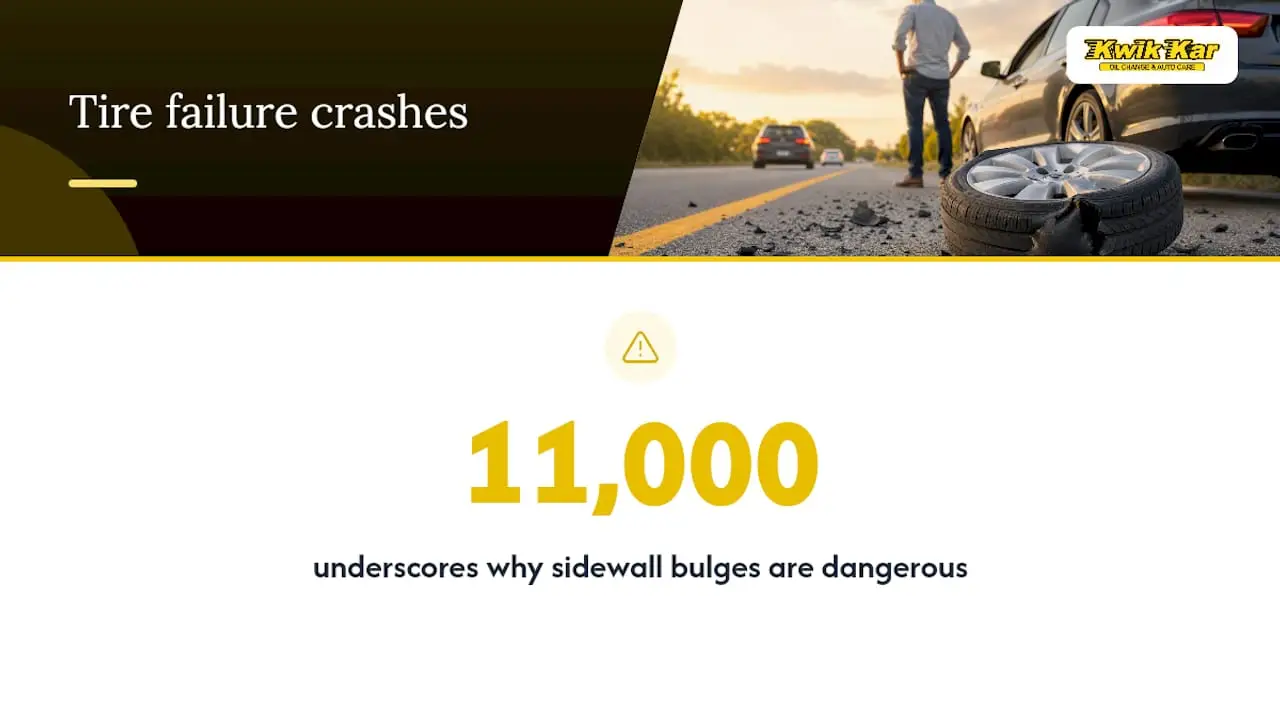
By the numbers: The National Highway Traffic Safety Administration estimates tire failure contributes to roughly 11,000 crashes every year in the U.S. That figure covers all tire failures, not bulges alone, but it underscores why sidewall damage never belongs on the “keep an eye on it” list.
What to Do Right Now if You Find a Bulge
How you handle the next few minutes matters more than almost anything else in this article.
- If you’re already driving, ease off the gas, avoid hard braking or sharp turns, and find a safe spot to pull over. Sudden maneuvers put extra stress on a sidewall that’s already failing.
- If you’re parked and need to move the car, stay under 30 mph and drive only the minimum distance necessary. Highway speeds are off the table.
- Swap in your spare if you have a full-size or compact spare and know how to change a tire safely.
- Call roadside assistance or a tow if a spare isn’t available or you’re not comfortable changing the tire yourself.
- Skip the tire inflator or sealant kit. Those are designed for small tread punctures, not structural sidewall damage, and using one on a bulge won’t fix the underlying cord failure.
Pro Tip: Keep your spare tire’s pressure checked along with your regular tires. A flat or underinflated spare does you no good the one time you actually need it.
How a Shop Diagnoses a Sidewall Bulge
A technician can’t fully evaluate a bulge just by looking at it from the outside, which is exactly why professional inspection matters here.
- The tire comes off the rim so the interior can be examined directly for broken cords and inner liner separation
- Outer rubber often looks intact even when the internal structure underneath is completely compromised
- Technicians document the damage, including the DOT date code, in case a manufacturing defect is suspected and a warranty claim is warranted
- No reputable shop will patch or plug a sidewall bulge. Sidewall problems fall outside the range of any legitimate tire repair
Michelin’s own guidance is direct on this point: a bulge or bubble means the cords are damaged, and the tire needs to be replaced, not repaired. Independent tire-industry resources back the same standard, classifying sidewall bulges as critical damage that calls for immediate replacement.
Replacing the Tire: What to Expect
Replacement is the only path forward once a bulge is confirmed, but a few decisions shape the process and the cost.
- Matching tread across the axle. If the damaged tire has significant tread wear compared to its pair, a shop may recommend replacing both tires on that axle for even handling and braking.
- Cost drivers. Tire size, brand, and type (all-season versus performance) all move the price, along with mounting, balancing, and disposal fees.
- Rough price range. Many passenger tires run somewhere in the neighborhood of $100 to $300 installed, though your exact cost depends on your vehicle and tire choice. Ask your shop for a specific quote before work begins.
- Bring your paperwork. If you suspect a manufacturing defect, purchase receipts and the tire’s DOT code help the shop evaluate a warranty claim with the manufacturer.
Preventing Sidewall Bulges Before They Start
Most sidewall bulges trace back to habits you can actually control.
- Check tire pressure monthly and inflate to the number on your vehicle’s door-jamb placard, not the number printed on the tire itself
- Slow down for potholes, speed bumps, and rough pavement, and give curbs a wider berth when parking
- Rotate your tires on schedule and glance over the sidewalls for cracking, cuts, or early bubbling
- Don’t exceed your vehicle’s load rating, and check the DOT date code on older tires since rubber loses flexibility with age
Michelin’s own maintenance guidance echoes these steps as the most effective way to reduce sidewall damage over a tire’s lifespan.
Pro Tip: Make tire pressure checks a habit tied to something you already do, like the first fill-up of the month. It’s the single easiest way to catch underinflation before it turns into cord fatigue.
The Kwik Kar Midlothian Perspective on Sidewall Bulges
You deserve a straight answer when you bring in a tire with a bulge, and that’s how Kwik Kar of Midlothian approaches it. When a bulge shows up during an inspection, our certified mechanics follow manufacturer guidance and recommend replacement, not a patch job that won’t hold.
What sets a good inspection apart is what happens after the tire comes off the rim. You should walk away understanding exactly what we found, whether it points to a road hazard or a possible defect, and what your replacement options look like before any work is approved. That kind of transparency is what keeps drivers coming back once the immediate problem is solved.
— Kwik Kar
Get Your Tire Inspected at Kwik Kar of Midlothian
A sidewall bulge doesn’t wait for a convenient time, and neither should your response to it. Kwik Kar of Midlothian gives Midlothian-area drivers a straightforward path to a safe replacement, without the guesswork of trying to diagnose sidewall damage yourself in a driveway.

Bring your vehicle in and our certified mechanics will pull the tire, inspect the cords and inner liner, and walk you through your replacement options, including mounting and balancing once the new tire is on. If you suspect a manufacturer defect, bring your purchase receipt and any warranty paperwork so we can document it properly. Stuck on the road right now with a bulging tire? Call ahead so we can have your replacement ready when the tow arrives. Check our full lineup of tire and maintenance services or visit Kwik Kar of Midlothian to schedule your inspection today.
Sources
- National Highway Traffic Safety Administration — Tires
- Sidewall problems: symptom bulge or bubble — Michelin USA
- Can You Drive With a Tire That Has a Bulge? No, and Here Is Why – Tire Advise
- Tyre sidewall damage — TyreMap
FAQ
Is it safe to drive on a tire with a sidewall bulge?
No. A bulge means the internal cords are already broken, and the tire can fail suddenly at any speed, so it needs to be replaced before you drive any real distance.
What’s the difference between a tire bulge and a tire bubble?
There isn’t really a technical difference. Both terms describe the same thing: the inner liner pushing outward through a spot where the sidewall cords have failed.
What causes a tire sidewall to bulge?
The most common causes are hitting a pothole or curb hard, driving on underinflated tires, and, less often, a manufacturing defect or age-related breakdown in the tire’s structure.
How long can I drive on a tire with a bulge?
You shouldn’t drive on it at normal speeds at all. If you must move the vehicle, keep it under 30 mph for the shortest distance possible, then get the tire replaced right away, since a bulge can worsen unpredictably with any additional impact.