




Expect to pay about $100 to $250 for a professional recharge if your car runs on R-134a refrigerant, and $250 to $500 if it uses the newer R-1234yf. A DIY kit can bring the R-134a job down to a relatively low cost, but R-1234yf isn’t a driveway project. Whatever your refrigerant type, if your AC needs a recharge more than once a year, you’re not fixing the problem. You’re paying to rent cold air until a leak gets found.
TL;DR:
- Most vehicle AC systems should only need recharging once a year if no leaks are present, as frequent recharges indicate underlying problems.
- R-134a refrigerant is DIY-friendly and costs about $30 to $70 for a basic top-off, while R-1234yf requires professional handling and can cost five times more.
- Recharging costs vary from around $50 for a simple top-off to over $300 for a full evacuate and leak check, with refrigerant type being the primary cost driver.
- A proper AC repair involves leak diagnosis, UV dye detection, and vacuum evacuations, which can take over an hour and improve system longevity.
- Always request an itemized quote that clearly separates refrigerant, labor, and diagnostic fees, and verify refrigerant type before authorizing any work.
Table of Contents
- How Much Does an AC Recharge Cost by Service Type?
- What Actually Drives AC Recharge Pricing?
- Can You Recharge Your Own Car AC, or Should You Hire a Shop?
- Why Do AC Systems Need Repeat Recharges?
- How Do You Get an Honest AC Recharge Quote?
- What to Expect From a Thorough AC Inspection
- The Refrigerant Split Is the Real Story in 2026
- Book an AC Check at Kwik Kar of Midlothian
- Sources
- FAQ
How Much Does an AC Recharge Cost by Service Type?
The price you’re quoted depends heavily on where you take your car and what kind of job you’re actually asking for. A quick top-off at a discount chain is a different service than a full evacuate-and-recharge at a shop that checks for leaks first.
Here’s how the typical bands break down:
- DIY R-134a kit: typically costs between $30 and $70 for the can and gauge, enough for a basic top-off on an older vehicle.
- Quick-lube or tire-shop top-off: often low cost but usually skips leak diagnosis entirely.
- Independent shop, full evacuate-and-recharge: commonly falls within a moderate price range for R-134a systems, according to national pricing averages.
- Dealership service department: typically costs more due to higher dealer labor rates.
- R-1234yf systems at any provider: generally cost significantly more, reflecting both the refrigerant’s price and specialized handling requirements.
The gap between a $50 top-off and a $300 recharge isn’t random. It usually comes down to whether the shop pulled a vacuum on the system and verified there’s no leak before adding refrigerant, or just topped off what’s already there.
What Actually Drives AC Recharge Pricing?
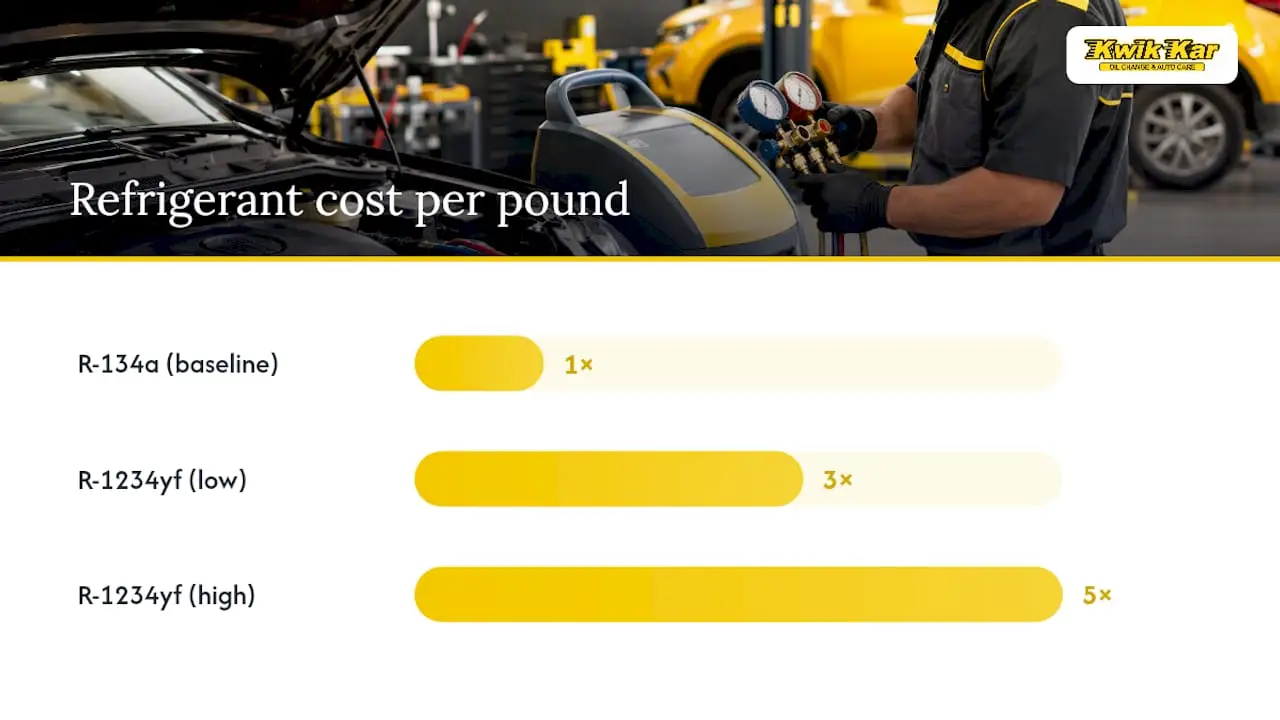
The single biggest factor in your quote is printed right under your hood: the refrigerant type. R-1234yf costs roughly three to five times more per pound than R-134a in 2026, and that difference alone explains why two nearly identical cars can get wildly different quotes.
Beyond refrigerant, a few line items typically make up the rest of the bill:
- Refrigerant charge weight — most passenger vehicles need 1 to 3 pounds, but larger trucks and SUVs need more.
- Labor — a proper evacuate-and-recharge takes real shop time, not just a five-minute top-off.
- Diagnostic steps — evacuating and weighing the system, injecting UV dye, and hunting for leaks all add to the invoice.
- Disposal and recovery fees — recovering old refrigerant before recharging isn’t optional, and most shops itemize it separately.
A ConsumerAffairs survey of mechanic quotes found full inspection-and-recharge jobs often averaging a few hundred dollars on sample vehicles, typically above the basic recharge costs advertised elsewhere. That gap is almost always labor and diagnostics, not the refrigerant itself.
Can You Recharge Your Own Car AC, or Should You Hire a Shop?
Whether DIY makes sense comes down entirely to what’s on your hood sticker.
- Check your refrigerant type first. R-134a is DIY-friendly with an off-the-shelf kit costing $30 to $70. R-1234yf is not: it requires certified recovery equipment and, in most states, a trained technician to handle it legally and safely.
- Understand what a kit actually does. A basic can-and-gauge kit adds refrigerant to whatever pressure remains in your system. It does not evacuate old refrigerant, check for contamination, or verify how much charge your system actually needs.
- Know when a top-off isn’t enough. If your AC blew cold two months ago and now it’s warm again, adding more refrigerant treats the symptom, not the cause.
- Budget real time for a proper job. A full evacuate-and-recharge with a leak check typically takes a shop 45 minutes to over an hour, depending on how easy the leak is to find.
Pro Tip: If a shop can complete your “recharge” in under 15 minutes without hooking up a vacuum pump, ask what exactly they did. A legitimate evacuate-and-recharge takes time because the system has to be pulled down to a vacuum before refrigerant goes back in.
Why Do AC Systems Need Repeat Recharges?
A car’s AC is a sealed system. It shouldn’t lose refrigerant on its own, so a car that needs recharging every year almost certainly has a leak somewhere, not a system that simply “runs low” over time.
Common leak points include:
- O-rings and hose connections that dry out and crack with age
- The condenser, especially on vehicles with front-end damage history
- The evaporator core, often the most expensive location to access
- The compressor itself, particularly on higher-mileage vehicles
Diagnostic steps like UV dye injection, an electronic sniffer, or a nitrogen pressure test typically add $50 to $400 or more to the bill depending on how hard the leak is to locate. Repair costs vary just as widely: a small hose or seal fix might run modestly, while compressor replacement or major component work can reach $700 to $2,000 or more. That range is why a cheap recharge quote can turn expensive fast once a tech actually finds the source.
How Do You Get an Honest AC Recharge Quote?
Comparing quotes fairly means asking the right questions before you agree to anything.
- Ask whether it’s a top-off or a full evacuate-and-recharge. These are different jobs with different price tags, and the terminology matters.
- Request an itemized breakdown. You want refrigerant cost, labor, and diagnostic fees listed separately, not lumped into one number.
- Confirm the refrigerant type and charge weight. Your hood sticker lists both, and a shop quoting the wrong refrigerant type is a red flag.
- Ask about warranty coverage. Find out what happens if the same leak reappears within a few months.
A shop that hesitates to itemize any of this is worth a second look before you hand over your keys.
What to Expect From a Thorough AC Inspection
A trustworthy shop treats a recharge as the last step, not the first. At a trusted shop, certified mechanics typically approach an AC concern with a sequence built to find the actual problem before adding a single ounce of refrigerant:
- Visual inspection of hoses, fittings, and visible components for oil residue or damage
- UV dye injection where warranted, so any active leak becomes visible under a black light
- Electronic leak detection to pinpoint smaller or hard-to-see leaks
- Evacuation and recharge to the exact factory-specified weight, not a guess
- A final performance check to confirm vent temperatures are back where they should be
Bring your hood sticker information if you have it, and always ask for itemized pricing before work begins. It’s the fastest way to know exactly what you’re paying for.
The Refrigerant Split Is the Real Story in 2026
Most advice about AC recharge cost still treats it like one question with one answer. It isn’t. It’s two separate cost universes split by a sticker under your hood, and conflating them is why so many drivers feel blindsided by a quote. If your car runs R-134a, you’re shopping in a $100 to $300 world. If it runs R-1234yf, standard on most vehicles built in the last several years, you’re shopping in a $250 to $500 world, and no amount of shop-hopping changes that math.
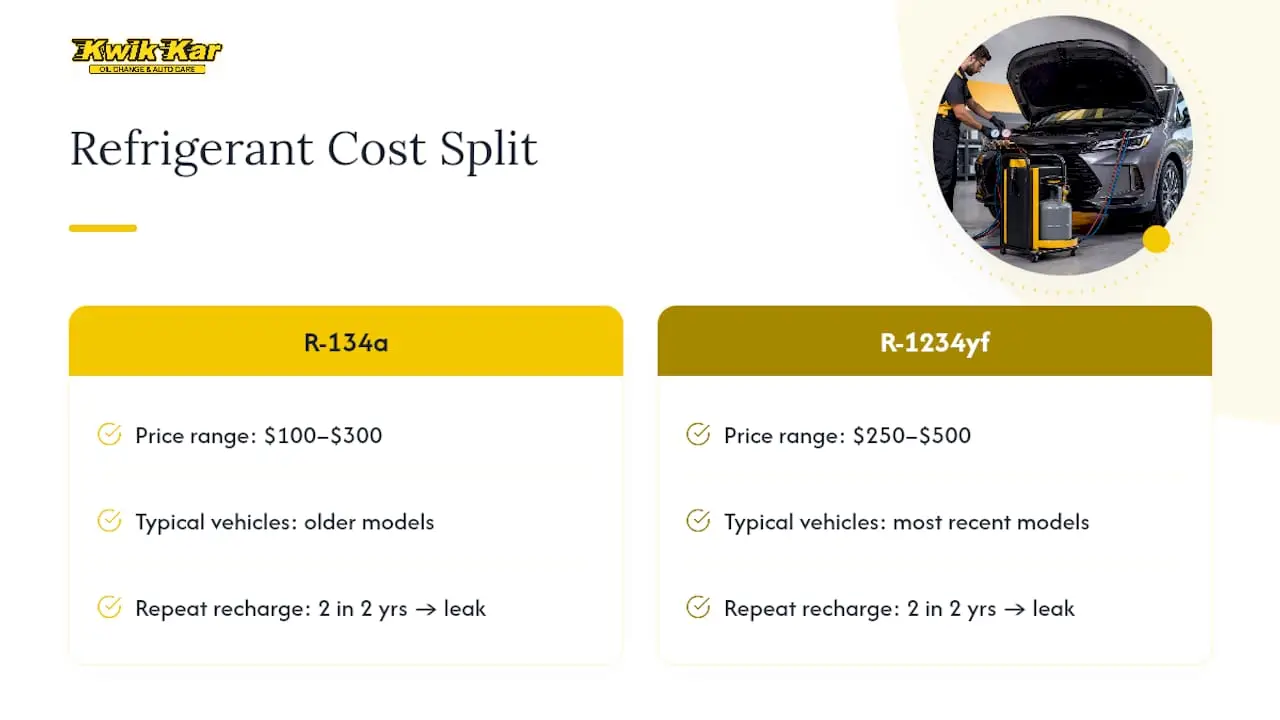
The bigger blind spot, though, isn’t refrigerant type. It’s the repeat recharge. Conventional advice focuses almost entirely on price comparison, when the real money question is frequency. One recharge is maintenance. Two recharges in two years is a leak you’re paying to ignore. If your shop can’t tell you why the refrigerant left the system the first time, you haven’t fixed anything. You’ve just bought yourself a few more months of cold air on credit.
Prioritize the diagnosis before you compare a single price quote.
— Kwik Kar
Book an AC Check at Kwik Kar of Midlothian
Kwik Kar of Midlothian gives Midlothian drivers a straightforward alternative to guessing at AC quotes over the phone: a certified mechanic looks at your actual system before anyone talks price.

AC-related services at some shops include visual and electronic leak inspection, dye testing, full evacuation and recharge, and repair of common failure points once a leak is confirmed. Every quote is itemized, so you see refrigerant cost, labor, and any diagnostic fees separately rather than one bundled number. If your AC has needed more than one recharge recently, that’s exactly the kind of pattern worth having a certified tech look at before you spend another dime on refrigerant alone.
Check current offers on the specials page, review the full lineup of available services, or contact Kwik Kar of Midlothian directly to schedule an AC inspection and get a real number instead of a guess.
Sources
- How Much Does Freon Cost for a Car? (2026 Price Guide) | The Daily Automotive
- AC Recharge Cost in 2026: $100 to $650 — the Sticker Under Your Hood Decides | Pulscar
- Cost of Car AC Repair (2026) | ConsumerAffairs®
- How Much Does Car AC Recharge Cost? (2026 Guide) | CostWhale
FAQ
Is an AC Recharge Worth It?
Yes, if your system has been properly leak-checked first. Recharging a system with an unfound leak just delays the same repair while you pay for refrigerant that will likely escape again within months.
Can Jiffy Lube or Similar Quick-Lube Chains Recharge My AC?
Many quick-lube locations offer basic AC top-off service, but this typically doesn’t include a full leak diagnosis or evacuation. For a lasting fix, a shop that performs a complete evacuate-and-recharge with leak detection is the safer bet.
How Much Does It Cost to Put Freon in Your Car at a Retail Store?
Retail and big-box automotive counters sometimes offer basic recharge service, generally in a similar range to quick-lube top-offs, though pricing and availability vary by location. These services commonly skip leak testing, so ask what’s included before booking.
How Often Does a Car AC Actually Need Recharging?
A properly sealed AC system shouldn’t need recharging on a regular schedule at all. If yours needs one every year or two, that’s a sign of a leak, not normal wear.
Does an AC Recharge Affect My Vehicle’s Warranty?
Using non-factory-specified refrigerant or having improper service performed can complicate manufacturer warranty claims on the AC system. Confirm the refrigerant type and get an itemized invoice any time work is done, so you have documentation if a warranty question comes up later.