




Most no-start problems come down to three things: the engine isn’t getting enough electrical power, it isn’t getting fuel, or it isn’t getting spark. The fastest way to sort them out is to listen to what the car does when you turn the key. Silence, clicking, slow cranking and normal cranking each point in a different direction.
This guide walks you through those sounds, the most common causes behind them, a few safe checks, and the point where it makes sense to stop and call a shop.
TL;DR
- Start by noticing what happens when you turn the key: nothing, a click, slow cranking, or normal cranking without the engine firing.
- A weak battery or dirty, loose battery terminals cause a large share of no-starts, and they can look just like a bad starter.
- If the engine cranks normally but won’t run, think fuel, spark or timing rather than the battery.
- A gas smell that doesn’t fade, or a burning smell, is a reason to stop trying and get the car checked.
- If you can’t pin it down in a few minutes, a proper test beats guessing and replacing parts.
Table of Contents
- Start With What the Engine Does When You Turn the Key
- Reason 1: A Weak or Dead Battery
- Reason 2: Corroded or Loose Battery Terminals
- Reason 3: A Bad Starter
- Reason 4: A Failing Alternator
- Battery, Starter or Alternator: A Quick Comparison
- Reason 5: The Engine Cranks but Won’t Start
- Reason 6: Ignition Switch and Electrical Faults
- Safe Checks You Can Make Before Calling
- What We See at Kwik Kar: Our Perspective
- Getting It Checked in Midlothian
- Preventing the Next No-Start
- FAQ
- Ready to Get Your Car Running Again?
- Sources
Start With What the Engine Does When You Turn the Key
A gasoline engine needs three things at the right moment: compression, fuel and spark, according to ALLDATA’s no-start guide. If one is missing, the car won’t run. Your first job is to work out which side of the problem you are on.
The car’s own behavior tells you most of it. Honda’s owner guidance, for example, splits no-start problems into two groups: the starter turns slowly or not at all, or the starter turns normally but the engine doesn’t run. Starter-maker Delco Remy uses a similar split: slow cranking, a click with no cranking, and no click with no cranking.
Here is how to read each one:
- Nothing at all. No click, no crank, maybe no dash lights. Think battery, battery connections, or a power supply problem.
- A single click or rapid clicking. The starter is being asked to work but isn’t getting enough power, or the starter itself is failing.
- Slow, labored cranking. Usually a weak battery, corroded connections, or a tired starter.
- Normal cranking, but no start. Look at fuel, spark, sensors and timing.
Reason 1: A Weak or Dead Battery
This is the most common cause, and the one every top guide lists first. Lights left on, short trips, age and hot Texas summers all wear a battery down.
Signs that point to the battery:
- Dim or absent headlights. Honda’s guidance says very dim or absent headlights suggest a discharged battery, and noticeable dimming while you try to start points to a discharged battery or corroded connections.
- Slow cranking that gets slower with each attempt.
- Dome light and dash lights that fade or flicker when you turn the key.
- A battery that is several years old and has been struggling for a while.
If the car starts with a jump but dies again soon after, the battery may not be the whole story. We cover that in the alternator section below. If you’ve needed more than one jump in a short time, something may be draining the battery while the car is parked, and our guide to parasitic battery drain explains how to test for it safely.
Reason 2: Corroded or Loose Battery Terminals
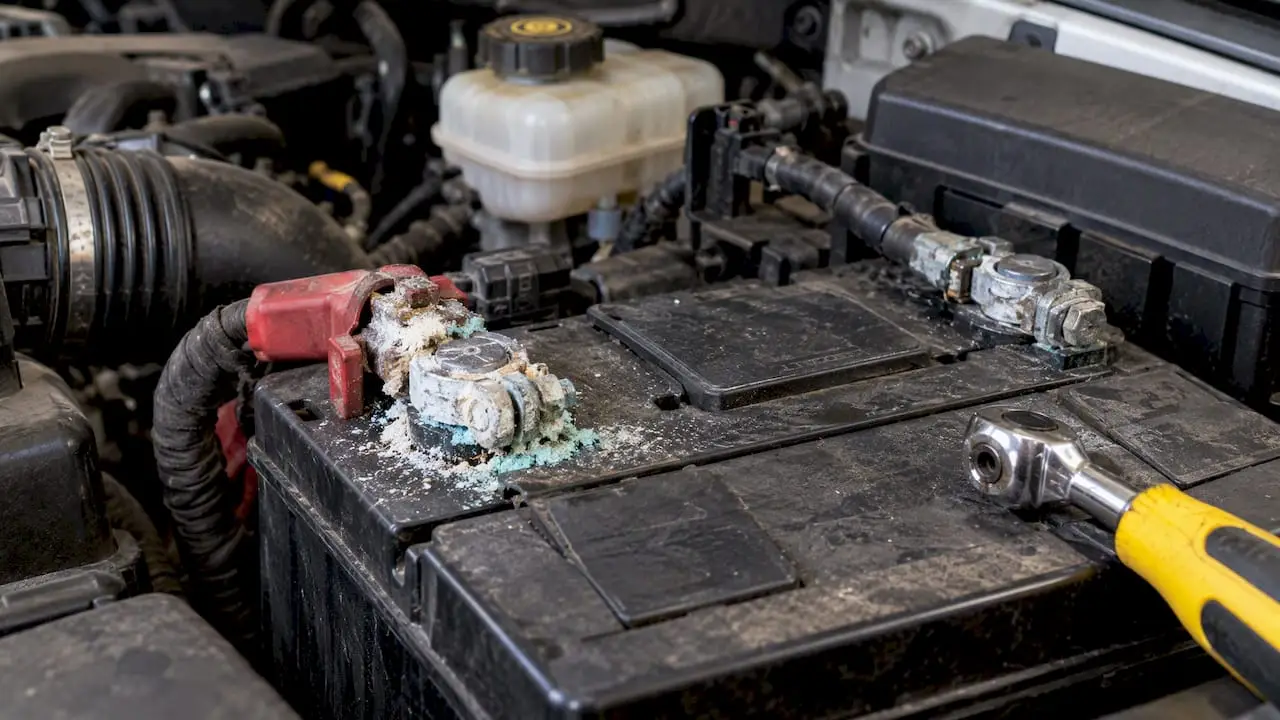
A good battery can still fail to start a car if the power can’t get out of it. The Federal Trade Commission’s auto repair advice notes that loose or corroded terminals can mimic a defective battery, and that terminals should be cleaned and the battery tested before you replace it.
Look for white, blue or green crusty buildup on the posts, or cable clamps you can wiggle by hand. If the clamps are loose or the buildup is heavy, that’s worth fixing before you spend money on a new battery.
Deeper cable problems don’t show on the surface. Technical guidance from the trade press says voltage drop from the battery positive to the starter, and from the engine ground back to the battery negative, should generally stay under 0.5 volts during cranking. Measuring that takes a meter and some know-how, which is one reason a shop test is worth it when cleaning the terminals doesn’t help.
Reason 3: A Bad Starter
The starter is the small motor that turns the engine over. When it fails, the battery can be perfectly healthy and the car still won’t crank.
Common signs of a bad starter:
- Dash lights come on, but the engine doesn’t crank. The car has power, but the starter isn’t responding.
- A click when you turn the key. AutoZone lists clicking as a sign of starter failure, though it also warns that battery trouble can cause the same symptoms.
- Slow cranking. A worn starter draws more current and turns the engine sluggishly.
- Smoke. Smoke from under the hood while cranking means stop right away.
- Starting that comes and goes. The car starts fine five times, then does nothing on the sixth.
Be careful about blaming the starter too early. The FTC points out that an apparent starter failure may really be a dead battery or a poor connection, and that a technician should check connections and test the battery first. Delco Remy’s procedure follows the same order: charge and load-test the battery, then check voltage drop in the starter cables and control circuit.
One useful clue: in a true no-click, no-crank situation, Delco Remy says power isn’t reaching the starter solenoid, which makes the starter motor itself an unlikely culprit. That points you back toward the battery, the ignition switch, fuses or wiring. For a closer look at how a failing starter behaves compared with a weak battery, this explanation of starter failure symptoms is a good companion read.
Reason 4: A Failing Alternator
The alternator recharges the battery and runs the electrical system while the engine is on. When it quits, the battery slowly drains until the car won’t start. That’s why an alternator problem often shows up as a dead battery the next morning.
AutoZone’s guide says a failing alternator usually gives warning signs for days or weeks before leaving you stranded. Signs include:
- The battery warning light on the dash. It means something in the charging system isn’t right, not necessarily that the battery is dead.
- Dim or flickering headlights, especially at idle. If they brighten when you rev the engine, the alternator is a likely cause.
- Power windows, radio or screens acting up.
- A battery that keeps dying even after a charge or replacement.
- A burning rubber or electrical smell, or a whining or grinding noise from the front of the engine.
The same guide offers a simple way to tell battery from alternator: a car that won’t start after sitting overnight but runs fine once going usually has a battery that isn’t holding charge. A car that jump-starts but dies on a short drive points to the alternator.
If the battery light has come on while you were driving, read our page on the battery light and shop checks before the next trip.
Battery, Starter or Alternator: A Quick Comparison
| What you notice | Most likely | Why |
|---|---|---|
| Dim or no headlights, no click | Battery or connections | Not enough power is reaching anything |
| Click, headlights stay bright | Starter, relay or wiring | Power is present but the starter isn’t turning |
| Slow crank, worse each try | Battery or terminals | Low charge or poor connection |
| Starts with a jump, then dies while driving | Alternator | Battery isn’t being recharged |
| Battery light on, flickering lights | Alternator or charging circuit | Charging system is not keeping up |
| Cranks normally, won’t fire | Fuel, spark, sensor or timing | Starting power is fine |
This table narrows the field. It doesn’t replace a test, because the symptoms overlap.
Reason 5: The Engine Cranks but Won’t Start
If the engine turns over at a normal speed and still won’t catch, the starting system is doing its job. Haynes lists several causes when the engine turns over but won’t start: an empty fuel tank, damaged ignition components, ignition wiring faults, worn spark plugs, fuel-injection faults, and timing belt or chain failure.
In plain terms:
- Out of fuel. Check the gauge, but remember gauges can fail.
- Fuel delivery problems. A weak fuel pump, clogged filter or faulty injector can starve the engine. Our fuel injection service page explains what we look at here.
- No spark. Worn plugs, a failed coil, or wiring faults can leave the engine cranking with nothing to ignite the fuel.
- Sensor trouble. A failed crankshaft-position sensor, for example, can stop the engine computer from knowing when to fire. ALLDATA lists a suspect crankshaft-position sensor among the common no-start causes.
- Timing belt or chain failure. The engine may spin freely and sound different, with no compression. Stop cranking and get it checked.
Reason 6: Ignition Switch and Electrical Faults
The ignition switch sends power to the starter and the engine systems. AutoZone notes that a faulty ignition switch can keep a car from starting normally. You might see dash lights flicker or go out, or the key may turn but nothing happens.
Honda’s guidance gives a helpful check: if the headlights don’t dim when you try to start, look at the fuses and the ignition switch or starter circuit rather than the battery.
ALLDATA also suggests watching whether the check-engine light comes on with the key in the run position. If it doesn’t, the engine computer may not be getting power or may have a bad ground. Blown fuses or melted wiring need a proper diagnosis, not a replacement fuse and another try.
When the problem is electrical and you can’t find it, our auto electrical repair team can trace it.
Safe Checks You Can Make Before Calling
These take a few minutes and need no tools beyond your eyes and ears.
- Make sure the car is in Park or Neutral and your foot is on the brake. Many cars won’t crank otherwise.
- Check the key fob battery if you have a push-button start, and try the spare key.
- Turn on the headlights and watch them while you try to start. Dimming or dead lights point to power.
- Listen. Click, rapid clicking, slow crank or silence, as described above.
- Look at the battery terminals for crusty buildup or loose clamps.
- Check the fuel gauge and think about how the car was running before it stopped.
- Don’t keep cranking. Long, repeated attempts can overheat the starter and drain what’s left in the battery. Rest between tries.
A basic multimeter can check battery voltage and alternator output, and an OBD-II reader can pull fault codes. Haynes says basic scanners may cost as little as $20. Codes tell you where to look, but they don’t always name the failed part.
When to Stop and Get Help
The FTC says that if you smell gasoline after a failed start, you should wait a few minutes before trying again. If the smell persists, suspect a fuel leak that needs immediate attention. The same page says a burning-toast smell can signal an electrical short, and that you should avoid driving the car until it has been diagnosed.
Also stop if you see smoke, hear grinding when you turn the key, or if the car has stalled while driving and won’t restart. If you are in a roadway or a spot that isn’t safe, put safety first and call for roadside help.
What We See at Kwik Kar: Our Perspective
The most common mistake we see is replacing a part before the problem is confirmed. A no-start feels urgent, and a new battery or starter feels like progress. But the symptoms overlap so much that guessing can cost you money and still leave you stranded.
Our approach is to test first. That means checking the battery and connections, then the starter and charging system, and only then talking about repairs. Our mechanics are ASE-certified, and we tell you what we find in plain language so you can decide with all the facts. We’d rather show you a corroded terminal that needs cleaning than sell you a part you don’t need.
If you tell us what the car did when it stopped, whether it clicked, cranked slowly or went silent, that helps us start in the right place. It also helps to mention anything that changed recently: a new accessory, a dash light that came on, a jump start that didn’t last.
— Kwik Kar
Getting It Checked in Midlothian
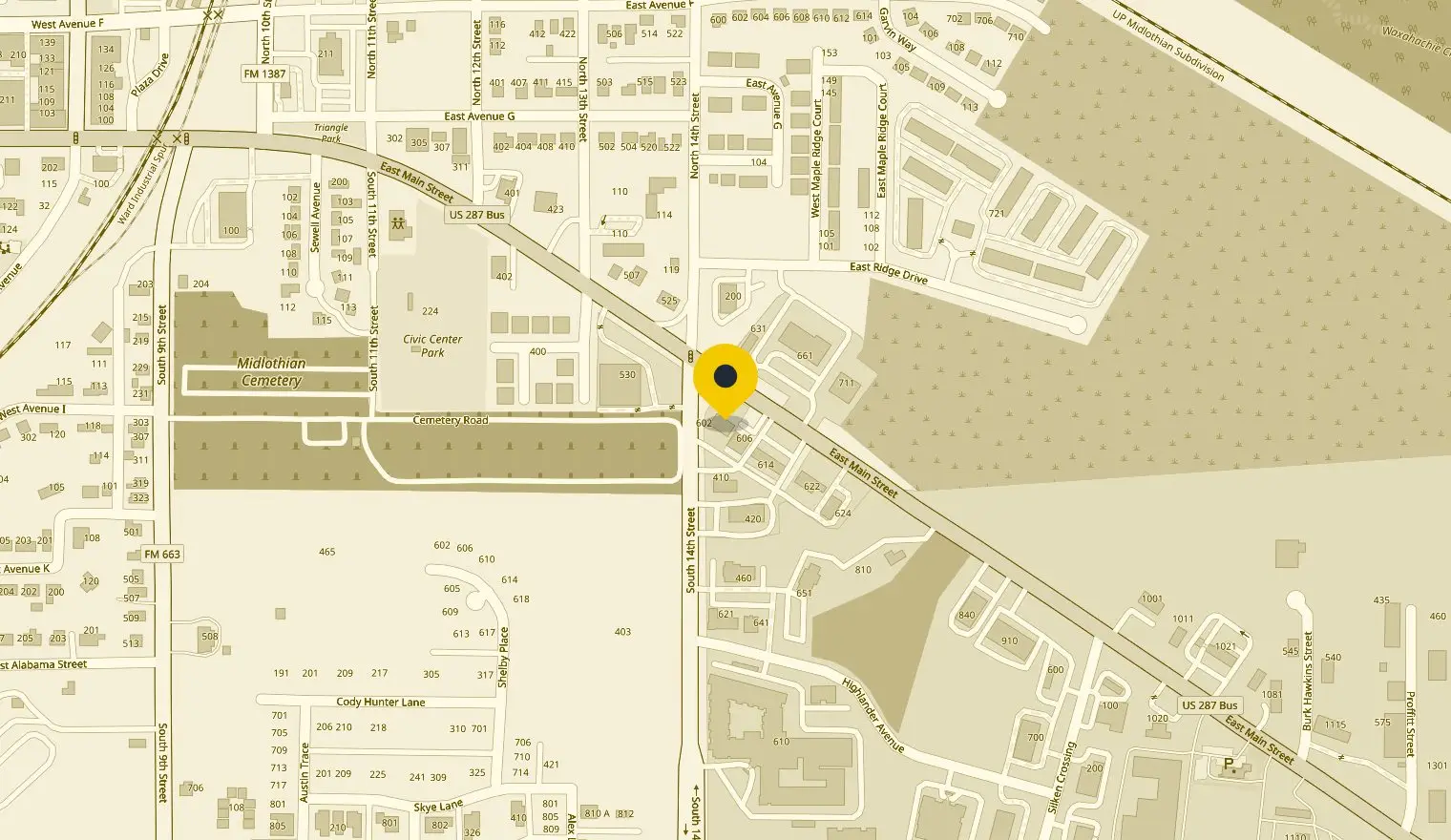
When the quick checks don’t solve it, we handle battery, alternator and starter service, along with fuel system, ignition and engine repair. You can see everything we do on our services page. We don’t publish prices online, so call us for details on your vehicle.
Preventing the Next No-Start
A few habits make a no-start less likely:
- Have the battery tested before it gets old or before summer and winter extremes, especially if cranking has slowed.
- Keep terminals clean and tight.
- Don’t ignore the battery light. It’s the charging system asking for attention.
- Stay on top of tune-ups, spark plugs and filters so fuel and spark stay healthy.
- Avoid very short trips all the time when you can, since they don’t give the battery much time to recharge.
FAQ
How can you tell if it’s the battery or the starter?
Look at the headlights while you try to start. If they’re very dim or dead, the battery or its connections are the likely problem. If they stay bright and you hear a click or nothing, the starter, relay or wiring deserves a look. A proper battery test and a check of the connections settles it.
Why does my car click but not start?
A click means something is trying to engage the starter but not getting enough power through. A weak battery and corroded terminals are the most common reasons, followed by a failing starter or a bad connection. Clean, tight terminals and a battery test come first.
Can a bad alternator stop a car from starting?
Yes, indirectly. The alternator recharges the battery as you drive, so when it fails the battery drains until it can’t crank the engine. If your car jump-starts but dies soon after, or the battery light has been on, the charging system should be tested.
Can a bad ignition switch keep a car from starting?
Yes. A faulty ignition switch can stop power from reaching the starter and engine systems. Warning signs include flickering dash lights, a key that turns with no response, or a car that starts only some of the time.
What should I do if the engine cranks but won’t start?
Check the fuel level first, then avoid cranking for long stretches. A gas smell that lingers or a burning smell means stop and get it inspected. Otherwise, the cause is likely fuel delivery, spark, a sensor or timing, which takes diagnostic testing to pin down.
Ready to Get Your Car Running Again?
If your car won’t start or has been showing the warning signs above, give us a call at (972) 775-5945 and tell us what it’s doing. We’ll help you schedule a time to have it tested so you can get back to your day with a clear answer.
Sources
- A quick-start guide to no-start diagnostics, ALLDATA
- If Your Engine Won’t Start, Honda owner guidance
- Tech Tip: Diagnosing Starter Cranking Problems, Delco Remy
- Auto Repair Basics, Federal Trade Commission
- Diagnostic Solutions: Starter and Battery Diagnostics, Underhood Service
- Signs of a Bad Starter, AutoZone
- How to Tell If Your Alternator Is Bad, AutoZone
- How to Start a Car with a Faulty Ignition Switch, AutoZone
- Diagnose Car Problems Without a Mechanic, Haynes