




If your battery light comes on while driving, it usually means the charging system isn’t keeping the battery charged, most often because of a failing alternator rather than the battery itself. Reduce your electrical load right away and pull over safely when you can. Running on battery power alone can drain the system fast, and your car may lose power or stall within minutes.
TL;DR:
- The battery light most likely indicates a failing alternator, regulator, or belt, rather than a dead battery, because the charging system handles power delivery.
- Immediately reduce electrical load by turning off accessories and seek a safe spot to stop before the system fully drains and causes the car to stall.
- A multimeter can help diagnose issues, with a healthy alternator showing 13.7 to 14.7 volts when the engine runs, unlike a low or flat reading.
- Driving on battery alone is only safe for a few minutes, as the system can shut down suddenly, especially if the battery is old or electrical use is high.
- A mechanic’s inspection for belt integrity, alternator output, and battery condition ensures correct repair rather than unnecessary part replacements.
Table of Contents
- What the battery light actually means
- Immediate steps to take while driving
- Simple checks to help you figure out what’s wrong
- How long is it safe to drive with the battery light on?
- What a repair shop checks and how they fix it
- Preventive maintenance to lower the risk
- What we typically see when diagnosing battery light issues
- How Kwik Kar Midlothian can help
- Sources
- FAQ
What the battery light actually means
The battery light doesn’t just watch the battery. It monitors your entire charging system, the network that keeps your car’s electronics running while the engine works.
That system has a few key parts:
- Battery: stores power and helps start the engine.
- Alternator: generates electricity while the engine runs and recharges the battery.
- Voltage regulator: controls how much voltage the alternator sends out.
- Serpentine belt: spins the alternator using power from the engine.
- Wiring and grounds: carry electricity between all these parts.
Once your engine starts, your car depends on the alternator, not the battery, to keep everything powered. According to AAA guidance on dashboard warning lights, the battery light usually means the charging system is failing and the alternator likely isn’t keeping the battery charged. That’s why a lit battery light almost always points to the alternator, the regulator, or the belt driving them, even though the battery gets the blame in the name.
Immediate steps to take while driving
Treat the battery light as a signal to act, not to panic. Here’s what to do in order:
- Check how the car is driving. Notice any dimming lights, sluggish acceleration, or unusual sounds.
- Cut electrical use. Turn off the air conditioning, radio, and any accessories you don’t need.
- Dim what you can. Lower your headlights to low beam if it’s safe and legal to do so.
- Find a safe stop. Pull into a parking lot, gas station, or wide shoulder as soon as possible.
- Call for help if needed. If the car stalls or won’t restart, contact roadside assistance rather than risking a stop in traffic.
AAA’s guide to reading dashboard lights compares red warning lights to a red traffic signal, meaning you should respond right away rather than waiting to see if the problem gets worse.
Pro Tip: Keep your phone charger in the car; if your electrical system fails, you may need a fully charged phone to call for help.
Simple checks to help you figure out what’s wrong
Before you call for a tow, a few quick observations can help narrow things down.
Look and listen for:
- A missing or broken serpentine belt: often causes a squealing noise before it fails completely.
- Smoke or a burning smell: signals you should stop immediately and turn off the engine.
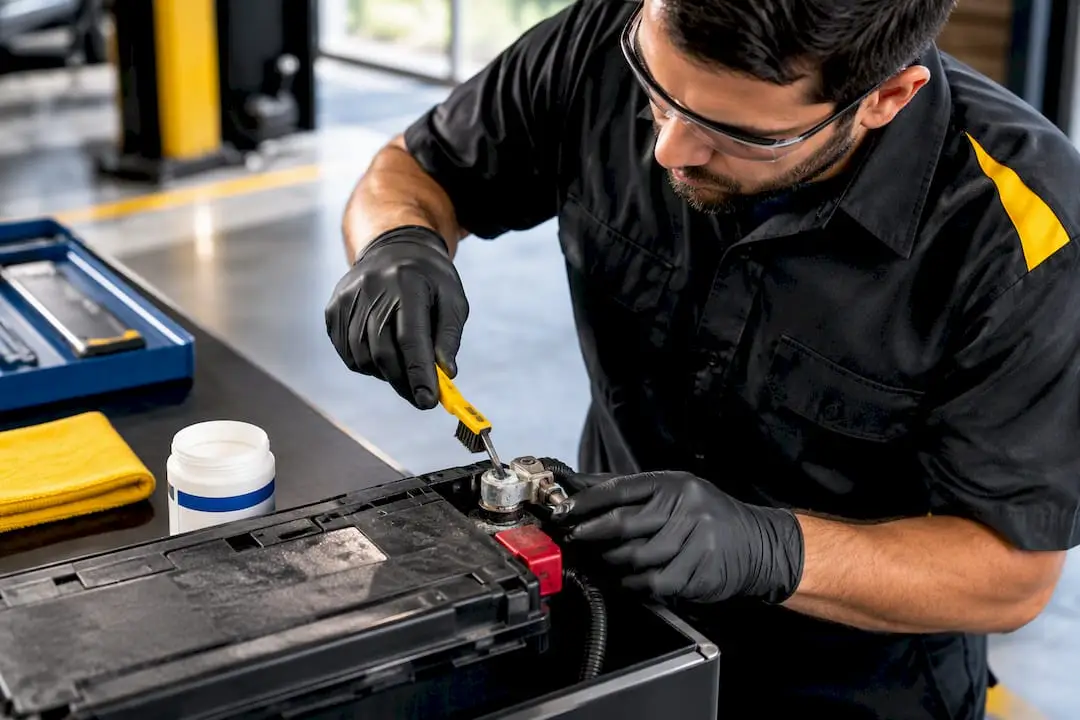
- Corrosion on battery terminals: white or greenish buildup that can interrupt the electrical connection.
- Headlights that dim when you rev the engine: a classic sign of low alternator output.
If you have a multimeter, a healthy battery reads around 12.6 volts with the engine off. With the engine running, a properly working alternator typically pushes that reading higher, generally in the 13.7 to 14.7 volt range. A reading that stays flat or drops when the engine runs suggests the alternator isn’t charging the battery the way it should.
Newer vehicles often add diagnostic alerts for this exact problem. Some cars display a low-voltage icon or message alongside the battery light, according to AAA’s comparison of alternator and battery failure signs, giving drivers an extra clue that the charging system, not just the battery, needs attention.
How long is it safe to drive with the battery light on?
Not long. Once the alternator stops charging the battery, your car is running on stored power alone, and that supply drains quickly. AAA warns that a vehicle can shut down completely within minutes once it’s relying only on the battery.
How fast that happens depends on a few things: the battery’s age and condition, how many electrical accessories are running, your engine speed, and how much stop-and-go driving you’re doing. An older battery under a heavy electrical load in city traffic will fail faster than a newer one on a highway with everything turned off.
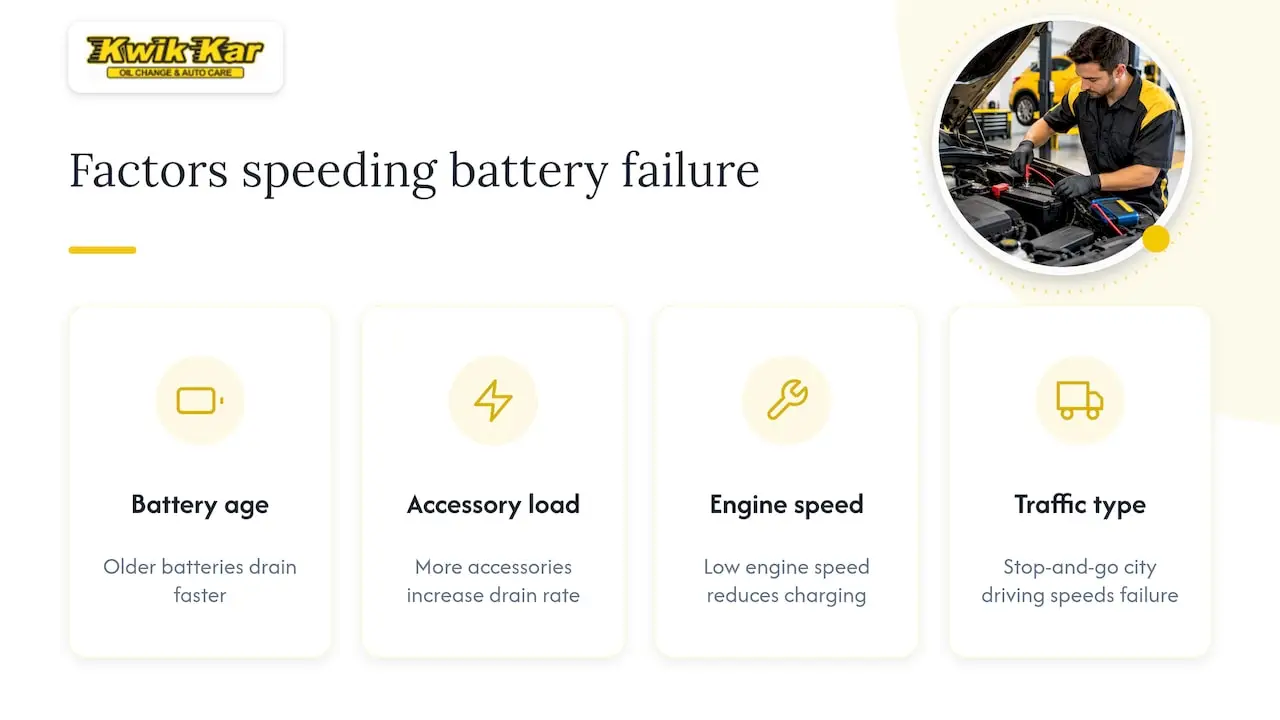
The safest approach is to treat the light as urgent from the moment it appears. Head toward the nearest safe stop or repair shop rather than continuing your normal route.
What a repair shop checks and how they fix it
Once you’re off the road, a proper diagnosis takes the guesswork out of the repair. A shop will typically walk through several checks, similar to those outlined in AAA’s guide to alternator and battery problems:
- Belt inspection: checking for wear, cracking, or a belt that has slipped off entirely.
- Alternator output test: confirming the alternator produces enough voltage under load.
- Battery load test: measuring whether the battery still holds and delivers a proper charge.
- Cable and ground inspection: looking for corrosion or loose connections that interrupt current.
- Parasitic drain test: checking for something pulling power even when the car is off.
Depending on what those tests find, common repairs include belt replacement, alternator replacement, battery replacement, or cleaning and tightening cable connections. If your car stalled, showed smoke, or is stuck somewhere unsafe, towing is the better call over trying to restart and drive it in.
Preventive maintenance to lower the risk
A little routine attention goes a long way toward keeping your charging system reliable.
Have your battery tested periodically, especially once it’s more than three years old, since age is one of the biggest factors in charging problems. Ask your mechanic to inspect the serpentine belt for cracking or glazing, and have battery terminals cleaned if you notice corrosion building up. If you drive a vehicle only occasionally, a battery tender can help maintain charge between uses and reduce strain when you do get behind the wheel. Repeated short trips also make it harder for the alternator to fully recharge the battery, so combining errands when you can helps the system stay topped off.
What we typically see when diagnosing battery light issues
Drivers often assume a lit battery light means the battery is dead, but a worn serpentine belt or a failing alternator explains the light in plenty of cases we see. Loose or corroded terminals are another repeat offender, and they’re often the easiest fix once spotted.
A structured inspection, checking the belt, alternator output, battery condition, and connections in order, helps avoid the common mistake of replacing a battery when the real problem is upstream in the charging system. Trained mechanics working through each step in sequence tend to catch the actual cause on the first visit instead of guessing.
— Kwik Kar
How Kwik Kar Midlothian can help

A battery light doesn’t have to mean an expensive mystery. Experienced mechanics can test your battery, alternator, and belt in one visit, so you get a clear answer instead of a guess. You’ll be guided through the findings and costs before any repair begins, with warranty-backed work once the job is done.
Services relevant to a battery light diagnosis include:
- Battery checks and load testing
- Alternator output testing
- Belt inspection and replacement
- Electrical wiring and connection diagnostics
You can book by calling the shop or requesting service through our services page, where you’ll find our full list of maintenance and repair options.
| What you get | Detail |
|---|---|
| Diagnosis | Belt, alternator, and battery checked in one visit |
| Communication | Clear explanation of findings before repair begins |
| Repairs | Warranty-backed work by certified mechanics |
If you’d rather see us in person first, visit our location page for hours and directions, or check current specials before you book.
Sources
This article draws on AAA’s guidance for dashboard warning lights and charging-system diagnosis, along with Kwik Kar Midlothian’s service listings for repair options available locally.
FAQ
Can I still drive my car if my battery light is on?
You can drive briefly, but it’s risky since the charging system may already be failing. Reduce electrical use and get to a safe stop or repair shop as soon as possible rather than continuing your regular route.
Does the battery light mean a bad battery or a bad alternator?
It usually points to the alternator or charging system rather than the battery itself, since the light monitors the whole charging process. A shop test of the belt, alternator output, and battery condition is the only reliable way to know which part has failed.
How long can I drive with the battery light on while driving?
Not long. AAA notes that a vehicle running only on battery power can shut down completely within 15 minutes or less, so treat the light as urgent and head toward a safe stop right away.
How do I know if it’s the battery or the alternator?
Headlights that dim when you rev the engine, along with a voltage reading that doesn’t rise when the engine is running, both point toward the alternator rather than the battery. A load test at a repair shop confirms which component actually needs replacing.
What does it mean if the battery light flickers instead of staying on?
A flickering light often points to a loose connection, a worn belt, or an intermittent alternator fault rather than a fully failed part. It’s still worth having the charging system inspected soon, since intermittent problems tend to get worse over time.