
A failing radiator cap usually shows up as overheating, coolant that keeps disappearing, a reservoir that overflows or bubbles, or a radiator hose that collapses as the engine cools. The cap is a small part with a big job: it holds the cooling system under pressure so the coolant does not boil too early. When it stops holding that pressure, the symptoms look a lot like bigger and more expensive problems, so it pays to know which signs point to the cap and which do not.
If your temperature gauge is climbing right now, pull over safely and shut the engine off. Do not open the cap while the engine is hot. More on that below.
TL;DR
- The cap keeps the cooling system pressurized, which raises the coolant’s boiling point. A weak spring or worn seal lets pressure escape and the coolant boils sooner.
- Common signs: overheating, steam, coolant loss with no obvious leak, an overflowing or bubbling reservoir, a collapsed upper hose, and a cracked or hardened rubber seal on the cap.
- Bubbles can also mean trapped air or a head gasket problem, so the timing of the bubbling matters.
- Never open a hot cap. Let the engine cool completely first.
- A cap should be pressure-tested against the rating for your vehicle, and a replacement must match that rating.
Table of Contents
- What the radiator cap actually does
- 7 radiator cap symptoms to watch for
- Bubbling in the reservoir: normal, cap, or something worse?
- Why a bad cap is easy to confuse with other problems
- How to check a radiator cap safely
- Choosing the right replacement cap
- Can you keep driving with a bad cap?
- Why bring it to a shop rather than guess
- Cooling system trouble? We can take a look
- FAQ
- Schedule your cooling system check
- Sources
What the radiator cap actually does
Most people think of the cap as a lid. It is really a pressure valve. Your cooling system is sealed, and the cap lets pressure build to a set point before it opens and sends extra coolant to the overflow tank. Pressure matters because it keeps coolant from boiling. MOTOR magazine explains that system pressure, anywhere from 5 to 15 psi, does the real work of keeping coolant from boiling, with each psi raising the boiling point by roughly 3 degrees.
A good cap does three things:
- It seals the system so pressure can build.
- It releases pressure at its rated number, sending coolant to the reservoir.
- It opens a vacuum valve as the engine cools, so coolant is pulled back from the reservoir into the radiator.
When any of those fail, coolant is lost, air gets in, or the system runs hotter than it should. The same MOTOR piece notes that a vehicle that does not recover coolant properly can fall into a spiral of coolant loss and overheating.
7 radiator cap symptoms to watch for
1. The engine runs hot or overheats
This is the most common sign. If the cap releases pressure below its rating, the coolant boils at a lower temperature, and the engine runs hotter than normal. The problem often appears only in certain conditions: stop-and-go traffic, hot weather, long climbs, towing, or highway driving under load. It can come and go, which makes it easy to dismiss.
That is a common situation in North Texas summers, when the cooling system is already working hard. If your gauge creeps up only in heavy traffic with the A/C on, a weak cap is one of several possible causes. Our guide to engine overheating causes walks through the others.
2. Steam coming from under the hood
Steam means coolant is boiling or escaping past the cap. Pull over in a safe spot, turn off the engine and leave the hood latched or opened carefully from a distance until things cool. Steam and hot coolant can burn you.
3. Coolant loss with no puddle
If you keep topping off coolant but find no drip under the car, vapor may be escaping past a worn cap seal. A faint sweet smell is a clue, since coolant has a distinctive odor. If you notice it, our page on a sweet smell in your car explains the other places it can come from.
4. An overflowing or bubbling coolant reservoir
A cap that does not seal, or that vents too early, pushes coolant into the overflow tank faster than it can be pulled back. Haynes explains that a worn cap, debris, or a weakened spring can reduce pressure, so coolant vaporizes sooner and bubbles in the reservoir. Clues include a faint coolant odor, residue near the cap, or a reservoir level that shifts more than usual between drives.
We cover this in more depth in coolant reservoir bubbling: causes and what to do.
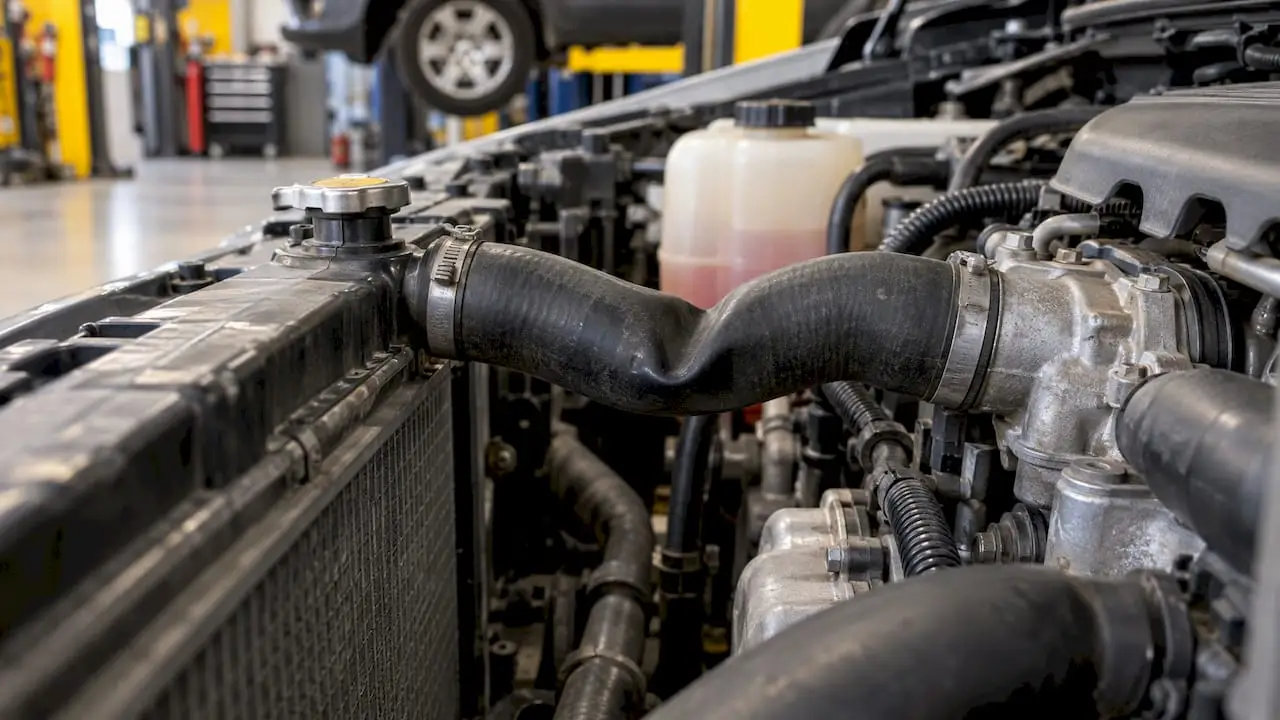
5. A collapsed upper radiator hose
As the engine cools, the coolant contracts and creates a vacuum. The cap’s vacuum valve is supposed to open and let coolant return. If it sticks, the soft upper hose can collapse inward. A cap inspection procedure from a truck maker’s technical literature notes that this valve prevents hose collapse as the system cools, and says to check that it is not stuck.
6. A damaged cap seal or gasket
With the engine fully cool, look at the cap. A cracked, hardened, flattened, or waxy rubber gasket, or a rusty spring, is a reason to replace it. The same inspection procedure says to replace the cap if the gasket or O-ring is cracked or deteriorated. A Nissan service manual for the Altima goes further and says to replace the cap if the metal plunger cannot be seen around the rubber gasket, or if waxy residue is on the gasket or retainer. That Altima procedure is model-specific, but it shows what technicians look for.
7. A temperature gauge that looks normal while the engine overheats
This one surprises people. When air pockets form in the system, the coolant temperature sensor can end up sitting in air rather than coolant, and the gauge may not reflect what the engine is really doing. If you see steam or smell coolant but the gauge looks fine, trust the steam.
Bubbling in the reservoir: normal, cap, or something worse?
A little bubbling is not always a problem. It can happen briefly during warm-up or right after shutdown. What deserves attention is steady bubbling at idle, fast overflow, or pressure that keeps dropping.
Timing helps narrow down the cause:
- Bubbles only once the engine is fully hot. This points toward a weak cap, though a thermostat or water pump problem can also be involved.
- Bubbles after a coolant change or repair. Trapped air is likely, and the system may need to be bled.
- Bubbles right after a cold start, or continuing with white exhaust smoke or oil that looks milky. Combustion gases may be entering the coolant, which can signal a head gasket problem. That is more serious than a cap.
Haynes frames the cap as one possibility among several, and that is the right way to think about it. A cap is the cheapest suspect to rule out, but it is not the only one. If you replace the cap and the bubbling continues, the cooling system needs a proper inspection rather than more guessing.
Why a bad cap is easy to confuse with other problems
A weak cap can imitate a thermostat fault, low coolant, a clogged radiator, a failing water pump, or a head gasket leak. That is why a cap check belongs early in any overheating diagnosis. It is quick and it can rule out a lot.
It also works the other way. Overheating that continues after a new cap points to something else. Common culprits:
- A cooling fan that is not running. Overheating in traffic but not at highway speed is a classic clue. See our checks for a cooling fan that won’t run.
- A failing water pump. Look for leaks near the front of the engine, whining noises, or temperature swings. Our guide to water pump failure covers the signs.
- Low coolant from a leak elsewhere. Hoses, the radiator, and the heater core can all seep.
- Heat from other systems. Electrical parts can also run hot, and alternator overheating diagnosis is worth reading if the charging system seems involved.
- A head gasket problem. Exhaust gases in the coolant, white smoke, or contaminated oil are the warning signs.
How to check a radiator cap safely
Safety comes first. Coolant under pressure is far above the boiling point of water at normal pressure, and it can erupt as steam. Honda’s owner’s manual tells owners to let the engine and radiator cool down before removing the cap because hot coolant can spray out and seriously scald.
Here is the sequence:
- Let the engine cool completely. Wait until the upper radiator hose is cool enough to squeeze comfortably. If the car just overheated, give it a long time.
- Look at the cap and reservoir. Check for crusty residue, rust, or a cracked or flattened rubber seal. Look at the reservoir level and for any coolant film around the cap neck.
- Check the hose. With the engine cool, squeeze the upper hose. If it looks collapsed or caved in after a drive, the vacuum valve may be stuck.
- Do not rely on a visual check alone. A cap can look fine and still fail under pressure.
- Have the cap pressure-tested. A cap tester measures the pressure at which the cap starts to release. Snap-on’s coolant system tester instructions say to work only on a cool engine, and that a cap must hold below its rating, relieve above it, and hold pressure for a minute or more. If the gauge hand falls quickly, replace the cap.
The cap’s own rating is stamped on top. The technical literature procedure mentioned earlier says to replace a cap that does not hold pressure within 10 percent of its marked rating.
What the numbers look like
Ratings differ by vehicle. Honda’s manual calls for a cooling system and cap test at 15 psi for the vehicle it covers. The Nissan Altima procedure lists a standard of 18 to 22 psi, with a limit of 16 psi. These are examples, not a universal target. Your vehicle’s own specification is what counts.
Choosing the right replacement cap
Caps are not universal. Pressure rating, neck depth, seal diameter, and vacuum valve design all have to match the vehicle. A cap that twists on may still be wrong.
The rating matters in both directions:
- Too low a rating lets the cap vent early, so coolant boils and escapes sooner than it should.
- Too high a rating can put extra stress on older hoses, the radiator, or the heater core.
The truck-maker procedure also warns that the installed cap may not be the original one, and that an improperly rated cap affects engine operating temperature and can cause premature wear or damage. Use a cap specified for your model. Honda’s manual says the same: if replacement is needed, use the cap specified for the vehicle.
Can you keep driving with a bad cap?
The safest answer is no, not for long. A cap that cannot hold pressure can lead to boiling coolant, coolant loss, and overheating. An overheated engine can suffer damage that costs far more than the cap, including a warped cylinder head or a blown head gasket.
If coolant is overflowing or the gauge is rising:
- Pull over when it is safe and turn the engine off.
- Let the engine cool fully before opening the hood or the cap.
- Check the coolant level and look for visible leaks at the radiator and hoses.
- Do not drive far on a hot engine to “make it home.”
If you must add fluid in an emergency, a cool system and a proper coolant mix are the goal. After any cooling repair, the system should be bled so air pockets do not form.
Why bring it to a shop rather than guess
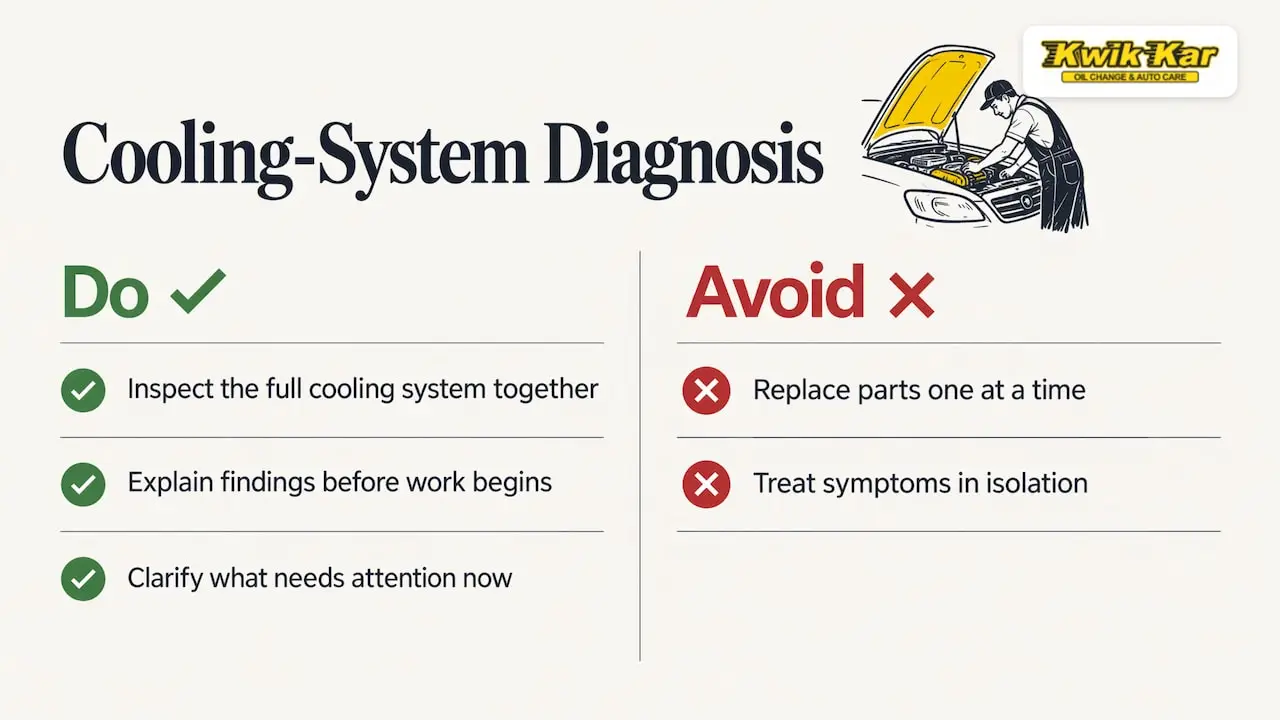
The frustrating thing about cap trouble is that the symptoms overlap with so many other faults. Replacing parts one at a time can leave you with the same overheating and a bigger bill. A technician can look at the whole cooling system together: the cap, hoses, radiator, coolant condition, fan, thermostat, and water pump.
At Kwik Kar of Midlothian, our ASE-certified mechanics handle radiator and cooling system service, and we explain what we find and what we recommend before work begins. Repairs are warranty-backed.
Our view: start with the simple, rule out the serious
We think of the radiator cap as the first, cheapest question in a cooling problem. It takes little time to look at, and it settles whether the system is holding pressure the way it should.
The other half of that answer matters just as much. If a cap is fine, or a new one does not fix the problem, you want to know early, before heat does damage to the engine. That is why we like to look at the full cooling system together instead of treating a symptom in isolation.
We also believe in clear communication. You should understand what we found, why it matters, and what your options are. A fair recommendation means telling you what needs attention now and what can wait.
Our ASE-certified mechanics approach cooling work the way we approach everything else: carefully, and with you in the loop.
Kwik Kar
Cooling system trouble? We can take a look
If your engine runs hot, your reservoir keeps overflowing, or you are adding coolant with no leak in sight, our team can inspect the cooling system and talk you through what is going on. Our ASE-certified mechanics work on radiators and cooling systems, and we also handle related services such as hoses, belts, and A/C.

See all of our services or check our current specials.
FAQ
How do I know if my radiator cap is bad?
Look for overheating, steam, falling coolant with no puddle, an overflowing reservoir, or a collapsed upper hose. With the engine fully cool, inspect the cap for a cracked, hardened, or waxy seal and a rusty spring. The only way to be sure is a pressure test against the cap’s rating.
Can I drive without a cap on the coolant reservoir?
It is not a good idea. A missing or loose cap on a pressurized system lets pressure and coolant escape, and the engine can run hot. If the cap is missing, get a correctly rated replacement before driving any distance.
How do I know if I need a new reservoir cap?
Signs include coolant residue around the cap, a cracked or flattened seal, a reservoir that overflows, or pressure that will not hold during a test. Match the replacement to the pressure rating marked on the old cap and your vehicle’s specification.
Why is my coolant overflow tank bubbling?
It can be a weak cap, trapped air after a coolant service, or combustion gases from a head gasket problem. Bubbling only when the engine is hot leans toward the cap, while bubbling right after a cold start or with white exhaust smoke needs prompt attention. If you are unsure, call us at (972) 775-5945.
Can a radiator cap cause overheating?
Yes. A cap that vents below its rating lowers the coolant’s boiling point, so the engine can overheat, especially in traffic, hot weather, or under load. Because other faults cause the same symptoms, a full cooling system check is the reliable way to find the cause.
Schedule your cooling system check
Don’t wait for the temperature gauge to decide for you. If any of the signs above sound familiar, call Kwik Kar of Midlothian at (972) 775-5945 and book a time that fits your week, so a small cooling problem stays small.
Sources
- MOTOR: Cooling System Diagnosis
- Haynes: Why Your Coolant Reservoir Is Bubbling
- Radiator Cap Inspection, Public Technical Literature
- Nissan Altima service manual: on-vehicle maintenance
- Honda owner’s manual: engine cooling system
- Snap-on coolant system tester manual