
A squeal, chirp, rumble or whine from the front of the engine often points to a worn idler pulley, and it is worth having it looked at soon. The idler pulley is a small wheel on a bearing that guides the serpentine belt. When that bearing wears, the noise starts first. A belt that wanders or comes off follows. Our ASE-certified mechanics at Kwik Kar in Midlothian inspect the whole belt drive, so the noise gets traced to the right part. Call us at (972) 775-5945 to set up an inspection.
TL;DR
- A failing idler pulley usually sounds like a squeal, a chirp, or a growl or rumble that rises and falls with engine speed.
- The cause is most often a worn bearing. Idler bearings are sealed, so they cannot be re-greased and the pulley needs to be replaced.
- Belt dressing and sprays are not a repair. They can hide the problem and add wear.
- You can often keep driving a short time, but a screech, a belt that wanders or warning lights mean stop and get help.
- A pulley replacement is usually a modest repair. A lost belt is a much bigger problem.
Table of Contents
- What an idler pulley does
- What idler pulley noise sounds like
- Why idler pulleys get noisy
- Is it an idler pulley, a tensioner or the belt?
- Other signs that point to the pulley
- Why not just spray it?
- Can you keep driving with a noisy idler pulley?
- What a repair involves and what it costs
- How we handle belt noise at Kwik Kar
- Get the noise checked
- How to describe the noise when you call
- Preventing the next noisy pulley
- FAQ
- Book a belt drive inspection
- Sources
What an idler pulley does
Your engine runs accessories such as the alternator, water pump and power steering pump with one long rubber belt, called the serpentine belt. The belt has to follow a path around several pulleys. Some of them are driven parts. Others only guide the belt or keep it tight.
An idler pulley is one of the guides. It does no work of its own. It spins freely on a sealed bearing and keeps the belt on the correct path. A tensioner pulley is a related part. It is spring-loaded and keeps tension on the belt.
Because every drive pulley uses a bearing, bearing wear is a normal wear item. When bearings go bad, they whine or rumble. That sound is a warning that the bearing is getting close to failing.
What idler pulley noise sounds like
The sound tells you a lot. Here are the common ones, from most to least frequent in a worn belt drive.
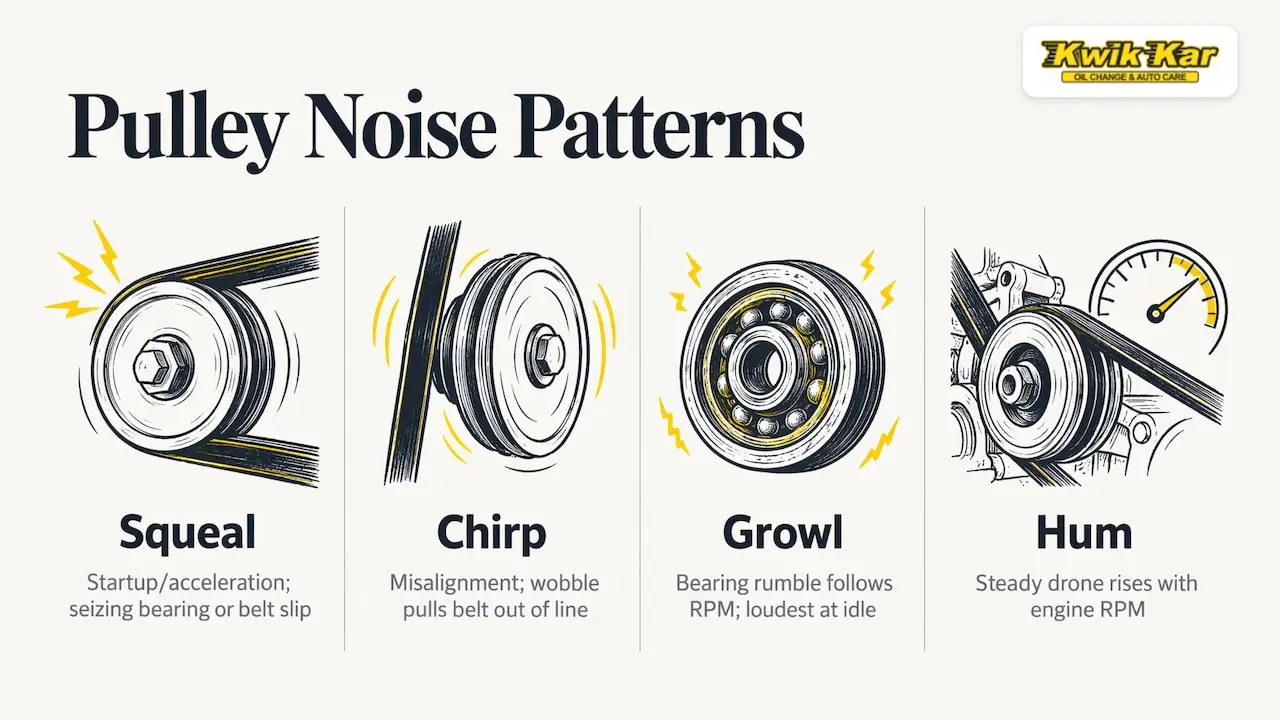
1. A squeal or whine. This is the sound most drivers describe first. It often shows up at startup or when you accelerate. A bearing that is seizing can cause it. So can a belt that is slipping because of low tension or fluid on the belt, according to a belt-drive technical guide.
2. A short, rhythmic chirp. A chirp is quick and repeats. The same guide names pulley misalignment as the leading cause. A worn bearing that lets the pulley wobble is also on the list. Trade press explains the mechanism: a loose or wobbly pulley pulls the belt out of line and produces the classic belt chirp.
3. A growl, grind or rumble. Dry grinding or rumbling that follows engine speed points to the bearing itself. It is often loudest at idle and on a cold start.
4. A hum that rises with RPM. This is a steady drone that climbs as the engine revs. It is a common early stage of bearing wear.
The noise can change with weather and load. Belt slip often gets worse in damp conditions or when the engine suddenly asks for more power, such as when the A/C compressor kicks on. A bearing problem tends to follow engine speed more consistently.
Why idler pulleys get noisy
Most idler pulley noise comes down to a handful of causes:
- Worn bearings. Heat, constant use and age break down the grease inside the bearing.
- Contamination. Water, dust or road grime can get past a worn seal. Fluid leaks from nearby parts can do the same.
- Misalignment. If a pulley sits out of line, the belt rubs the edge and chirps. Bearing wear can cause it. A bent bracket can too.
- Tension problems. A weak tensioner or an over-tight belt puts extra load on every pulley bearing.
- Wear on other parts. A worn alternator or water pump bearing can load the belt drive and speed up wear on the rest.
The sealed design matters. Idler bearings are sealed for life and cannot be re-greased. Once the grease inside is gone, adding more from the outside is not possible. The pulley is a wear part that gets replaced.
Is it an idler pulley, a tensioner or the belt?
This is the hard part. Several belt-drive parts make almost the same noise. A bad tensioner pulley is a close look-alike. A glazed or worn belt can squeal on its own. An alternator or water pump bearing can whine in the same area of the engine.
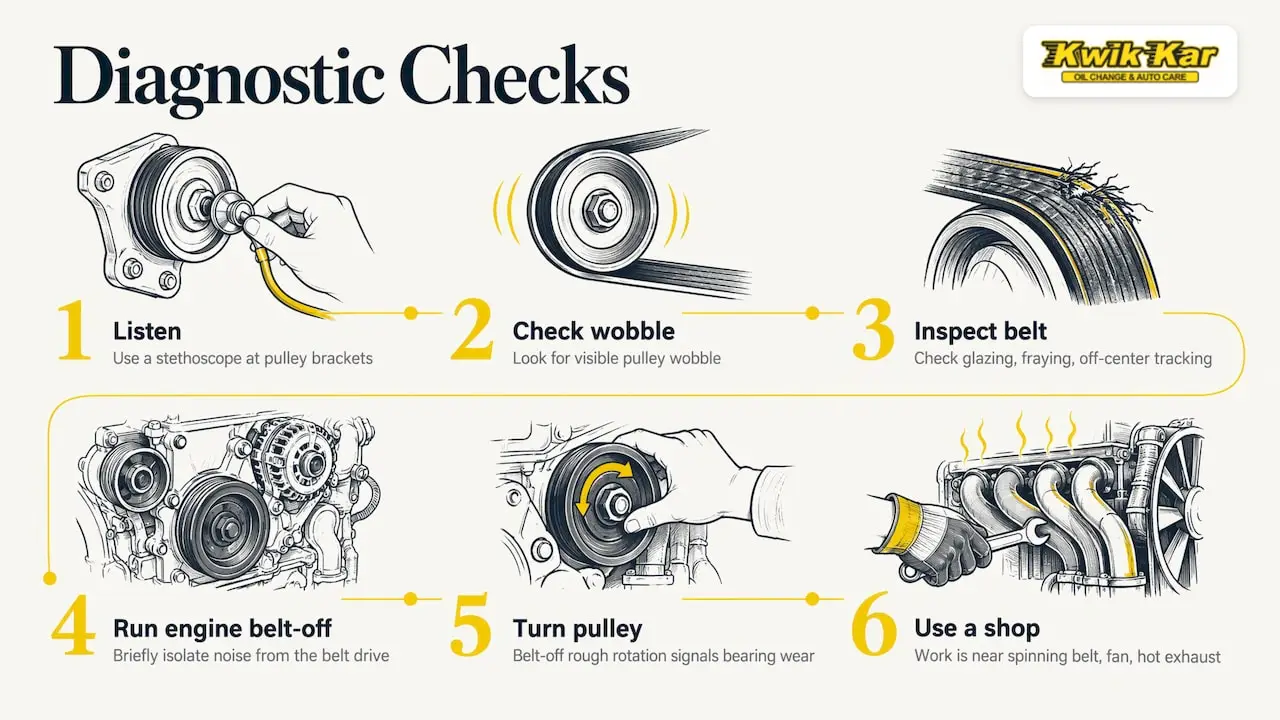
Technicians separate them in a few ways. They listen with a mechanic’s stethoscope at the pulley brackets. They look for visible wobble. They check the belt for glazing, fraying or running off-center. And they may run the engine briefly with the belt off to learn whether the noise comes from the belt drive at all. Trade press on belt noise describes that belt-off state as the chance to examine pulleys for worn bearings. A pulley that feels rough or has restricted rotation when turned by hand with the belt removed points to bearing wear. A parts maker’s service tips say the same.
That work is done near a spinning belt, a fan and a hot exhaust manifold. Loose clothing, hair and hands do not mix with any of it. It is a good reason to let a shop do the isolating. If you want a deeper look at what different belt sounds mean, see our guide on serpentine belt noise.
Other signs that point to the pulley
Noise is not the only clue. Mention any of these when you call:
- Belt wear on the edges. Fraying, glazing or rubber dust around the pulley can mean the pulley no longer holds the belt true.
- A belt that runs off-center. The belt should sit centered in each groove.
- A visibly wobbling pulley. Side-to-side play is a bad sign.
- Squeal that is worst when the engine is cold. Many worn bearings are loudest at cold start and may quiet down once warm.
- Dashboard warnings. If the belt slips or stops driving the alternator, the battery light may come on. If it stops driving the water pump, the temperature gauge will rise.
Why not just spray it?
It is tempting to reach for a can of belt dressing or a squirt of lubricant. Don’t. Belt dressing attracts dirt and hides the real problem, and it can speed up wear on the pulley and the belt. One major belt manufacturer’s technician workbook says plainly: do not use any sprays or chemicals to reduce belt noise.
Any quiet you get from a spray is temporary. The bearing is still failing. Trade press makes the same point: because most idler bearings are sealed and cannot be oiled, a noisy or wobbling idler needs to be replaced.
Can you keep driving with a noisy idler pulley?
A mild hum or occasional chirp is not usually an emergency. It is a notice that a part is wearing out. Plan the inspection within the next few days, not the next few months.
Stop driving and get help if any of these happen:
- The noise turns into a loud screech.
- The belt starts to wander or you see it off its path.
- The battery or temperature warning light comes on.
- You lose power steering or the A/C quits suddenly.
A pulley with a lot of play can let the belt run off the groove. A worn pulley or tensioner can lead to premature belt wear and a broken or lost belt. On many engines the same belt drives the alternator and the water pump. Losing it can leave you without charging and without engine cooling. In Texas heat, that is not a place to be stuck.
What a repair involves and what it costs
The usual fix is simple: replace the idler pulley. If the belt is glazed, cracked or frayed, it gets replaced too. Many technicians also suggest replacing the belt, the tensioner and the idler pulleys together, since they wear at the same pace. A parts maker’s service guidance recommends replacing the belt, tensioner and idler pulleys together.
On cost, one insurer’s published guide puts idler pulleys at $30 to $100 each when they are replaced during a serpentine belt job. It also says shops may charge $20 to $50 for an inspection fee to diagnose belt-drive noise. Those are national ranges for parts and fees. Labor and the exact pulley for your vehicle change the total. We do not publish set prices for this service, so call us and we will go over your vehicle and the work it needs.
What drives the final bill:
- Whether just the idler needs replacing, or the belt and tensioner as well.
- How hard the pulley is to reach on your engine.
- Whether a nearby part, such as a leaking seal, is also involved.
How we handle belt noise at Kwik Kar
If you bring in a squeal or rumble, the goal is to find the actual source and not guess. Our ASE-certified mechanics look at the belt, the idler and tensioner pulleys and the parts the belt drives. You get clear communication about what we find, which part is the cause and what we recommend, before the work starts. Our repairs are warranty-backed.
Belt and pulley work is part of our belt and hose service. If your vehicle has a timing belt, it is a separate part with its own mileage interval, and we explain that on our timing belt replacement page. You can see everything we do on our services page.
Our view: replace it before it costs more
When someone brings in a noisy belt drive, the cheapest moment to act is the first time they hear it. A pulley bearing does not heal. It gets louder, then it gets rough, then it can let the belt slip or come off.
We would rather look at the whole belt drive once and tell you plainly what is worn than sell you a part you may not need. Our ASE-certified mechanics explain what they find, show you the cause where we can, and let you decide.
Replacing a worn pulley when the belt is changed also saves you a second visit later. A belt that goes on new but runs over an old, noisy pulley is likely to be noisy again.
Kwik Kar
Get the noise checked
If your engine is squealing, chirping or rumbling, we can find out why. Tell us when it happens: cold start, idle, acceleration or when the A/C is on. That helps narrow it down fast.

We offer belt, hose and timing belt service, plus related work such as battery, alternator and starter service and check engine light diagnosis. See our services or check current specials before you come in.
How to describe the noise when you call
A few details help the technician before the hood is even open:
- When it happens. Cold start only, all the time, or only under load.
- What it does with speed. Does it rise with RPM, or is it a steady chirp?
- What it sounds like. High squeal, rhythmic chirp, rumble or hum.
- What changed recently. A new belt, a water splash, a fluid leak or the A/C turning on.
- Any warning lights. Battery, temperature or check engine.
That is plenty. You do not need to name the part. Describing the sound is the best start.
Preventing the next noisy pulley
You cannot stop bearings from wearing, but you can avoid shortening their life:
- Fix leaks promptly. Oil, coolant and power steering fluid on the belt drive wear belts and bearings quickly.
- Keep the engine bay clean without blasting the belt area. Pressure-washer spray can push water into a bearing seal.
- Replace the pulleys with the belt. A common guideline from parts makers is to replace pulleys whenever the serpentine belt is changed. One bearing maker puts belt changes at about every 60,000 to 100,000 miles. Check your owner’s manual for your own vehicle’s interval.
- Act on small noises. A chirp that comes and goes is easier and cheaper to fix than a seized pulley.
FAQ
Why does my idler pulley squeal only when the engine is cold?
Cold grease is stiffer, and a worn bearing often makes the most noise at startup. A belt can also slip more until the engine warms up. If it fades after a few minutes, it is still a sign of wear and worth an inspection.
Can a bad idler pulley damage other parts?
Yes. A seized or wobbling pulley can fray the belt or let it slip off. Without the belt, the alternator and water pump stop turning on many engines. That can lead to a dead battery and overheating.
Can I fix a noisy idler pulley with lubricant?
No. Idler bearings are sealed, so there is no way to re-grease them. Sprays and belt dressing only cover the sound for a while and can add wear. Replacing the pulley is the repair.
How do I know if it’s the idler pulley or the tensioner?
They sound almost the same and sit close together on the belt path. A technician separates them by listening at each bracket and checking each pulley for play or roughness. If you hear the noise, bring the vehicle in and we will find which one it is.
Book a belt drive inspection
A noisy pulley is easiest to fix before it turns into a roadside problem. Call Kwik Kar of Midlothian at (972) 775-5945 and schedule a time for us to listen to it and look at the belt.
Sources
- Counterman: When Belt Tensioners and Pulleys Go Bad
- Counterman: Tech Topic, Belt Tensioners, Pulleys
- Tomorrow’s Technician: Isolating Belt Noise
- Continental Power Transmission Group Automotive Aftermarket Workbook
- Bosch Aftermarket: Accessory Drive Components Service Tips
- Lemonade: How Much Does Serpentine Belt Replacement Cost?
- TRUPA: Idler Pulley Bearing Failure Symptoms and Diagnosis
- OTT Bearing: Idler Pulley Bearing Replacement Guide