



Low oil pressure means your engine is not getting enough oil to its moving parts. When the oil pressure light comes on, pull over safely and shut the engine off. Driving on can cause serious damage within seconds, so this is one warning light you should not wait on.
Below, we explain what the light means, why it can flicker at idle, what to check first, and when to call a tow truck.
TL;DR
- The oil pressure light means the engine may not be getting enough oil. It needs immediate action, unlike the oil service light, which only suggests an oil change.
- Pull over, shut off the engine, wait at least 10 minutes, then check the dipstick on a fairly level surface.
- If the oil is low, add the correct oil. If the light stays off, drive to a shop. If the oil level is fine or the light stays on, call a tow truck.
- Common causes include low oil, the wrong viscosity, a clogged filter, a weak pump, worn bearings, and a faulty sensor.
- Call us at (972) 775-5945 to schedule an inspection.
Table of Contents
- What the oil pressure light actually means
- What to do right now when the light comes on
- Can you drive with low oil pressure?
- Why the light flickers or comes on at idle
- Common causes of low oil pressure
- Other symptoms that can go with low oil pressure
- How a shop diagnoses low oil pressure
- Our perspective
- Keeping oil pressure healthy
- Get the light checked in Midlothian
- FAQ
- Sources
What the oil pressure light actually means
Oil pressure is the force that pushes oil through your engine so metal parts glide on a thin film instead of touching. When pressure drops, that film can fail.
AAA’s magazine explains that the light signals the engine has lost its oil supply, and that metal-on-metal contact can lead to major engine damage within seconds. That is why the advice is so firm.
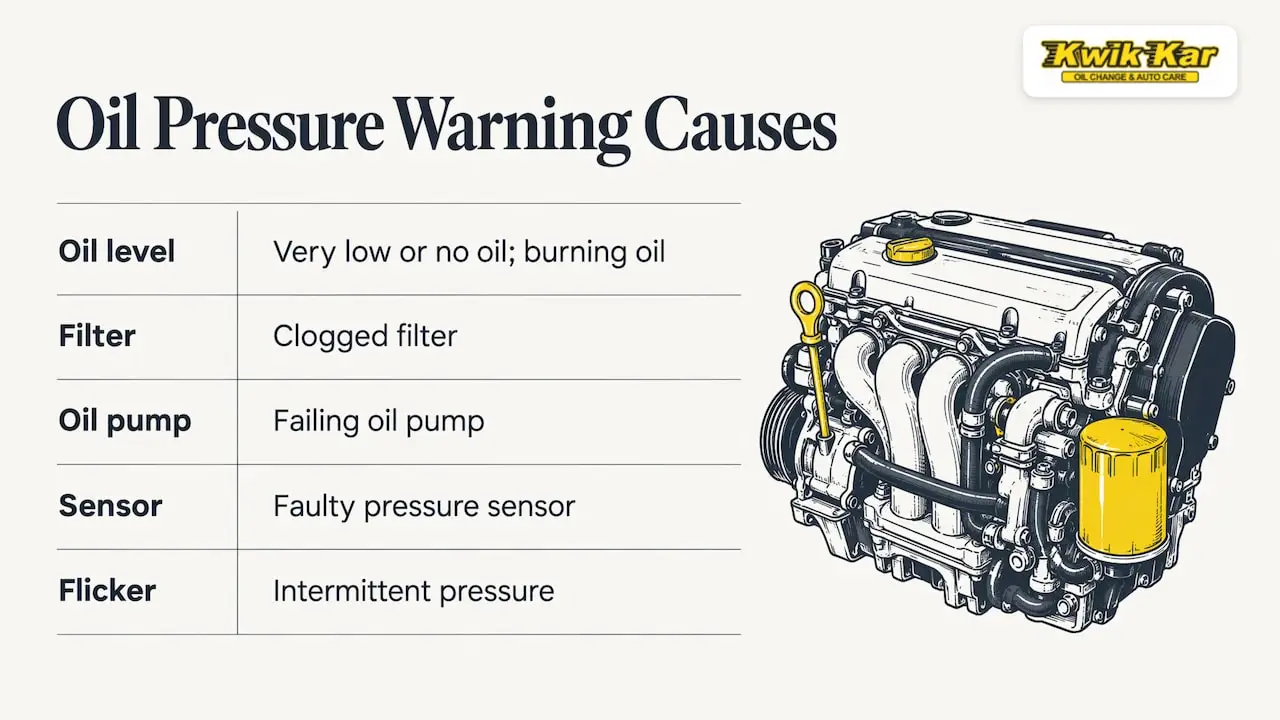
The light can come on for several reasons. AAA’s Via lists very low or no oil, a clogged filter, burning oil, a failing oil pump, or a faulty pressure sensor. It can also flicker if the problem comes and goes.
Don’t confuse it with the oil service reminder. That light is your car’s computer suggesting it is time for an oil change. The red oil can symbol is a pressure warning.
What to do right now when the light comes on
Stay calm and work through these steps in order.
- Pull over safely. Use your signal, find a safe spot off the road, and turn off the engine. AAA notes that warning lights usually come on early enough to avoid major damage if you pull over and shut off the car right away.
- Wait at least 10 minutes. AAA recommends letting the car sit on a fairly level surface so the oil drains back to the pan and the reading is accurate.
- Check the dipstick. Pull it, wipe it clean, reinsert it fully, and pull it again. The oil should sit between the marks.
- If the oil is low, add the grade listed in your owner’s manual. Restart the engine. If the light stays off after a few minutes, you can drive to a mechanic.
- If the oil level is normal, or the light stays on, call a tow truck. Don’t try to limp to the shop.
Even if adding oil clears the light, the oil went somewhere. A leak or oil burning is likely, and it needs to be found.
Can you drive with low oil pressure?
No. AAA states that both low oil level and low oil pressure can cause catastrophic engine damage. A tow costs far less than a replacement engine.
The one exception is the short drive after you have topped off the oil and the light stays off. Go straight to a shop, and don’t treat it as a fix.
Why the light flickers or comes on at idle
Many drivers first notice the light at a stop sign or in traffic, then watch it go out when they press the gas. That pattern deserves attention.
At idle, the oil pump spins slowly and pressure is at its lowest. Anything that weakens pressure shows up there first. Castrol notes that worn bearings can cause low pressure at idle.
A flicker can also point to an intermittent problem, such as a low oil level that sloshes away from the pickup tube in turns or on hills. Sensors can also fail in a way that makes the light blink.
Some vehicles have known issues. For example, a manufacturer service bulletin covers certain GM vehicles where a stuck relief valve in the oil pump assembly can cause low pressure at idle and set code P0521. Another bulletin describes certain Mazda models where contaminated oil can make an oil solenoid valve stick, setting codes P0524:00 or P055F:00. These apply only to the listed models, but they show why a proper diagnosis beats guessing.

Common causes of low oil pressure
Here are the usual suspects, roughly from simplest to most serious.
1. Low oil level. Castrol lists leaks, worn seals, or an overdue oil change as common reasons the level drops. This is the first thing to check.
2. Wrong oil viscosity. AAA notes that the wrong grade can make pressure drop or oil flow too slowly on cold starts. Use the grade your manufacturer recommends.
3. A clogged oil filter. A restricted filter can trigger the light even when the oil level looks fine.
4. A failing oil pump. The pump is what creates pressure. When it weakens, pressure falls everywhere in the engine.
5. Worn engine bearings. Clearances grow with wear, and oil escapes faster than the pump can replace it.
6. A faulty pressure sensor or switch. The engine may be fine while the light says otherwise. Kia, for example, extended warranty coverage for oil pressure switch leaks on 2015 to 2018 Sedona vehicles with the 3.3L GDI engine, which shows these parts can fail on specific models.
Other symptoms that can go with low oil pressure
The light is not always the first clue. Watch for these:
- Engine noise. Ticking, knocking, or rattling can mean parts are rubbing without enough lubrication.
- Running hotter than usual. Oil helps manage heat, so low pressure can make the engine run hotter than normal. If your temperature gauge climbs, see our guide to engine overheating causes.
- A burning oil smell. This often means oil has reached hot engine parts, which usually points to a leak. Our page on a burning oil smell walks through the dipstick check.
- Oil spots under the car. Check your parking spot for drips.
How a shop diagnoses low oil pressure
Diagnosis follows a logical order, and it should be explained to you along the way.
- Check the oil level and condition. Low, dirty, or thin oil tells a lot.
- Look for leaks. A technician checks the pan, valve covers, filter, and seals.
- Confirm the reading is real. If the oil level is full but the light stays on, a mechanical gauge check can show whether the pressure is truly low or the sensor is at fault.
- Scan for codes. Pressure-related codes can point toward the pump, a solenoid, or a sensor.
- Inspect the filter and oil type. The wrong grade or a clogged filter is a simple fix.
What happens next depends on the finding. A bad sensor or a filter is a small repair. A weak pump or worn bearings is a bigger one, and we would talk through the options with you before any work starts.
Our perspective
Most oil pressure problems we hear about start small: an oil change that slipped past its interval, a slow leak, or the wrong grade of oil. By the time the light comes on, the engine has been asking for help for a while.
We would rather see you for a routine oil and filter service than for an engine repair. Checking the level between visits and keeping to the interval in your owner’s manual are the two cheapest ways to protect your engine.
When you do bring a car in with the light on, our ASE-certified mechanics start with the basics, explain what they find in plain language, and recommend only what the car needs. You decide what happens next.
Kwik Kar
Keeping oil pressure healthy
A few habits cut the odds of seeing the light at all.
- Check the dipstick regularly. Once a month and before long trips is a good rhythm.
- Follow your maintenance schedule. Our guide on how often to change your oil helps you pick an interval. Your owner’s manual has the final word.
- Use the right oil grade and a quality filter.
- Fix small leaks early. A few drops a week add up.
- Don’t skip maintenance. AAA’s magazine notes that vehicles that skip important services may wear out at 50,000 to 70,000 miles.
Fleet owners face the same issue at larger scale. A written plan for fleet maintenance and service compliance keeps oil changes on schedule across many vehicles. We also work with fleets at our shop.
For more habits, see 12 habits that extend the life of your car.
Get the light checked in Midlothian
If your oil pressure light has come on, or it flickers at idle and you aren’t sure why, we can help find the cause. Our oil change and preventive maintenance service covers the basics, and our mechanics can also look into leaks, filters, and warning lights. You can see everything we do on our services page.

We don’t list prices online, so call us at (972) 775-5945 and we will tell you how to get started. If you have specials running, you can find them on our specials page.
FAQ
Can I drive with the oil pressure light on?
No. Pull over, shut off the engine, and check the oil after waiting at least 10 minutes. If the level is low and the light stays off after you add oil, you can drive to a mechanic. If not, call a tow truck.
Why does my oil light flicker at idle?
Pressure is lowest at idle, so weak spots show up there first. Causes include a low oil level, worn bearings, the wrong viscosity, or a faulty sensor. A shop can confirm which with a pressure check.
Can the light come on when the oil level is fine?
Yes. A failing oil pump, a clogged filter, or a faulty pressure sensor can all trigger the light with a full dipstick. Have it diagnosed before you drive any distance.
Will adding oil fix low oil pressure?
It can, if low oil was the cause. But oil does not disappear on its own, so a leak or burning oil is likely. Have the car checked even if the light goes out.
What is the difference between the oil light and the oil service light?
The oil pressure light needs immediate action. The oil service light is your car’s computer suggesting an oil change, as AAA explains.
Sources
- What Does the Oil Pressure Light Mean? | Via
- What to Do When Your Car Breaks Down | AAA Network
- What Does Your Check Engine Light Mean? | Via
- What does low engine oil pressure mean? | Castrol USA
- Low Oil Pressure: Causes and Symptoms | FRAM
- NHTSA technical service bulletin, GM low oil pressure at idle
- NHTSA bulletin note, Mazda oil solenoid valve
- NHTSA Kia warranty extension letter, oil pressure switch
- Fleet Maintenance For Vocational Fleets