
Most vehicles need a transmission fluid change based on your owner’s manual schedule, not a fixed mileage number, since intervals range from roughly 25,000 to 150,000 miles depending on the vehicle. Three things should trigger service: your manufacturer’s recommended interval, warning signs like slipping or shuddering, and severe driving conditions such as towing or heavy stop-and-go traffic. Below, we walk through intervals, warning signs, service types, DIY steps, and typical costs so you can decide what your vehicle needs.
TL;DR:
- Delayed engagement, burning odors, fluid leaks, or warning lights call for diagnosis first, since a fluid change may not resolve mechanical or sensor problems.
- A pan and filter service lets technicians inspect metal debris, while a machine exchange replaces more fluid; some automakers advise against flushes on older transmissions.
- RepairPal estimates service at $282 to $343, while Kelley Blue Book lists $150 to $175 for a basic change; quotes vary by service and market.
- DIY service requires the exact fluid listed in your manual, jack stands, and serviceable components; sealed transmissions without accessible fill points need shop service.
Table of Contents
- When to change transmission fluid: manufacturer schedules and how to interpret them
- Warning signs and quick checks that indicate service is needed
- What each service type does: drain & refill, pan-and-filter, and machine exchange/flush
- DIY overview: step-by-step summary, tools, safety, and limits
- Professional service expectations and our approach at Kwik Kar Midlothian
- A mechanic’s take on transmission fluid service
- Get your transmission fluid checked at Kwik Kar Midlothian
- FAQ
- Sources
When to change transmission fluid: manufacturer schedules and how to interpret them
There is no single mileage rule for transmission fluid, and that is by design. Automatic transmissions, CVTs, and manual gearboxes use different fluids and wear at different rates, so manufacturers build their own schedules around each design.
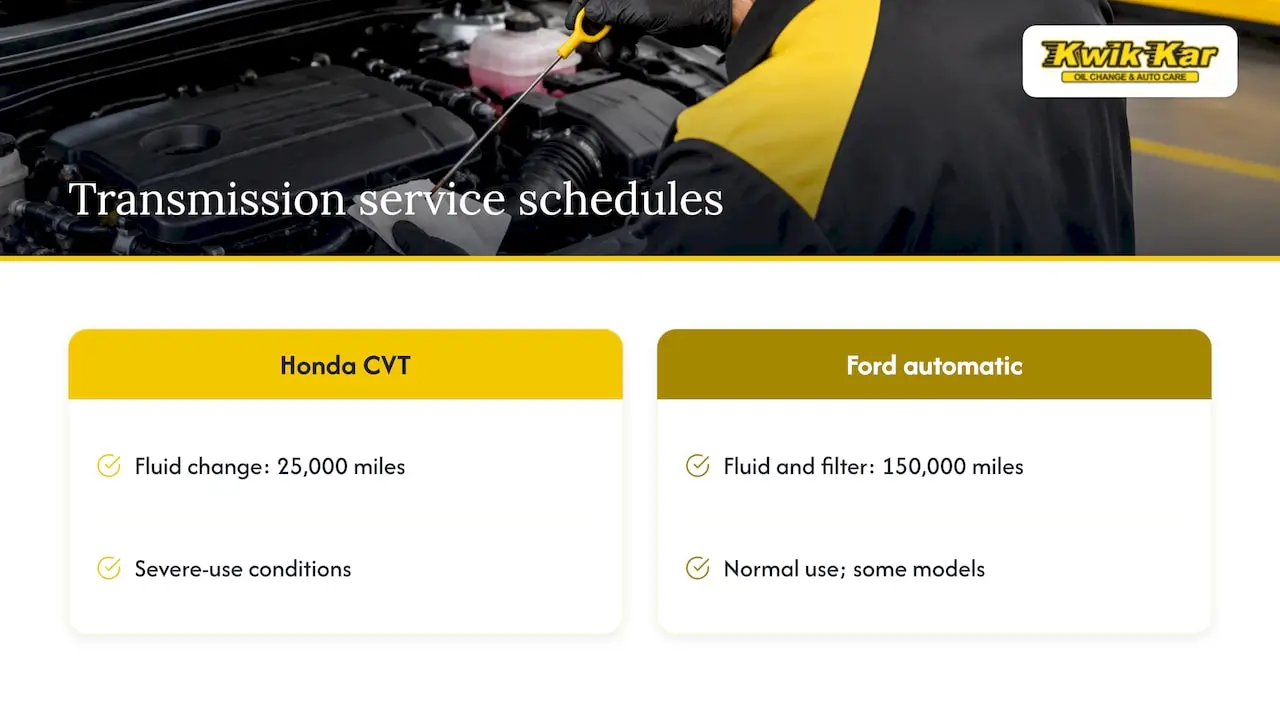
Ford, for example, schedules automatic transmission fluid and filter replacement at 150,000 miles under normal driving for some models, while Honda’s Maintenance Minder system can call for CVT fluid changes as early as 25,000 miles under severe-use conditions. That gap, from 25,000 to 150,000 miles, shows why checking a general guide instead of your own vehicle’s schedule can lead you badly astray.
Severe-use conditions shorten most intervals. If you regularly tow, drive in mountainous terrain, sit in stop-and-go traffic, or live somewhere with extreme heat, your transmission works harder and the fluid breaks down faster. Many manufacturers list a separate severe-use schedule for exactly this reason.
The most reliable source for your vehicle is your owner’s manual or your dashboard’s built-in maintenance system, which tracks driving conditions and adjusts recommendations accordingly. If you are unsure which schedule applies, Toyota’s own maintenance guidance echoes this advice directly: check your manual first, because the right interval and procedure depend entirely on your specific vehicle.
Warning signs and quick checks that indicate service is needed
Some symptoms show up well before your scheduled interval, and they deserve attention regardless of mileage. Watch for:
- Delayed engagement: a pause before the transmission shifts into gear after you put the car in drive or reverse.
- Slipping: the engine revs without a matching increase in speed, or gears change unexpectedly.
- Shuddering or rough shifts: vibration or jerking as the transmission moves between gears.
- Burning smell: old, degraded fluid often smells scorched rather than sweet like fresh fluid.
- Leaks or spots under the vehicle: reddish fluid puddles point to a seal or gasket issue.
- Dashboard warning lights: a transmission or check engine light can indicate fluid or sensor problems.
A dipstick check, where your vehicle has one, can tell you a lot: fluid that is dark brown or smells burnt is a sign of degradation, and low levels can point to a leak. Many newer vehicles use sealed transmissions with no dipstick at all, so checking level yourself is not possible, and that is a normal design choice rather than a problem on its own. If you notice slipping, shuddering, or warning lights, a diagnostic check is a smarter first step than a simple fluid change, since those symptoms can point to issues a fluid change alone will not fix.
What each service type does: drain & refill, pan-and-filter, and machine exchange/flush
The terms “change,” “flush,” and “service” get used loosely, but they describe different jobs. Kelley Blue Book’s breakdown draws a clear line between them:
- Drain and refill: removes only the fluid that drains naturally from the pan, leaving fluid in the torque converter and cooler lines behind.
- Pan-and-filter service: drops the pan so a technician can inspect it for metal particles, then replaces the filter and gasket along with the fluid.
- Machine exchange (flush): uses a machine to cycle new fluid through the entire system, replacing substantially more old fluid than a simple drain.
A pan-and-filter service offers a diagnostic advantage a flush cannot match: metal shavings in the pan can reveal internal wear before it becomes a bigger problem, which is why many technicians favor pan inspection for routine maintenance. Whether a flush is appropriate at all depends on your manufacturer’s own guidance. Some automakers recommend against flushes for certain high-mileage or older transmissions, so checking your manual still matters here.
Pro Tip: Always confirm the fluid specification listed in your owner’s manual before any service. Transmission fluids are not interchangeable, and the wrong type can cause shifting problems almost immediately.
DIY overview: step-by-step summary, tools, safety, and limits
Changing your own transmission fluid is realistic for many vehicle owners, provided you have the right tools and confirm your fluid spec first. Castrol’s step-by-step guide lays out a workflow that generally follows this order:
- Warm up the transmission by driving briefly so fluid drains more completely.
- Lift and secure the vehicle safely on jack stands, never a jack alone.
- Locate and drain the pan, letting fluid fully empty into a catch container.
- Inspect the pan and magnet for metal debris that could signal wear.
- Replace the filter and gasket if your vehicle uses a serviceable pan.
- Refill with the manufacturer-specified fluid to the correct level.
- Torque the pan bolts to spec to prevent leaks.
- Road-test the vehicle and recheck the fluid level afterward.
Tools and supplies checklist: jack stands, a drain pan, a torque wrench, a new filter and gasket (if applicable), and the exact fluid your manufacturer specifies, confirmed before you start.
Safety matters as much as the steps themselves. Use jack stands rather than relying on a jack, let the transmission cool before touching the pan if you skip the warm-up drive, and dispose of old fluid at a proper recycling facility rather than pouring it out. Some vehicles use sealed transmissions with no dipstick and no owner-serviceable fill point, which means DIY service is not possible or recommended for those systems. If your vehicle is still under warranty, or you are not confident identifying the correct fluid, a shop visit protects both your transmission and your coverage.
According to RepairPal, a transmission fluid plus filter service can be significantly more expensive than a basic fluid change due to additional labor and parts involved in a full pan-and-filter job.
Professional service expectations and our approach at Kwik Kar Midlothian
A shop visit for transmission fluid typically runs anywhere from thirty minutes for a basic drain and refill to over an hour for a pan-and-filter service, depending on your vehicle and how accessible the pan is. According to RepairPal’s national estimate, a standard transmission fluid change costs about $282 to $343, while Kelley Blue Book lists a basic fluid change closer to $150 to $175. Those figures differ because they measure different services and markets, which is exactly why a vehicle-specific quote matters more than a national average.
When you bring in a vehicle showing symptoms like slipping or delayed engagement, we start with a diagnostic check rather than jumping straight to a fluid service. That often includes:
- Checking fluid color, smell, and level where a dipstick is available.
- Inspecting for leaks at seals, pan gaskets, and cooler lines.
- Dropping the pan to look for metal debris when a pan-and-filter service is warranted.
Our mechanics walk you through what they find and quote the work clearly before starting, so you know what you are paying for and why. You can review the full range of maintenance and fluid services we offer, including manufacturer-scheduled maintenance tailored to your vehicle’s specific requirements.
A mechanic’s take on transmission fluid service
We see more transmission problems caused by skipped intervals and mismatched fluid than by any single driving habit. Our priority is always matching your vehicle’s exact specification and pulling the pan when debris or symptoms suggest it, rather than defaulting to a one-size-fits-all flush. If you’re unsure what your Midlothian-area vehicle needs, bring it in and we’ll walk you through a specific recommendation.
— Kwik Kar
Get your transmission fluid checked at Kwik Kar Midlothian
A quick inspection takes the guesswork out of deciding whether your vehicle needs a drain and refill, a pan-and-filter service, or nothing at all right now. We’ll check your fluid condition, confirm the correct specification for your vehicle, and give you a clear quote before any work begins.

Visit our services page to see our full range of maintenance offerings, or check our current specials before you book. Call or stop by Kwik Kar Midlothian today to get your transmission fluid checked by a mechanic.
FAQ
How often should transmission fluid be changed?
There is no universal mileage number. Intervals vary by manufacturer and transmission type, ranging from about 25,000 miles for some CVTs under severe use to 150,000 miles for certain automatic transmissions under normal driving, so checking your owner’s manual is the most reliable step.
Do I actually need to change transmission fluid?
Yes, transmission fluid breaks down over time from heat, age, and contamination, which can eventually cause shifting problems and premature wear. Following your manufacturer’s schedule, or servicing sooner if you notice warning signs, helps protect your transmission from costlier repairs down the road.
What are signs you need a transmission flush?
Common signs include slipping gears, delayed engagement, shuddering during shifts, a burning smell, or visible fluid leaks. If you notice any of these, a diagnostic check is a better first step than assuming a flush alone will fix the issue, since some symptoms point to other problems.
Can I replace transmission fluid myself?
Many vehicles allow a DIY fluid change if you have jack stands, a torque wrench, and the exact fluid specification your manufacturer requires, as outlined in Castrol’s step-by-step guide. Vehicles with sealed transmissions and no dipstick are not designed for DIY service, so a shop visit is the safer route in those cases.
Sources
- Transmission Fluid Change Cost Estimate
- Transmission Fluid Change Prices & Cost Estimates
- How to Change Transmission Fluid Yourself | Castrol® USA
- Toyota