




A short hiss lasting a brief period right after you shut off the engine is usually just pressure equalizing between the system’s high and low sides, and it does not need repair. A hiss that continues while the AC runs, grows louder, or shows up alongside weaker cooling is a different story. That pattern points to a refrigerant leak or a failing expansion valve, and it deserves a look. Note exactly where the sound comes from, check whether the vents are still blowing cold, and get it checked before you put more miles on it.
TL;DR:
- An intermittent short hiss after shutting off the engine is normal pressure release, but a continuous or loud hiss during operation indicates a potential refrigerant leak or failing expansion valve.
- Leaks often produce oil residue around fittings, and a loss of cooling performance when the hiss occurs suggests refrigerant escaping, especially if accompanied by oily spots or a chemical smell.
- Diagnosing the issue involves checking whether the hiss is from vents or under the hood, noting if it changes with fan speed, and observing cooling strength to distinguish refrigerant issues from airflow problems.
- Constant hissing with decreased cooling and a chemical smell demands prompt inspection to avoid compressor damage and expensive repairs.
- Skilled technicians use pressure gauges, leak detection dyes, and smoke tests to identify leaks and confirm repairs, which may include replacing seals, lines, or components like the condenser or evaporator.
Table of Contents
- What Causes an AC Hissing Sound in a Car?
- How Do You Diagnose an AC Hissing Sound Yourself?
- Is It Safe to Drive With a Hissing AC?
- What Happens During a Professional AC Diagnosis and Repair?
- Can You Prevent AC Hissing and Leaks?
- Why a Certified Local Shop Matters for AC Diagnosis
- When to Watch and Wait vs. When to Act
- Get Your AC Diagnosed the Right Way
- Sources
- FAQ
What Causes an AC Hissing Sound in a Car?
Not every hiss means trouble. Pressure equalization happens because your AC operates as a closed loop with a high-pressure side and a low-pressure side. When you shut the engine off, those pressures balance out through the expansion device, and that brief release is what you’re hearing. It’s quiet, quick, and doesn’t repeat during a drive.
Abnormal hissing behaves differently. It shows up while the compressor is actually running, it might get louder as the engine revs, and it often comes with other clues that something is escaping or leaking.
Refrigerant system causes:
- Leaking O-rings or fittings on the condenser, lines, or evaporator let pressurized refrigerant escape with a steady hiss, often paired with reduced cooling and sometimes an oily residue around the fitting.
- A failing expansion valve or orifice tube can hiss constantly because refrigerant is metering incorrectly through a worn or clogged component.
- Compressor seal wear produces a hiss near the front of the engine, usually with visible oil around the compressor housing.
- Evaporator leaks are trickier since the evaporator sits behind the dash. These often produce hissing from the vents along with a faint sweet, chemical smell.
Airflow and HVAC causes:
- A clogged cabin air filter can whistle or hiss as air squeezes past trapped debris, and the sound usually changes when you adjust fan speed.
- A blocked condensate drain rarely hisses on its own, but trapped moisture can affect nearby ductwork and mimic a hiss under certain fan settings.
The fastest way to tell these apart: refrigerant leaks tend to come with a cooling drop and sometimes oily spots, while airflow noises change when you touch the fan or vent controls.
How Do You Diagnose an AC Hissing Sound Yourself?
Before you call a shop, spend five minutes gathering information. It saves diagnostic time and, often, money.
- Locate the sound. Is it coming from the vents, from under the hood, or from somewhere behind the dashboard? Pop the hood briefly (engine off, hood cool) and listen near the compressor and lines.
- Note the timing. Does it hiss at startup, continuously while driving, or only right after you turn the AC off? A hiss tied to startup or shutdown behaves differently than one that runs the whole trip.
- Check if it changes with fan speed or RPM. Airflow noise usually shifts with fan settings. A refrigerant hiss tends to stay steady regardless of fan speed.
- Check cooling performance. Cold air still coming through strong? That’s a good sign. Weaker or warm air alongside the hiss usually means refrigerant loss.
- Look and smell. Check visible hoses and fittings for oily residue, and note any sweet or chemical smell near the vents.
- Try quick owner checks. Swap between fan speeds, cycle through vent modes, and glance at your cabin air filter if it’s easy to reach.
Pro Tip: Write down exactly when the hiss happens (idle, acceleration, right after shutdown) and whether cooling has changed. That single note can cut a technician’s diagnostic time in half.
Bring those notes with you. A shop that knows the sound’s timing and whether cooling is affected can often narrow the cause before ever hooking up a gauge.
Is It Safe to Drive With a Hissing AC?
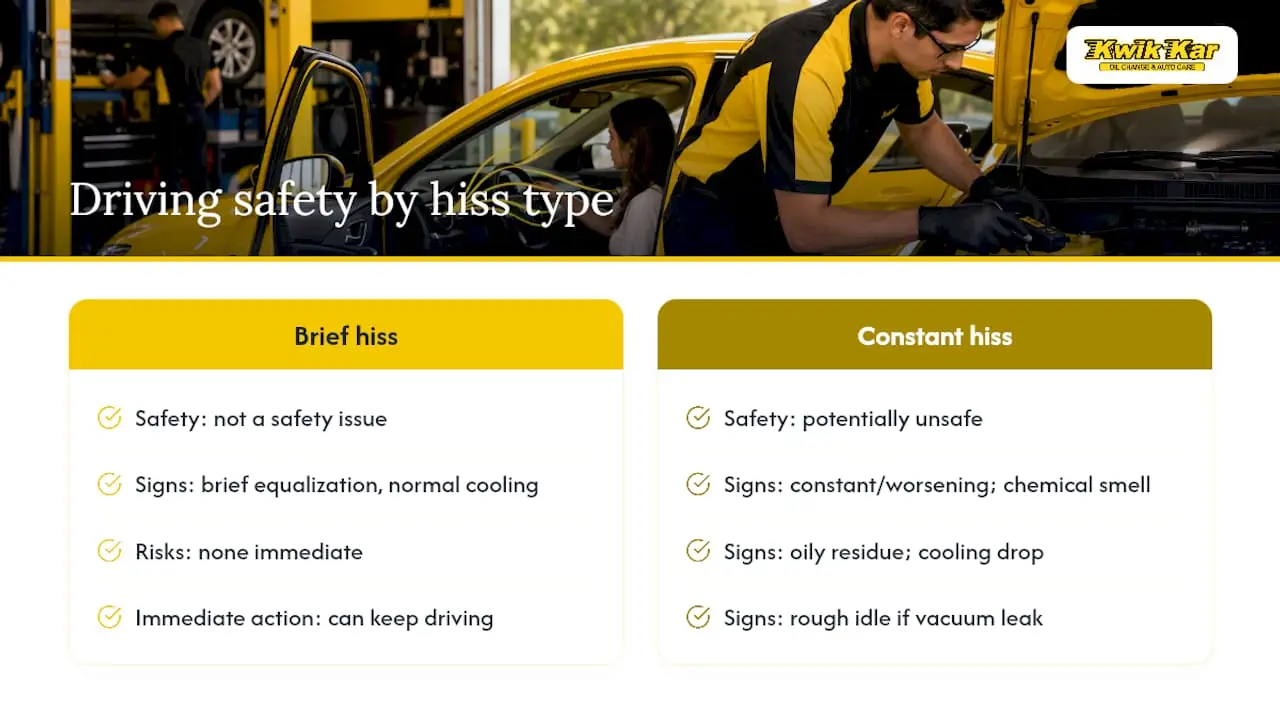
A brief equalization hiss with normal cooling is not a safety issue. You can drive without concern.
A constant or worsening hiss is a different matter, especially if it comes with a chemical smell, oily residue, or a noticeable drop in cooling. Running low on refrigerant for too long risks losing the lubrication your compressor needs, and a continuous, loud hiss can lead to compressor failure if you keep driving on it. If the leak is vacuum related, some drivers also notice rough idle.
You don’t need to pull over immediately, but cut back on AC use and get the car inspected soon rather than waiting for a long trip.
What Happens During a Professional AC Diagnosis and Repair?
A proper shop visit follows a consistent sequence, and knowing it ahead of time helps you understand what you’re paying for and why.
Technicians typically start with pressure gauge readings on both the high and low sides to see if the system is running under spec. From there, they may run a vacuum test to check for leaks in the system’s ability to hold a seal, followed by UV dye or electronic leak detection to pinpoint exactly where refrigerant is escaping. If the hiss seems airflow related rather than refrigerant related, a smoke test on the HVAC housing can reveal blend door or duct leaks.
Once the leak is found, common repairs include:
- Replacing worn O-rings or seals at fittings
- Repairing or replacing a damaged hose or line
- Servicing or replacing the condenser, evaporator, or expansion device
- Compressor work, but only when the compressor itself is confirmed to be the source rather than replaced as a guess
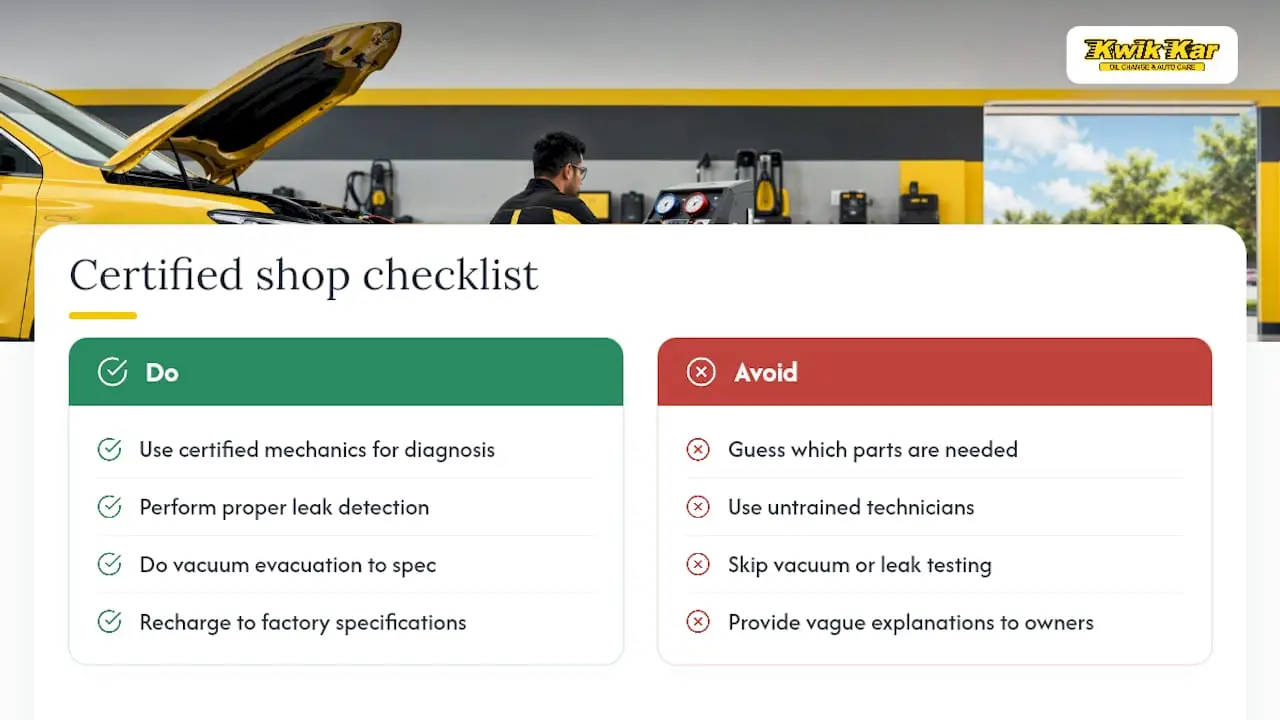
After the repair, a shop follows the same standard order every time: locate the leak, fix it, evacuate the system to remove trapped air and moisture, recharge to factory spec, then confirm performance with the gauges. Skipping the evacuation step lets residual moisture degrade cooling almost immediately, which is why it’s never optional.
Before you approve the work, ask what specific leak was found, what pressure the system was recharged to, and whether you’ll get documentation of the repair for your records.
Can You Prevent AC Hissing and Leaks?
A little routine attention goes a long way toward keeping your AC quiet and leak-free.
- Replace your cabin air filter on the schedule in your owner’s manual, and keep the condensate drain clear of debris.
- Run the AC for a few minutes even in cooler months. Regular use keeps internal seals lubricated and helps prevent them from drying out and leaking.
- Skip the DIY recharge cans if you’re not sure what’s wrong. Topping off refrigerant without fixing the actual leak can overcharge the system and create new pressure noises down the line.
- Keep your service records, and ask for a leak check whenever you notice cooling performance start to slip.
Pro Tip: If your AC blew ice cold last summer and feels a little weaker this year, that’s often the first sign of a slow leak. Catching it early is cheaper than waiting for a full hiss to develop.
Why a Certified Local Shop Matters for AC Diagnosis
Proper leak detection, vacuum evacuation, and recharging to factory spec take training and the right equipment. A certified local shop relies on certified mechanics who follow that exact process rather than guessing at parts. You get a clear explanation of what was found and what was repaired, backed by essential vehicle services built around transparent communication.
When to Watch and Wait vs. When to Act
Here’s the practical rule we’d give any driver: a brief hiss after shutdown with strong cooling is worth ignoring. A hiss that runs during operation, grows louder, or comes with weaker air is worth a same-week appointment, not a “let’s see how it goes” attitude. Bring your checklist notes with you. The more specific you can be about timing and cooling performance, the faster a technician gets you an answer instead of a guess.
— Kwik Kar
Get Your AC Diagnosed the Right Way
If that hiss has you second guessing your next road trip, A local automotive shop gives you a straightforward path to an answer instead of weeks of wondering. We diagnose AC noises with certified mechanics using proper pressure testing and leak detection, and we walk you through exactly what we find before any repair starts, so you’re never stuck approving work you don’t understand.

Booking is simple: call or stop by, describe when the hiss happens and whether your cooling has changed, and the team takes it from there. You’ll get a clear explanation of the cause and a straightforward estimate before any work begins. Head to our A/C diagnostic and repair services page to see what’s included, or visit Kwikkarmidlothian to schedule your inspection before that hiss turns into a bigger repair.
Sources
For more detail on how technicians trace hissing sounds to their source, these references cover diagnostic steps and common causes in depth: Why Is My Car Hissing When the AC Is On?, Hissing Noise from Car AC: Causes and Fixes, Why Car AC Makes Hissing Noise When Turned On, and Car AC Making Hissing Noise: Causes and Fixes.
- Engineerskill
- Hissing Noise from Car AC: Causes and Fixes — AutoZone
- Car AC Making Hissing Noise – Causes and Fixes — RxMechanic
FAQ
What does a blown AC compressor sound like?
A failing compressor often produces a grinding, growling, or loud clanking noise rather than a hiss, though a hiss combined with reduced cooling can point toward a compressor seal leak that, left unaddressed, risks compressor damage.
What does a freon leak sound like?
A refrigerant leak typically sounds like a steady, continuous hiss that doesn’t change with fan speed, often paired with weaker cooling and sometimes an oily residue near a fitting.
Should I turn off my AC if it’s making noise?
If the hiss is brief and happens only right after shutdown with normal cooling, you don’t need to turn it off. If it’s continuous, growing louder, or cooling has dropped, cut back on AC use and get it inspected soon.
Is it normal to hear a hissing sound?
A short hiss lasting roughly 10 to 30 seconds after you turn off the AC is normal pressure equalization. A hiss during operation is not typical and should be checked.
How much does AC hissing repair cost?
Repair costs vary depending on whether the fix is a simple cabin filter swap or a refrigerant leak requiring parts replacement and a full recharge; Local shops typically provide a clear estimate after diagnosis before any work begins.