




When your car AC blows cold then warm, the most likely culprits are low refrigerant from a slow leak, a condenser fan that can’t keep up at idle, or a compressor cycling on and off because of pressure problems. Don’t reach for a can of refrigerant from the auto parts store as a fix. The right next step is a pressure-based diagnostic that checks both sides of the system and looks for the leak causing the problem in the first place.
TL;DR:
- Low refrigerant from a slow leak is the most common cause of AC cycling between cold and warm, requiring pressure diagnosis to confirm.
- Compressor or clutch issues and condenser fan failures at idle cause similar cycling patterns, but their diagnosis involves inspecting operational engagement and airflow.
- Inconsistent refrigerant metering due to restriction or debris in the expansion valve can produce unpredictable cooling, necessitating a full system check.
- Replacing components without proper diagnosis risks higher costs, especially if contaminants like metal debris from a failing compressor are involved.
- Immediate attention is required if the AC produces loud noises, rapid cycling, oil leaks, or visible ice buildup to prevent further system damage.
Table of Contents
- Why Does AC Change Temperature? Common Causes Explained
- Diagnostic Checklist: How to Find the Real Cause
- AC Repair Options and What They Typically Cost
- Warning Signs That Mean Stop Using the AC Now
- Preventive Maintenance to Avoid Repeat AC Problems
- How Kwik Kar Midlothian Diagnoses Intermittent AC Cooling
- Our Take: Skip the Guesswork, Follow the Pressure
- Get Your AC Checked at Kwik Kar of Midlothian
- Sources
Why Does AC Change Temperature? Common Causes Explained
An AC system that runs cold for a while, then slides into warm air, then maybe cools again, isn’t broken in one simple way. It’s cycling. Something inside the system is hitting a limit and shutting the compressor off, then letting it restart. Figuring out what’s forcing that on-off pattern is the whole game.
Low refrigerant from a slow leak is the single most common reason for this complaint. Your AC system relies on a specific pressure range to work. When refrigerant leaks out slowly over months, the low-pressure switch eventually senses the drop and shuts the compressor off to protect it. Pressure creeps back up once the compressor stops cycling refrigerant, the switch resets, and cold air returns, briefly, until pressure drops again. This is a repeating loop, and it’s why low refrigerant charge is the classic explanation for AC that goes cold then warm.
Compressor clutch or compressor cycling problems show up differently. A clutch that’s slipping, overheating, or starting to seize will engage inconsistently, so cooling comes and goes even when refrigerant levels are fine. Listen for clicking or grinding as the clutch tries to catch.
Condenser fan or airflow failure explains a very specific pattern: your AC cools fine on the highway but stops cooling, or gets noticeably weaker, sitting at a red light or drive through window. Many vehicles run dual cooling fans, with one dedicated to full-speed operation whenever the AC is on. If that fan fails, the condenser can’t shed heat properly at idle, high-side pressure spikes, and the system shuts itself down as a safety measure.
Expansion valve or orifice tube restriction causes inconsistent refrigerant metering into the evaporator. Debris or a sticking valve means the system sometimes gets the right amount of refrigerant and sometimes doesn’t, producing unpredictable cooling that has nothing to do with how much refrigerant is actually in the system.
Evaporator freeze-up is its own beast. Moisture on the evaporator coil can freeze into a thin layer of ice, blocking airflow through the fins. Air blows cold, then the ice buildup chokes off flow and you get warm air, then the ice melts and cooling returns. This freeze-thaw cycle produces almost the exact symptom pattern drivers describe as “cold then warm cold again.”
Secondary electrical issues round out the list: a failing pressure switch, a sticking relay, or a blend-door actuator that’s losing its grip can all mimic refrigerant problems without a single drop of refrigerant missing.
Diagnostic Checklist: How to Find the Real Cause
You can rule out a few things yourself before anyone opens a manifold gauge set. Work through these in order.
- Check the cabin air filter. A clogged filter restricts airflow and can make cooling seem inconsistent even when the AC system itself is healthy.
- Look at the condenser through the front grille for leaves, bugs, or bent fins blocking airflow.
- Watch the compressor clutch with the hood open and AC on. If it never visibly engages, that points to low charge, a bad pressure switch, or an electrical fault rather than a mechanical failure. Owners can often spot a clutch engagement problem just by watching the front of the compressor for a few minutes.
- Note the pattern. Does cooling fail only at idle and come back at speed? That’s a strong airflow signal, not a refrigerant one.
Beyond that point, the job needs a shop. A technician will attach manifold gauges to both the high and low sides, then watch pressure behavior through a full cooling cycle rather than a single snapshot. They’ll confirm compressor engagement under load, test condenser fan operation specifically at idle versus while driving, and run UV dye or electronic leak detection to find where refrigerant is actually escaping.
Interpreting the numbers takes experience. Low readings on both sides usually mean undercharge or a leak. Normal low-side pressure with high high-side pressure at idle that corrects at speed points straight at the condenser fan. Fluctuating readings with no clear pattern often mean a restricted expansion valve or orifice tube.
Pro Tip: Not every compressor works the same way. Modern vehicles increasingly use variable-displacement compressors instead of the older on/off clutch style, and testing the wrong type the wrong way leads to parts getting replaced that were never the problem. A tech should confirm which type your vehicle has before condemning any component.
Stop testing and call a shop immediately if you hear loud grinding or squealing from the compressor area, notice rapid on/off cycling within seconds, or spot oily residue anywhere in the engine bay near AC lines.
AC Repair Options and What They Typically Cost
Repair costs vary a lot depending on which of these causes is actually at play, and getting the diagnosis right the first time matters more than people expect.
- Leak detection and repair plus recharge: This covers locating the leak with dye or electronic detection, repairing or replacing the leaking component (often a hose, fitting, or seal), then recharging the system to spec. Costs for this kind of work commonly land in the low hundreds of dollars, with the exact number depending on where the leak is and how accessible it is.
- Condenser fan or blower motor repair: Diagnosing a dead fan is usually quick, but the part and labor to replace it add up, especially on vehicles where the fan assembly sits behind the bumper cover.
- Expansion valve or orifice tube replacement: This is a moderate repair that restores consistent refrigerant metering, but it typically requires evacuating and recharging the system afterward.
- Compressor replacement: This sits at the top of the cost bracket. A failed compressor often sheds metal debris into the system, and skipping a full flush plus receiver/drier replacement risks killing the brand new compressor within months.
A shop that diagnoses correctly the first time, rather than guessing and replacing parts one at a time, generally saves you money over the life of the repair. Repeated visits for the same symptom almost always cost more than one thorough diagnostic up front.
Warning Signs That Mean Stop Using the AC Now
Some symptoms mean the AC needs attention this week. Others mean pull over and get it looked at before you drive much further.
- Grinding, rattling, or metallic noises from the compressor area. Keep running it and you risk turning a repair into a replacement.
- Rapid on/off cycling, engaging and disengaging every few seconds. That stresses the compressor clutch and the electrical system that controls it.
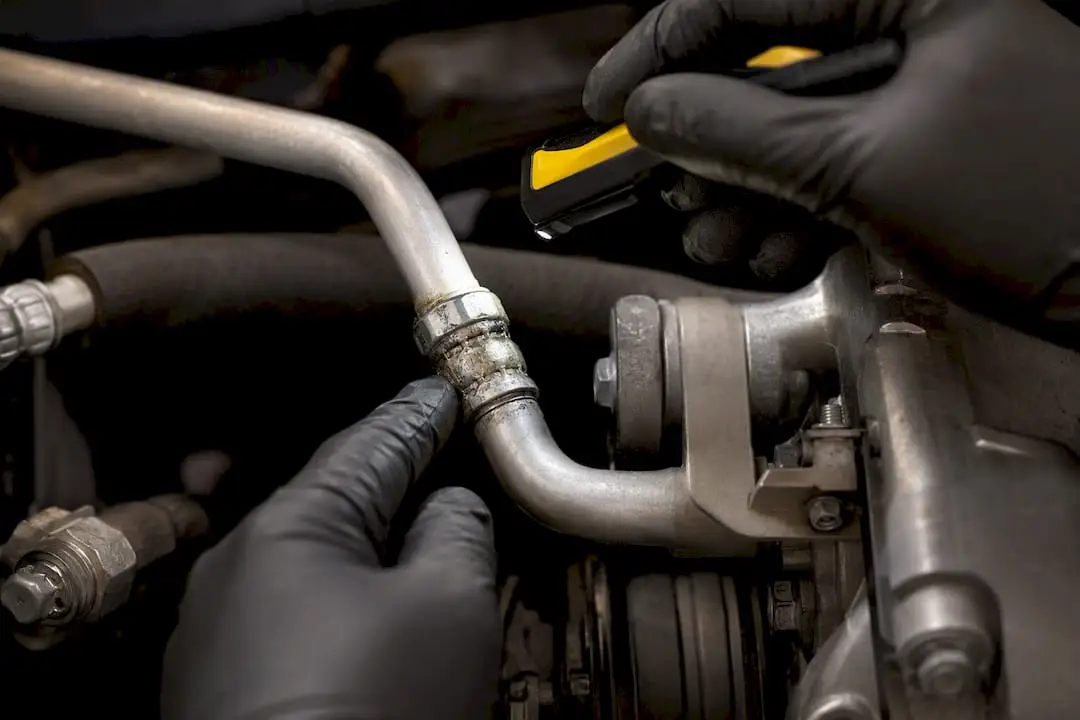
- Oily residue or wet spots on AC lines or fittings under the hood. Refrigerant oil leaks mean refrigerant is leaking too, and it’s a sign the system needs professional attention soon.
- Ice buildup you can see or feel on the lines or through the vents. Turn the AC off and let it thaw rather than forcing it to keep running against a blockage.
Preventive Maintenance to Avoid Repeat AC Problems
A little routine care goes a long way toward keeping your AC from cycling on you mid-summer.
- Replace the cabin air filter on schedule. A dirty filter restricts airflow and stresses the whole system.
- Keep the condenser clean by rinsing debris out of the front grille area when you notice buildup.
- Have hoses and fittings visually inspected during routine service, since small leaks are far cheaper to catch early.
- Get an annual professional AC check that includes a pressure test and leak inspection, not just a “does cold air come out” test.
Pro Tip: Skip the over-the-counter recharge kits. The EPA cautions that DIY top-offs are a temporary patch at best, and refrigerant lost to the atmosphere from an unrepaired leak carries real environmental consequences, not just a repeat repair bill next season.
How Kwik Kar Midlothian Diagnoses Intermittent AC Cooling
Automotive service shops often approach intermittent AC complaints this way: pressure checks on both sides of the system, a visual and operational check of the compressor clutch, and leak detection before anything gets recharged. That sequence exists because guessing wastes your money, and a proper diagnosis tells the technician exactly what’s failing instead of what might be failing.
Good service providers typically explain what was found and why a given repair is recommended before any work starts. If your AC has been running cold then warm, scheduling a diagnostic gets you an actual answer instead of another guess.
Our Take: Skip the Guesswork, Follow the Pressure
Most advice about car AC problems treats every symptom the same way: “check your refrigerant.” That’s backwards. Refrigerant doesn’t disappear on its own, so low refrigerant always means a leak somewhere, and topping it off without finding that leak just delays the same phone call by a few weeks.
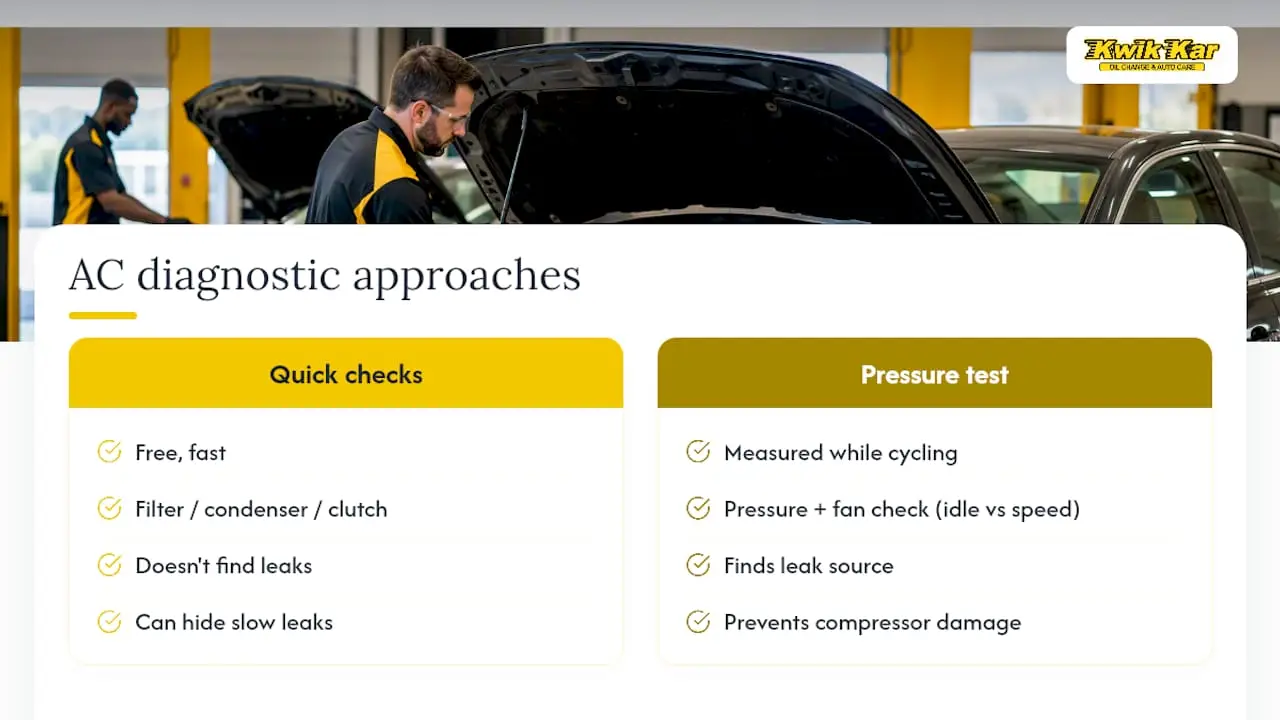
The owner checks in this article, the filter, the condenser, watching the clutch engage, matter because they’re free and fast. But they’re a filter, not a diagnosis. The real answer lives in pressure readings taken while the system is actually cycling, plus a fan check at idle versus at speed. That single comparison, cooling at speed but not at idle, is one of the most useful diagnostic clues available, and it’s something a lot of drivers never think to notice on their own.
If there’s one thing worth prioritizing, it’s this: don’t let a slow leak turn into compressor damage because a can of recharge made things “good enough” for a month. Get the pressure test done before the cheap fix becomes the expensive one.
— Kwik Kar
Get Your AC Checked at Kwik Kar of Midlothian
A reliable automotive repair shop can provide a clear diagnosis for AC that blows cold then warm, rather than guesswork or temporary fixes. Experienced mechanics conduct pressure checks, compressor inspections, and leak detection, and explain findings before recommending any repair.

If your AC has been cycling between cold and warm, that pattern usually points to something specific, and driving around Midlothian, Texas in July without knowing which one it is only makes the eventual fix more expensive. Check our current service specials and schedule a diagnostic appointment so a technician can put gauges on your system and tell you exactly what’s going on, not just top it off and send you on your way.