




Low refrigerant means your car’s air conditioning system is undercharged, and that almost always points to a leak somewhere in the system. It is not something that happens from normal wear. Topping off the system without finding the leak just hides the problem and can lead to compressor damage down the road. The right move is a diagnosis from a certified technician who can pinpoint the leak before adding anything back into the system.
TL;DR:
- A refrigerant leak is typically caused by aging seals, punctured components, or corrosion, rather than normal use, and requires a professional diagnosis.
- Signs of low refrigerant include warm air, compressor short cycling, oily residue, frost buildup, and symptoms that recur after recharging, indicating an active leak.
- Leak detection involves layered testing such as visual inspection, electronic sniffers, UV dye, and pressure decay, complying with EPA and SAE protocols.
- Repair costs vary from simple O-ring or valve replacements to full compressor or condenser replacements, with proper evacuation and precise recharge vital for system longevity.
- Recharging the system repeatedly without fixing the leak risks compressor damage, environmental harm, and can lead to more expensive future repairs.
Table of Contents
- What Are the Warning Signs of Low Refrigerant?
- Why Does Refrigerant Get Low in the First Place?
- How Do Shops Diagnose a Refrigerant Leak?
- What Repair Options Fix a Low Refrigerant System?
- Why Is Delaying Repair or DIY Topping Off Risky?
- How Can You Prevent Refrigerant Leaks?
- Our Take on Low Refrigerant Repairs
- Ready to Get Your AC Checked?
- Sources
- FAQ
What Are the Warning Signs of Low Refrigerant?
Your dashboard will not tell you the refrigerant is low. Your comfort will, usually within the first few minutes of a drive on a hot Texas afternoon.
Here is what to watch for:
- Warm or barely cool air that starts fine but fades after a few minutes of running
- Cooling that fades fast after a recharge, sometimes within days or weeks
- Hissing or bubbling noises coming from the AC lines or under the hood
- Oily residue around fittings, hoses, or the condenser
- Frost or ice buildup on the AC lines, which sounds odd for a system that’s supposedly low on refrigerant but actually points to a restriction or leak point
- Compressor short cycling, where it clicks on and off more often than normal
- Weaker airflow even when the temperature setting is maxed out
Pro Tip: If your AC blew cold for a week or two after a recharge and then faded again, that pattern is one of the clearest signs of an active leak rather than a one-time fluke. A system that loses its charge that fast is not “running low” on its own; it is leaking somewhere specific, and a good technician can usually find where.
According to Kelley Blue Book, warm vents, hissing, oily residue, frost on the lines, and short cycling are the most common indicators of a refrigerant problem. That said, other issues, like a failing blower motor or a clogged cabin filter, can mimic some of these same symptoms, which is exactly why a hands-on inspection beats guessing every time.
Why Does Refrigerant Get Low in the First Place?
Your car’s AC is a sealed, closed-loop system. Refrigerant does not get used up, burn off, or evaporate the way gasoline or oil does. If the level is low, refrigerant escaped somewhere, and that “somewhere” is almost always a physical leak point.
The most common failure points include:
- O-rings at hose and component connections, which dry out and shrink with age
- Schrader valves, the small fittings used to charge and test the system
- Condenser punctures, often from road debris kicked up at highway speed
- Evaporator leaks, harder to spot since the evaporator sits inside the dash
- Compressor shaft seals, which wear down over years of operation
Age plays a big role here. Rubber seals harden over time, metal lines corrode from road salt and moisture, and constant thermal cycling (hot engine bay, cold refrigerant, repeat) stresses every joint in the system. A car AC that doesn’t cool like it used to after five or six years of Texas summers is often just showing normal wear catching up with a seal or fitting somewhere in the loop.
How Do Shops Diagnose a Refrigerant Leak?
A certified shop does not just glance under the hood and guess. Finding a refrigerant leak takes layered testing, because leaks can be tiny and symptoms can overlap with other AC problems.
Here’s a typical diagnostic sequence:
- Visual inspection of hoses, fittings, and the condenser for oily residue, since refrigerant oil tends to weep out right at the leak point
- Electronic leak detection, using a sniffer-style tool that picks up refrigerant molecules in the air near suspected joints
- UV dye testing, where fluorescent dye is added to the system and a black light later reveals exactly where it’s escaping
- Pressure or vacuum decay testing, which isolates the system to see how fast pressure drops when nothing is added or removed
Technicians follow tiered procedures based on SAE J1628 guidance, which sets recommended sensitivity levels for detection equipment and outlines when each method makes sense. A large leak might show up on a basic visual check; a slow seep from a shaft seal often needs UV dye or vacuum decay testing to confirm.
None of this is optional guesswork, either. EPA Section 609 requires that motor vehicle AC service be handled by certified technicians using approved recovery equipment, and it flatly prohibits venting refrigerant into the atmosphere.
Refrigerant recovery and diagnosis on a modern vehicle isn’t a “hook up a gauge and see” job anymore. Between refrigerant-specific equipment requirements and the shift toward R-1234yf systems, the right tools and training matter as much as the right diagnosis.
What Repair Options Fix a Low Refrigerant System?
Once a leak is found, the fix depends entirely on where it is and how bad it’s gotten.
Smaller, less expensive repairs include:
- Replacing a worn O-ring or Schrader valve
- Repairing or replacing a damaged hose section
- Tightening or resealing a loose clamp fitting
Larger repairs come into play when the leak has done more damage:
- Condenser or evaporator replacement, common after road debris punctures or long-term corrosion
- Compressor replacement, needed if the system ran low long enough to starve it of lubrication
- Receiver/drier or accumulator replacement, since these parts absorb moisture and often get swapped during a full repair
After any repair, shops evacuate the system, sometimes flush it if contamination is present, then recharge it by weight to the manufacturer’s exact specification. That precision matters. Overcharging or undercharging by even a small amount can hurt cooling performance and stress the compressor.
Pro Tip: If your AC has been recharged more than once in the past year without a leak repair, ask your shop to run a full leak test before adding refrigerant again. Repeated recharges without fixing the source only delay the real problem and raise the odds of expensive compressor failure.
Why Is Delaying Repair or DIY Topping Off Risky?
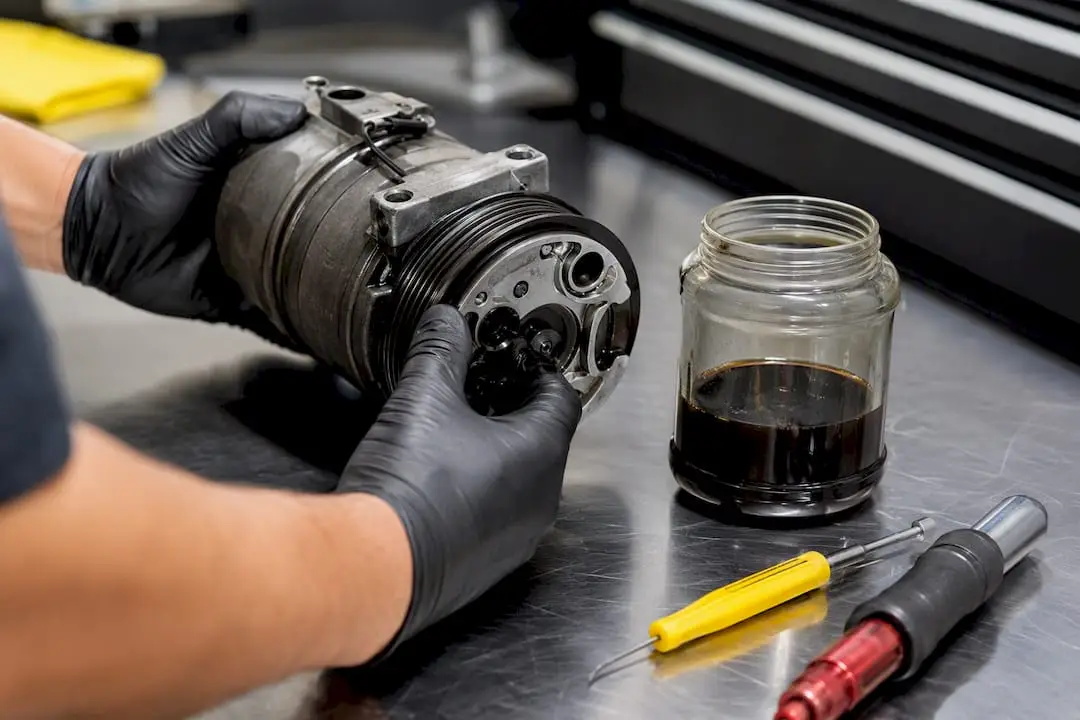
Refrigerant does more than cool the cabin. It also carries the oil that lubricates your compressor. Run the system low for too long, and that compressor can start grinding metal against metal, sending contamination throughout the entire AC loop.
There’s an environmental angle too. Refrigerants carry a high global warming potential, and older types are ozone-depleting substances. That is exactly why federal law prohibits intentional venting and requires certified recovery equipment. A DIY can from the auto parts store cannot legally recover refrigerant, and improper handling risks releasing it straight into the air.
How Can You Prevent Refrigerant Leaks?
You cannot leak-proof an AC system forever, but you can catch problems early with a few habits.
- Check for oily residue near the condenser or lines after hitting debris or driving rough roads.
- Protect the condenser with intact grille covers, and repair bent fins before they turn into a bigger air-flow problem.
- Replace your cabin air filter on schedule. A clogged filter adds strain and traps moisture that can accelerate corrosion.
- Ask for an AC inspection during routine maintenance visits, even when cooling still feels fine.
Small leaks are far cheaper to fix than the compressor damage that follows a big one.
Our Take on Low Refrigerant Repairs
We see the same pattern often: a driver tops off refrigerant themselves, gets a week of relief, then loses cooling again. That cycle almost always ends in a bigger repair bill than if the leak had been found the first time.
Technicians generally follow SAE-based leak detection methods and EPA-compliant recovery procedures, using approved recovery and charging equipment. A typical visit starts with an inspection, diagnostic testing to confirm the leak point, and ends with a written estimate explaining the issue and repair options. Documentation of refrigerant recovery is provided when required.
— Kwik Kar
Ready to Get Your AC Checked?
If your AC has been blowing warm, cycling on and off, or losing its cool faster than it should, a local service center can diagnose the actual leak first and provide a transparent estimate before any repair begins.

We handle everything from a quick refrigerant leak check to full A/C service work, including compressor, condenser, and evaporator repairs when needed. If you’ve been putting it off, check our current specials before you book. The next step is simple: give us a call or stop by the shop, and we’ll get your system properly diagnosed instead of just topped off.
Sources
- Regulatory requirements for MVAC system servicing – EPA
- 7 Signs Your Car Needs Freon – Kelley Blue Book
FAQ
Is It Safe to Drive With Low Refrigerant?
Yes, driving with low refrigerant is safe in the short term since it does not affect engine performance or braking. It just means weaker or warmer airflow from the vents, though ignoring it too long raises the risk of compressor damage.
Can I Just Add Refrigerant Myself?
You can buy DIY recharge cans, but adding refrigerant without finding the leak first only masks the problem temporarily. Refrigerant doesn’t run out on its own, so a system that’s low will just drop again, often within days or weeks.
How Long Does AC Diagnosis Take at a Shop?
Diagnosis time varies depending on how obvious the leak is, ranging from a quick visual and electronic detector check to longer UV dye or pressure decay testing for smaller leaks. Ask Kwik Kar of Midlothian’s service team for a time estimate specific to your vehicle.
How Do I Know a Leak Repair Actually Worked?
A properly repaired system holds its charge over weeks and months rather than losing cooling again shortly after a recharge. Shops confirm this with follow-up pressure testing and by checking for any return of oily residue at the repaired fitting.
What Causes Most Car AC Refrigerant Leaks?
Worn O-rings, Schrader valves, and condenser punctures from road debris are among the most common causes. Oily residue, hissing sounds, and frost on the lines are the clearest signs a leak has developed at one of these points.