




Visible dry rot does not automatically mean a tire is unsafe to drive on, but it does mean you need to check it closely before your next trip. Fine surface cracks are usually a situation to monitor and note. Deep cracks reaching the cords, bulges, or slow pressure loss mean the tire is unsafe and should be replaced. Check your cold-pressure spec and inspect all four tires plus the spare before you decide.
TL;DR:
- Tires with deep cracks reaching the cords, bulges, or slow pressure loss are unsafe and should be replaced immediately.
- Surface cracks are common on older tires but require monitoring; only structural cracks that expose internal layers indicate the need for urgent replacement.
- Climate, storage conditions, and driving patterns significantly influence how quickly a tire’s rubber deteriorates, often more than the tire brand or type.
- Regular monthly checks of pressure and visual inspections, along with proper storage, can slow the effects of dry rot and extend tire lifespan.
- A tire’s manufacture date, found in the DOT code, helps determine its age, as rubber properties begin to change measurably after one to three years.
Table of Contents
- What tire dry rot is and what causes it
- Signs to look for and what each sign means for safety
- How long before tires dry rot: timelines and the factors that speed aging
- Prevention: monthly checks, maintenance routine, and storage best practices
- How professionals diagnose dry rot and when to bring the car in
- Impact of tire dry rot on vehicle performance and fuel efficiency
- Differences in dry rot susceptibility among tire types and brands
- Kwik Kar’s safety-first perspective on dry rot
- How Kwik Kar Midlothian can help: inspection, repair, and tire services
- Official guidance and studies to read next
- Sources
- FAQ
What tire dry rot is and what causes it
Tire dry rot, also called sidewall weathering, is a breakdown of the rubber compound itself, not the gradual tread wear you get from normal driving. Normal wear flattens the tread from friction. Dry rot cracks the rubber from the inside out as the material loses the oils and plasticizers that keep it flexible.
The process is chemical as much as physical. Heat, ultraviolet light, and ozone in the air trigger what’s called thermo-oxidative aging, a slow reaction that hardens rubber and strips away its elasticity. Tires that sit still for long stretches age faster in some ways than tires that stay in regular use, because flexing helps redistribute the protective compounds built into the rubber. A tire that never moves loses that benefit.
This is also why storage conditions matter as much as calendar age. The USTMA’s tire facts and storage guidance recommends keeping tires in a clean, dry, shaded space, away from ozone sources like electric motors, and moving any vehicle with mounted tires at least every three months. A tire sitting unused in direct sun for years will often show more damage than one that’s been driven regularly, even if both are the same age.
Signs to look for and what each sign means for safety
A monthly look at your tires takes less than five minutes and tells you most of what you need to know. Walk around the vehicle and check each sidewall and tread area under good light.
- Fine surface cracks: Thin, spiderweb-like lines on the sidewall that don’t go deep are common on older tires and worth monitoring rather than panicking over.
- Deep cracks reaching the cords: Cracks that expose the fabric or steel belting underneath mean the tire has lost structural integrity and should be replaced right away.
- Bulges or blisters: A raised or uneven bump on the sidewall signals internal damage and often precedes a blowout.
- Exposed cords: Any visible fabric or wire through the rubber is an immediate replace, no exceptions.
- Slow leaks or unexplained pressure loss: Rot can create tiny fissures that let air escape gradually, even without an obvious puncture.
- New vibration or handling changes: A tire that’s degrading unevenly can throw off balance and steering feel.
The rule of thumb: cosmetic cracking gets watched, structural cracking gets replaced. If you’re unsure which one you’re looking at, that uncertainty itself is a good reason to have it checked.
How long before tires dry rot: timelines and the factors that speed aging
There’s no single expiration date, but there are useful ranges. NHTSA’s tire aging test project found measurable changes in rubber properties after roughly one to three years of aging under lab and roadwheel testing, with more severe changes showing up at longer exposure. That doesn’t mean every three-year-old tire is failing, but it does mean the clock is running from the day the tire was manufactured, not the day you bought it or mounted it.
Climate accelerates the process. Hot, sunny, low-humidity environments age rubber faster than cool, shaded ones. Underinflation, overloading, and long periods of nonuse all add stress the rubber has to absorb. A tire that’s mounted but rarely driven can age differently than one on a daily driver, and a spare stored in a hot trunk isn’t exempt either.
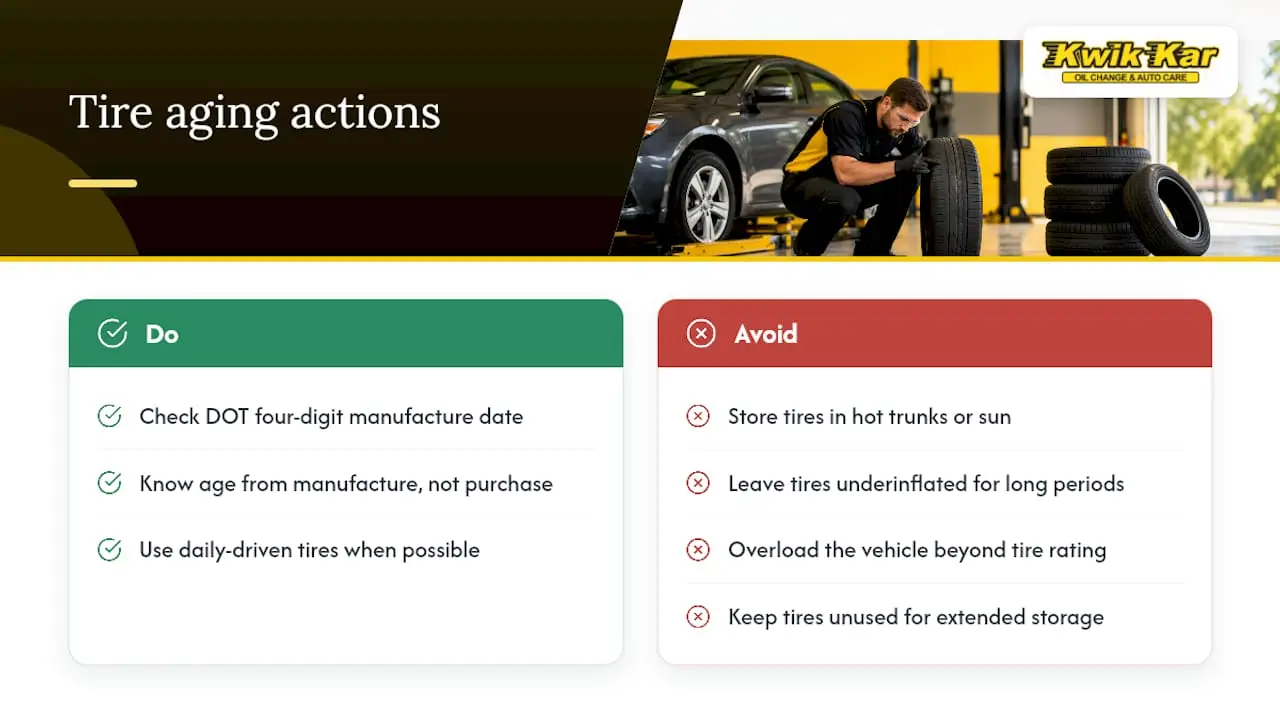
Every tire carries a DOT date code on the sidewall, a four-digit number where the first two digits are the week and the last two are the year of manufacture. A tire coded “2222” was made in the 22nd week of 2022. Knowing that number matters more than knowing when you bought it, especially with used or long-stored tires.
Prevention: monthly checks, maintenance routine, and storage best practices
Most dry rot damage develops slowly enough that a consistent routine catches it early.
- Check pressure monthly using your vehicle manufacturer’s cold-pressure spec, found on the driver’s door jamb, never the number molded into the tire’s sidewall.
- Inspect visually for cracking, bulges, or uneven wear every month and always before a long trip.
- Rotate tires on a regular schedule, generally every 5,000 to 8,000 miles, to even out wear and flex patterns across all four positions.
- Store spares and parked vehicles in a shaded, dry space, away from generators, motors, or other ozone sources.
- Move a stored vehicle at least once every three months so tires flex and redistribute their internal oils, a practice recommended by the USTMA’s storage guidance.
- Keep tires away from petroleum products and solvents, which break down rubber compounds on contact.
- Avoid overloading your vehicle beyond its rated capacity, and don’t forget to check the spare along with the rest.
Pro Tip: Set a phone reminder for the first of every month to check tire pressure and give each sidewall a quick visual scan, it takes less time than filling up with gas.
Rotation matters here because tires that wear or flex unevenly put more localized stress on the rubber, which can speed up cracking in specific spots rather than spreading the aging evenly.
How professionals diagnose dry rot and when to bring the car in
A technician’s inspection goes beyond a quick glance. Expect a visual and tactile check of the full sidewall and tread, sometimes with the tire removed from the vehicle to examine the inner liner and bead area where cracks aren’t visible from outside.
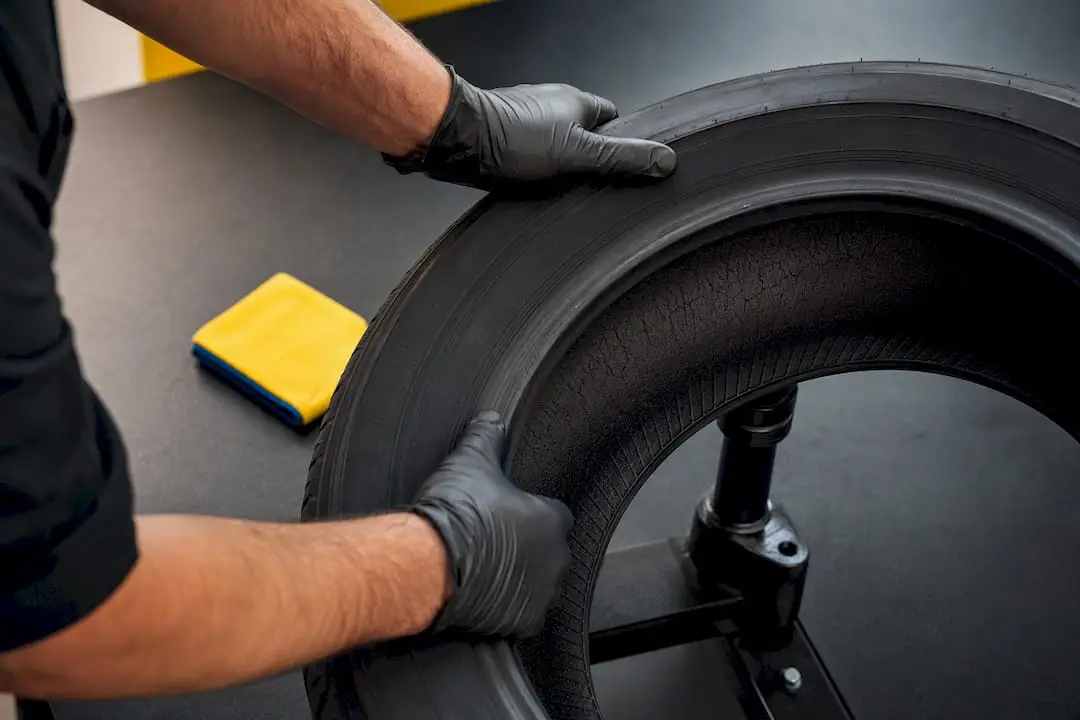
The decision to replace generally comes down to a few clear rules: cracks that reach or expose the cord layer, any sidewall bulge, or a persistent pressure loss that can’t be traced to a simple puncture. These are structural failures waiting to happen, not cosmetic issues.
If replacement is needed, a shop will typically discuss matching tread patterns across an axle, whether an alignment check makes sense given the tire’s wear pattern, and realistic timing so you’re not caught off guard by a sudden failure.
Impact of tire dry rot on vehicle performance and fuel efficiency
Dry rot doesn’t just threaten safety, it changes how your vehicle behaves day to day. As rubber loses flexibility, tires transmit more vibration and road noise into the cabin, and steering response can feel less precise. Traction on wet or uneven surfaces suffers first, since a hardened tire can’t conform to the road surface the way supple rubber does.
Underinflation caused by slow leaks from dry rot cracks also affects fuel efficiency. A tire running below its recommended pressure creates more rolling resistance, meaning the engine works harder to maintain speed. This is one more reason monthly pressure checks against your vehicle’s cold-pressure spec matter, they catch the slow leaks before they become a mileage problem or a safety one.
Uneven tire aging can also throw off balance and alignment over time, leading to irregular wear patterns that shorten the life of the new tires you eventually install. A cracked, aging tire rarely fails in isolation. It tends to drag down ride quality, fuel economy, and the lifespan of everything else in the contact patch at the same time.
Differences in dry rot susceptibility among tire types and brands
Not all tires age at the same rate, even under identical conditions. Compound formulation plays a large role: tires built with more UV-resistant and antiozonant additives in their rubber blend tend to resist surface cracking longer than budget compounds with fewer protective agents. Higher-quality tires generally use more of these additives, though no compound is immune to aging entirely.
Tire type matters too. Performance and low-profile tires often use softer rubber compounds for grip, which can make them more prone to surface weathering than a touring or all-season tire built for longevity. Off-road and heavy-duty tires, designed with thicker sidewalls, sometimes show cracking later simply because there’s more material to age through before it becomes structurally significant.
Storage and use patterns usually outweigh brand differences, though. A premium tire left in direct sun for years will often show more damage than a mid-range tire that’s been driven regularly and stored properly. Brand reputation matters less here than how the tire has actually been treated since it left the factory.
Kwik Kar’s safety-first perspective on dry rot
We’d rather see a customer replace a tire a little early than push a marginal one too far. Deep cracking, sidewall bulges, or pressure that won’t hold steady are structural problems, not cosmetic ones, and we treat them that way every time. Fine surface cracking on an otherwise sound tire can often be monitored, but we still recommend a professional check before any long or high-speed trip, including a look at the spare most people forget about.
— Kwik Kar
How Kwik Kar Midlothian can help: inspection, repair, and tire services
You don’t have to guess whether a crack is cosmetic or structural. Our team offers full tire services, including inspection, replacement, rotation, and alignment, so you get a straight answer instead of a shrug.

- Tire inspection and replacement: We check sidewalls, tread, and pressure against your manufacturer’s spec and tell you plainly what needs attention now versus what can wait.
- Rotation and alignment: Regular rotation evens out wear and flex stress, extending the life of tires that are still sound.
- Certified mechanics: Every recommendation comes with a clear explanation, no pressure, no guesswork.
Check our current specials or book an appointment and we’ll take a look before your next long drive.
Official guidance and studies to read next
For readers who want the primary sources: NHTSA’s tire safety guidance covers maintenance basics, the NHTSA tire aging project details lab findings on aging timelines, and USTMA’s tire facts page explains storage best practices. Consumer Reports offers independent testing perspective on replacement timing.
Sources
FAQ
Is it okay to drive on dry rotted tires?
It depends on severity. Fine surface cracking on an otherwise sound tire may be safe for short, low-speed trips, but deep cracks reaching the cords, bulges, or pressure loss mean the tire should be replaced before driving, according to NHTSA guidance.
Can dry rot on tires be fixed?
No. Dry rot is a breakdown of the rubber compound itself, and there’s no repair that restores that structural integrity. Once cracking reaches a certain depth or the cords are exposed, replacement is the only safe option.
How many years does it take for tires to dry rot?
NHTSA’s aging research found measurable rubber property changes after roughly one to three years, with more severe changes appearing at longer exposure, though climate, storage, and use patterns all affect the timeline. Checking the DOT date code on the sidewall gives you the actual manufacture date to work from.
Is it safe to air up dry rotted tires?
Adding air to a tire with fine surface cracking is usually fine as a temporary measure while you arrange an inspection. If the tire shows bulges, exposed cords, or won’t hold pressure after airing up, treat that as a sign the tire needs replacement rather than reinflation.