



A grinding noise when you brake almost always means metal-on-metal contact, usually from worn brake pads or a damaged rotor. If you smell burning, feel a soft pedal, or see a brake warning light, stop driving and arrange an inspection or tow. Only a hands-on inspection can confirm the exact cause, but the safety step is the same regardless: don’t put it off.
TL;DR:
- Brake grinding often results from worn pads or damaged rotors, and early signs like squealing should prompt inspection to prevent more costly repairs.
- Signs such as a burning smell, hot wheels, or a spongy pedal indicate urgent issues requiring immediate stopping and professional diagnosis.
- Checking pad thickness and rotor surface visually from outside the wheel can help assess wear before a technician’s measurement-based inspection.
- Proper brake inspection involves measuring rotor thickness and runout, and replacing or resurfacing parts depends on these precise measurements.
- Catching warning signs early, like squealing, helps reduce repair costs and maintains vehicle safety, avoiding full rotor or caliper replacements later.
Table of Contents
- What Causes Brake Grinding Noise When Stopping?
- How Urgent Is Brake Grinding? Signs You Shouldn’t Ignore
- How to Check Your Brakes Safely Before Your Shop Visit
- What Happens During a Professional Brake Inspection
- Brake Repair Options and What Affects the Cost
- Preventing Brake Grinding Before It Starts
- How Kwik Kar Midlothian Diagnoses Grinding Brakes
- A Note on Measured Decisions
- Schedule a Brake Inspection With Kwik Kar of Midlothian
- Sources
- FAQ
What Causes Brake Grinding Noise When Stopping?
The most common cause of brake grinding is worn pads. Brake pads have a friction layer bonded to a metal backing plate, and once that friction material wears away, the bare metal backing scrapes directly against the rotor. That’s the classic metal-on-metal sound, and it means you’re past due for pad replacement.
Rotor damage is the second big culprit. Overheated, warped, or rust-scored rotors can grind against pads even when pad material is still present, and this often shows up as a rougher, more uneven noise than simple pad wear. Stuck caliper hardware, worn slide pins, or a caliper that isn’t retracting properly can also cause grinding or scraping, since the pad ends up dragging unevenly against the rotor.
Not every grinding sound is a brake problem at all. Rust and surface oxidation that builds up overnight or after sitting in rain can cause a temporary grinding noise for the first few stops, and it usually clears on its own. Debris caught between the pad and rotor can do the same thing. Wheel bearing wear or suspension components can also mimic brake grinding, which is one reason SAE research on brake noise points out that groan and grind sounds sometimes come from friction material interacting with the suspension and structure of the vehicle rather than the pads themselves.
Paying attention to when the noise happens helps narrow things down:
- Grinding only at low speed or when coasting often points to a bearing or debris issue.
- Grinding that appears specifically when turning suggests a wheel bearing or a localized caliper problem on one side.
- Grinding every time you press the brake pedal, regardless of speed, usually means pad or rotor wear.
How Urgent Is Brake Grinding? Signs You Shouldn’t Ignore
Grinding brakes are a safety issue, not a maintenance inconvenience you can schedule around. Several red flags mean you need to stop and get help right away:
- A burning smell coming from a wheel
- One wheel noticeably hotter than the others
- A soft, sinking, or spongy brake pedal
- A brake or ABS warning light on the dash
- Noticeably longer stopping distances
AAA guidance lists these exact symptoms as signs that warrant prompt inspection, and in more severe cases, arranging a tow rather than driving. That caution makes sense once you understand what’s happening mechanically: once pads wear down to bare metal, every mile you drive lets that metal cut deeper into the rotor surface. A rotor that could have been resurfaced quickly turns into one that needs full replacement, and stopping power keeps degrading the whole time. If you’re hearing grinding, avoid long drives, skip the highway trip, and get the car looked at before you drive it much further.
How to Check Your Brakes Safely Before Your Shop Visit
You don’t need to pull a wheel off to gather useful information. A few safe checks help your technician diagnose the problem faster, and they help you decide how urgent the visit is.
- Park on level ground and set the parking brake. Never work on a vehicle that isn’t secured, and don’t jack it up unless you’re trained to do it safely.
- Look through the wheel spokes. On most wheels, you can see the outer brake pad pressed against the rotor. If the pad material looks paper thin or you can’t tell where pad ends and metal begins, that’s a strong clue.
- Check the rotor surface for visible grooves or a bluish, discolored ring. Deep scoring or heat discoloration usually points to rotor damage.
- Note when the noise happens. Does it change with speed? Does it show up only when turning left or right? Does it happen only on the first few stops of the day?
- Write down any dashboard warning lights and, if it’s safe, take a short video or photo of the wheel and any visible pad or rotor condition.
Pro Tip: Bring your notes or photos with you to the shop. Telling a technician “it grinds when I turn right at low speed, and the ABS light came on yesterday” gets you a faster, more accurate diagnosis than “it’s making a weird noise.”
Don’t attempt to remove wheels, calipers, or brake hardware yourself if you’re not experienced, and don’t keep driving to “see if it gets better” once you’ve spotted any of the red flags above.
What Happens During a Professional Brake Inspection
A proper inspection follows a set sequence, and it’s worth knowing what your technician is actually checking so an estimate makes sense to you.
- Identify the noisy wheel and remove it to get a direct look at the pad and rotor.
- Check pad thickness and wear pattern, since uneven wear often points to a caliper or hardware issue rather than simple age.
- Inspect caliper slides, pins, and hardware for corrosion or sticking, which the ASE brake inspection procedures list as a standard step alongside pad checks.
- Measure rotor thickness and runout using a micrometer and dial indicator, comparing the reading against the manufacturer’s minimum specification.
That last step is the one that actually decides whether a rotor can be machined (resurfaced) or needs full replacement. If measured thickness is close to the minimum, machining removes too much material and the rotor won’t hold up; if there’s enough thickness left, resurfacing can restore a smooth braking surface. After any repair, a proper job includes a road test and a pad burnishing period, letting the new friction material seat correctly against the rotor before you’re back to normal driving.
Brake Repair Options and What Affects the Cost
What your brakes need depends entirely on what the measurements show, not just on how bad the noise sounds. Common repair scopes include:
- Pads only, when the rotor still measures within specification
- Pads plus rotors, either resurfaced or replaced, when scoring or thickness loss is significant
- Caliper or hardware replacement, when sticking or damaged parts are causing uneven wear
- Non-brake repairs, such as wheel bearing replacement, when that’s the actual source of the noise
A few things typically drive the price up or down: how close the rotor is to minimum thickness, how much labor the caliper or hardware work requires, and whether you choose OEM or aftermarket parts. Consumer Reports notes that pads and rotors are often best replaced together when wear justifies it, rather than swapping just one and leaving a mismatched surface. Before you approve any repair, ask the shop for the measured rotor thickness, whether machining was considered, and what warranty applies to parts and labor.
Preventing Brake Grinding Before It Starts
Grinding is the last warning stage, not the first. Most brake pads squeal or chirp with a built-in wear indicator well before metal touches metal, and responding to that squeal early costs less than waiting for a full grind.
- Get brakes checked at the first sign of squealing, not just at grinding
- Choose pad material suited to how you drive (ceramic pads run quieter with less dust; semi-metallic pads handle heat better under heavy use)
- Have caliper hardware inspected and lubricated periodically so pads wear evenly
- Follow your manufacturer’s brake fluid service interval and ask about proper break-in after any pad or rotor replacement
Catching wear at the squeal stage instead of the grind stage is one of the cheapest habits you can build into regular vehicle care, and it’s worth watching for the warning signs before they escalate.
How Kwik Kar Midlothian Diagnoses Grinding Brakes
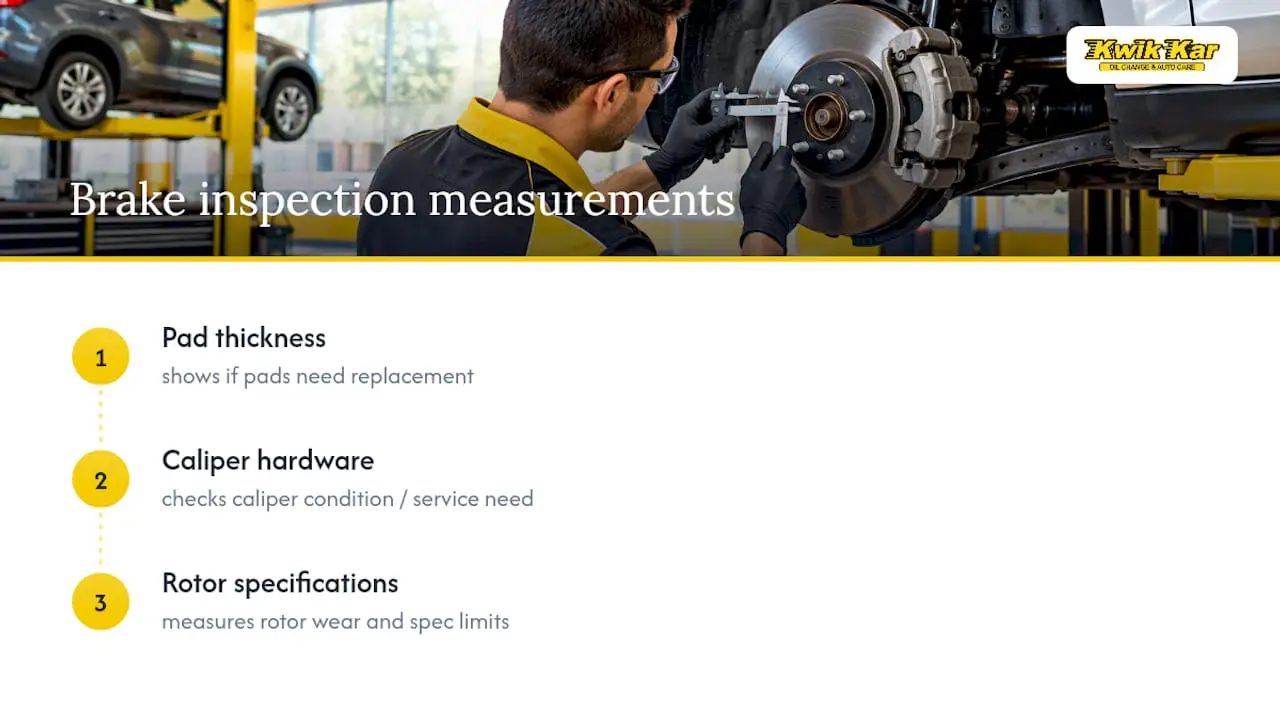
Certified mechanics follow measurement-based inspection steps, checking pad thickness, caliper hardware, and rotor specifications. You’ll get a clear walkthrough of what was found and what your options are before any work begins.
A Note on Measured Decisions
Grinding brakes deserve a measurement-backed answer, not a guess based on sound alone. If you’re seeing red-flag symptoms, stop driving and get it looked at. Otherwise, ask your shop for the actual numbers behind their recommendation, and don’t skip the burnishing instructions after a repair.
— Kwik Kar
Schedule a Brake Inspection With Kwik Kar of Midlothian
Guessing at brake problems from sound alone usually ends up costing more once a fixable pad issue turns into a full rotor replacement. A trusted local shop provides a measurement-backed alternative: certified mechanics who check pad thickness, rotor specs, and caliper hardware directly, then walk you through what they found before recommending any repair.

When you bring your vehicle in for brake services, expect a straightforward process: a full inspection, a transparent estimate showing exactly what was measured, and an explanation of your options in plain language, not a hard sell. If you noticed grinding at low speed, on turns, or with any warning light on the dash, jot those details down and bring them with you. Contact a local qualified automotive shop or visit a service center to get your brakes inspected before a manageable repair turns into a bigger one.
Sources
This article draws on guidance from Consumer Reports, ASE study procedures, AAA, and SAE technical research.
- ASE Automobile study guide (brakes procedures)
- Vehicle noises you should never ignore — AAA
- Reduction of groan and grind noise in brake systems — SAE technical paper
FAQ
Is It Safe to Drive on Grinding Brakes?
No. Grinding usually means metal-on-metal contact, and Consumer Reports advises stopping driving and having the vehicle inspected or towed when brakes grind. Continuing to drive risks further rotor damage and reduced stopping power.
How Much Does It Cost to Fix Grinding Brakes?
Cost depends on what’s actually worn: pads alone, pads plus rotors, or caliper hardware, so there’s no single fixed price. Kwik Kar of Midlothian doesn’t publish set brake repair pricing online, but you can get an inspection and a transparent, measurement-based estimate at the shop.
Does Grinding Always Mean the Rotors Are Bad?
Not necessarily. Grinding often starts with worn pads, and rotors may still be within specification if caught early. A technician measures rotor thickness and runout with a micrometer and dial indicator to determine whether the rotor can be resurfaced or needs replacement.
How Urgent Is a Grinding Brake Noise?
It’s urgent, especially if paired with a burning smell, a hot wheel, a soft pedal, or a warning light. AAA lists these as signs that call for prompt inspection or towing rather than continued driving.
Can a Grinding Noise Be Something Other Than Brakes?
Yes. Wheel bearing wear, suspension components, or debris caught near the rotor can all produce a grinding-like sound. A full inspection is the only reliable way to tell the difference between a bearing problem and worn brake hardware.