




Changing an engine air filter is usually a short, beginner-friendly job on most cars, often done in 10 to 30 minutes with a screwdriver and a new filter. Doing it yourself restores airflow and helps protect your engine, though on modern fuel injected vehicles it rarely changes your fuel economy. If the filter housing is hard to reach, the clips or screws are stripped, or a check engine light appears, it’s time to let a certified mechanic take over.
TL;DR:
- Using the correct filter part number is essential, and it should match the original shape, dimensions, and gasket edge for a proper fit.
- Check the filter every 5,000 to 7,500 miles by inspecting for dirt, oil, or damage, especially in dusty or polluted conditions that warrant earlier replacement.
- Most disposable paper filters last between 15,000 and 30,000 miles, but in harsh environments, more frequent checks and replacements are advised.
- Avoid cleaning disposable pleated paper filters, as they are designed for single-use only, and forced cleaning can cause damage.
- If access is difficult, screws are stripped, or warning lights appear, a professional inspection ensures proper fitting, sealing, and sensor checks to prevent engine issues.
Table of Contents
- What You Need Before You Start
- How to Replace Your Engine Air Filter Step by Step
- How Often Should You Check and Replace It
- Choosing the Right Filter and Tools
- Common Mistakes That Turn a Simple Job Into a Repair Bill
- Why Some Owners Still Choose a Professional Inspection
- Let Kwik Kar Midlothian Handle the Filter If You’d Rather Not
- Sources
- FAQ
What You Need Before You Start
A few minutes of prep saves you a trip back to the parts store. Confirm you have the right filter and tools before you open the hood.
- Look up the correct filter part number using your owner’s manual, your VIN, or a parts counter lookup.
- Park on level ground, turn off the engine, and let it cool, then set the parking brake.
- Gather a screwdriver or ratchet set, a trim tool, a flashlight, gloves, a rag, and a trash bag for the old filter.
- Set aside about 10 to 30 minutes depending on how easy your housing is to reach.
Most owners can knock this out during a coffee break. Cars with tight engine bays or extra covers over the intake may take a little longer.
How to Replace Your Engine Air Filter Step by Step
Once you’re set up, the actual swap follows the same basic pattern on almost every vehicle, even though housing shapes vary.
- Find the housing. Look for a rectangular plastic box connected to a wide intake tube, often near the front or side of the engine bay, sometimes tucked under an engine cover.
- Open the cover. Undo the screws, clips, or clamps holding it shut. Some covers also have an electrical connector or hose attached, so move slowly and note where everything was connected.
- Remove the old filter. Slide it out and check it for oil residue, holes, heavy dirt buildup, or nesting debris from small animals.
- Run the light test if it applies. Hold a pleated paper filter up to a light source. If you can see light through most of the pleats, it likely still has service life; if not, replace it. This test does not work on dense synthetic filters, according to AAA’s guidance on air filter care.
- Clean the housing. Wipe the rim with a clean rag and, if the mass airflow sensor is visible and reachable, clean it gently with a manufacturer recommended electronics cleaner.
- Install the new filter. Match the orientation of the old one, and confirm the gasket edge sits flush all the way around so nothing can slip past unfiltered.
- Reattach the cover. Tighten screws or clips snugly, without overtightening plastic fasteners that can crack.
- Start the engine. Listen for hissing or whistling that might signal an intake leak, and check that no warning lights appear on the dash.
Pro Tip: If a screw won’t turn with a standard Phillips driver, stop. Some vehicles, including certain Hondas, use JIS screws that look similar but strip easily under the wrong tool, according to KBB’s air filter replacement guide.
How Often Should You Check and Replace It
Manufacturers typically recommend replacing the engine air filter every 15,000 to 30,000 miles, though the right interval depends on your vehicle and how you drive, per AAA’s guide to air filter replacement. Checking it at every oil change, roughly every 5,000 to 7,500 miles, helps you catch problems early instead of waiting for a scheduled swap.
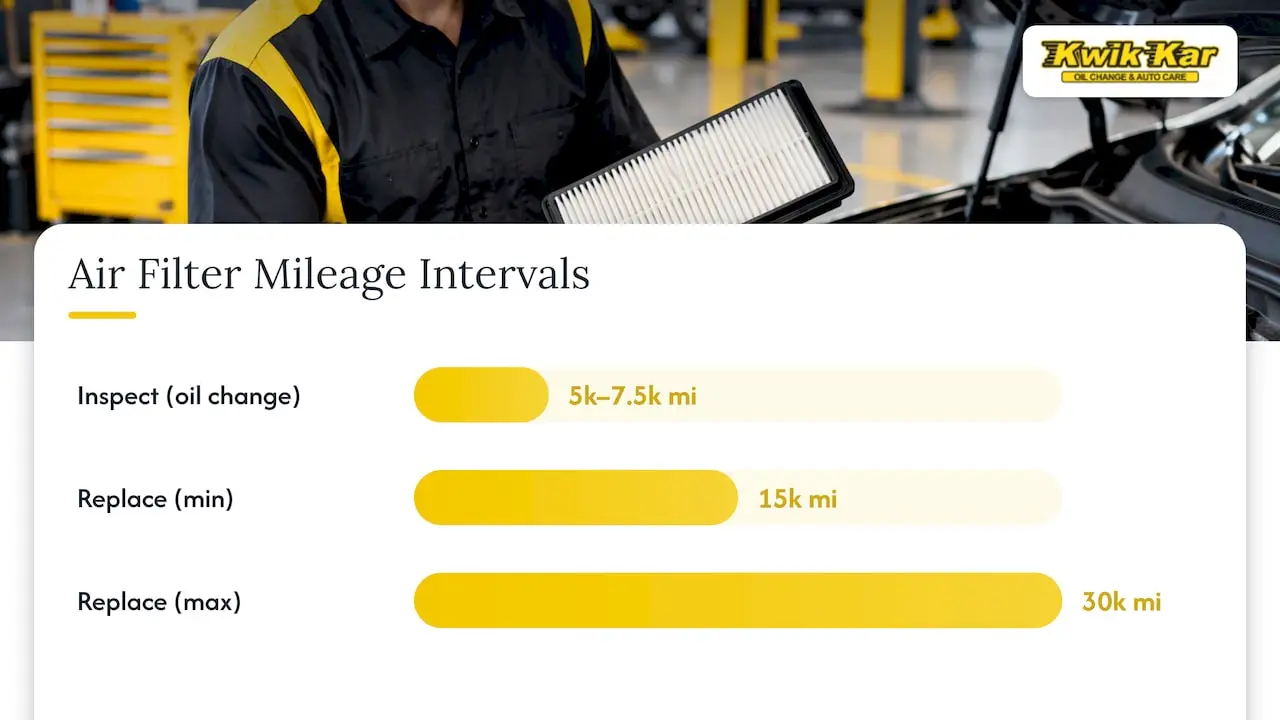
Drive in dusty conditions, near wildfire smoke, or through heavy traffic pollution? You’ll likely need to replace the filter sooner than the standard schedule suggests, since the Car Care Council recommends more frequent inspection and replacement when airborne contaminants are heavy.
Watch for these signs that your filter needs attention now:
- Reduced acceleration or a noticeable loss of power.
- A rough or uneven idle.
- Heavy black deposits or soot inside the housing.
- A smell of soot or fuel when you open the hood.
- Visible oil contamination on the filter media.
One figure worth remembering: replacing a badly clogged filter can restore lost power and acceleration, even though it won’t meaningfully change your fuel economy on a modern fuel injected engine.
Choosing the Right Filter and Tools
Getting the correct part matters more than getting a cheap one. Start with your owner’s manual or a parts lookup using your VIN, and bring your vehicle’s year, make, model, and engine code if you’re asking at a parts counter.
- Most vehicles use an OEM style disposable pleated paper filter, which is the safe default choice.
- Washable or reusable performance filters exist mainly for specific cold air intake setups and need manufacturer approved cleaning, not a quick rinse.
- Check fit carefully: the shape, dimensions, and gasket edge should match your old filter exactly.
- Keep a small tool kit handy: a screwdriver set that includes a JIS driver if your vehicle needs one, an 8 to 10 millimeter socket, a trim tool, a flashlight, and a pair of gloves.
Common Mistakes That Turn a Simple Job Into a Repair Bill
A rushed filter change can cause more trouble than the dirty filter itself. Keep these pitfalls in mind.
- Don’t force a stripped screw. Switch to the correct driver, including a JIS bit if needed, before you round off the head.
- Check the housing seal and gasket every time. A cracked clip or a gap lets unfiltered air and dirt bypass the filter entirely.
- Never try to clean a disposable pleated paper filter. It’s built for one use, and only specific washable performance filters can be cleaned, following the manufacturer’s own instructions.
- Stop and call a shop if the housing is cracked, the screws are rounded off, a check engine light comes on, or you’re not confident about the fit.
Pro Tip: A few extra minutes inspecting the gasket beats a callback visit. A filter that looks perfect but sits crooked in its housing still lets dust straight into your engine.
Why Some Owners Still Choose a Professional Inspection
Plenty of vehicle owners handle this job themselves, and that’s perfectly reasonable on cars with easy access. Professional mechanics take the process a step further during routine service. A professional inspection covers the filter housing and snorkel for cracks, checks the mass airflow sensor, replaces worn gaskets or broken clips, and often includes a short road test to confirm the engine responds the way it should. That extra set of eyes catches problems a quick glance under the hood can miss, especially on vehicles with hidden fasteners or sensors tucked near the intake.
— Kwik Kar
Let Kwik Kar Midlothian Handle the Filter If You’d Rather Not

DIY works well for a lot of drivers, but you don’t have to wrestle with a stuck cover or guess at the right part number. Kwik Kar Midlothian can inspect or replace your engine air filter as part of a routine visit, and our team checks the housing, gasket, and related components while your car is already on the lift. If you noticed any of the symptoms above, or you’re simply due for a check at your next oil change, browse our maintenance and repair services or schedule an appointment with Kwik Kar Midlothian today.
Sources
- Consumer Guide to Fuel Economy (U.S. Department of Energy)
- Car engine air filter replacement: DIY or pro service? | AAA (VIA)
- Wildfires a serious concern for vehicles, passengers (Car Care Council)
- How to replace engine air filter | KBB
FAQ
How often should I change my engine air filter?
Most manufacturers recommend replacing your engine air filter every 15,000 to 30,000 miles, though the right timing depends on your vehicle and driving conditions, according to AAA. Inspecting it at every oil change, about every 5,000 to 7,500 miles, helps you catch a dirty filter before it affects performance.
Do you really need to change the engine air filter?
Yes, eventually. A clogged filter restricts airflow to the engine and can reduce acceleration and power, though the Department of Energy notes it won’t meaningfully affect fuel economy on a modern fuel injected vehicle. Skipping replacement too long can also let more dirt reach sensitive components like the mass airflow sensor.
How long does an engine air filter usually last?
A typical disposable pleated paper filter lasts between 15,000 and 30,000 miles under normal driving conditions. Dusty, smoky, or heavily polluted environments shorten that lifespan considerably, so inspecting it more often in those conditions is worthwhile.
Can I replace my engine air filter myself?
In most cases, yes. It’s a beginner friendly job that usually takes 10 to 30 minutes with basic tools, though some vehicles have fasteners or hidden clips that make the job trickier. If you run into stripped screws, a cracked housing, or you’re unsure about fit, a certified mechanic can finish the job safely.