




If a tire is losing air slowly, check its cold pressure with a calibrated gauge and compare it to the number on your vehicle’s door placard. If the reading is only a few pounds low, inflate it and monitor it over the next day or two. If pressure is dropping fast or you see a bulge or visible damage, stop driving and get the tire looked at. Temporary fixes can buy you time, but most permanent repairs need a shop to remove the tire from the wheel, as explained by FIX-A-DENT specialists.
TL;DR:
- Most slow leaks are caused by small punctures, valve stem issues, or rim seal leaks, which can often be identified with a soapy water test.
- Regular pressure checks and logging pressure over weeks help distinguish real leaks from seasonal temperature fluctuations or normal permeation.
- Permanent repairs require tire removal, interior inspection, and a combination patch and plug, especially for punctures smaller than one quarter inch in the tread area.
- Temporary fixes like valve-core replacement or external sealants can buy time but should not replace professional inspection if leaks persist.
- Roadside sealants and plugs are only short-term solutions; a thorough shop inspection ensures safe, lasting repair or necessary tire replacement.
Table of Contents
- Step-by-step diagnostics to find the leak at home
- Common causes of slow leaks and how each cause appears during a check
- Emergency and temporary fixes you can use safely, plus their limits
- What shops do for permanent repairs and clear criteria for replacement
- Routine checks and habits that reduce the chance of slow leaks
- How to monitor tire pressure over time to confirm a slow leak
- Differences in repair approaches and safety considerations for tubeless versus tube-type tires
- How environmental factors can affect tire pressure and perceived leaks
- Publisher perspective: why we recommend professional inspection for persistent slow leaks
- Get your slow tire leak inspected at Kwik Kar Midlothian
- Sources
- FAQ
Step-by-step diagnostics to find the leak at home
A slow leak can be tracked down with tools most drivers already have or can buy for a few dollars. The goal is to confirm the leak exists, estimate how fast it’s happening, and find where the air is escaping.
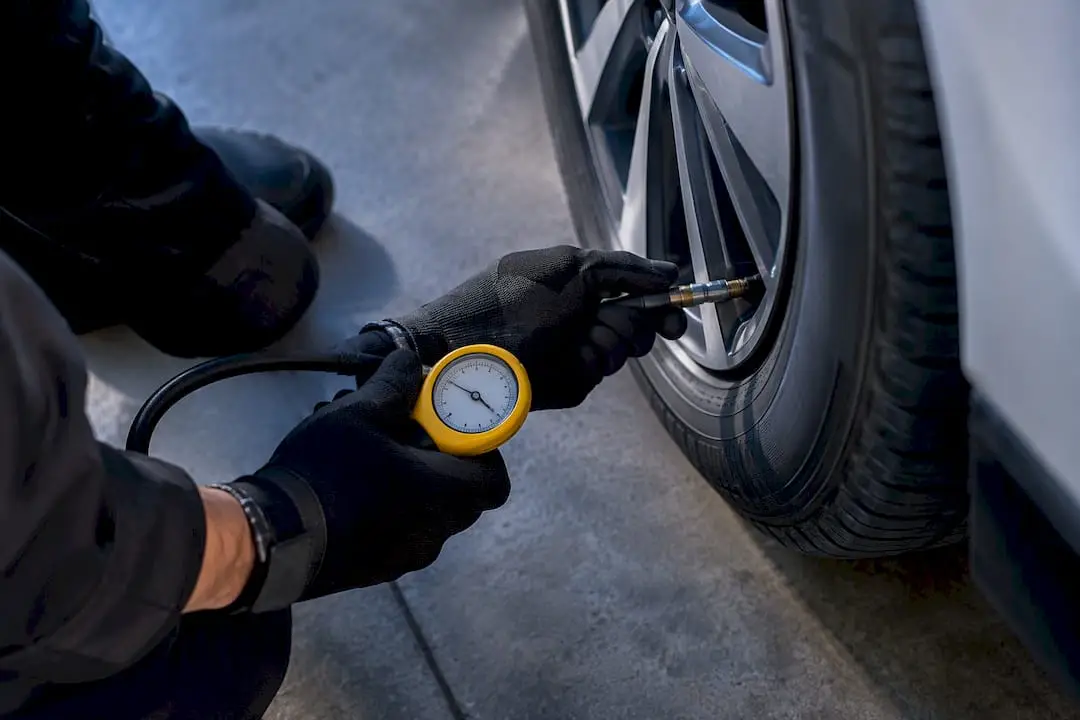
- Check cold pressure with a calibrated gauge. Measure each tire before driving, when the tire is cold, and compare the reading to your vehicle’s placard, usually located on the driver’s door jamb.
- Log the number and recheck. Write down the psi and check again in 24 to 72 hours. A drop of more than a couple of pounds over that window points to a real leak rather than normal fluctuation.
- Spray soapy water over the tire. Cover the tread, sidewall, valve stem, and the bead where the tire meets the rim. Steady bubbling marks the leak’s location.
- Inspect and test the valve. Remove the cap, look for cracking or corrosion, and press the valve core briefly. If it won’t hold air cleanly, the core may need replacing.
- Note whether your TPMS light is on. NHTSA’s TPMS final rule explains that the system is meant to supplement manual checks, not replace them, and it typically warns only once a tire is significantly underinflated. A dark dashboard light doesn’t mean the tire is fine.
If the leak keeps coming back, you spot a puncture, or the sidewall looks bulged or cut, the tire needs to come off the car for a full inspection rather than another round of guesswork.
Pro Tip: Keep a small tire gauge in your glove box. A five-dollar gauge catches slow leaks weeks before a dashboard warning light ever will.
Common causes of slow leaks and how each cause appears during a check
Most slow leaks trace back to one of a handful of causes, and the soap test usually tells you which one you’re dealing with.
- Tread punctures. A nail or screw embedded in the tread often shows a wet spot or steady bubbling right where the object sits.
- Valve stem or core problems. Bubbles forming at the valve, or a leak that returns after you’ve already tried a new core, points to the stem itself.
- Bead or rim seal leaks. Bubbling along the rim edge, especially after rain or a curb strike, suggests the seal between tire and wheel has broken down or the rim has corroded.
- Sidewall or shoulder damage. Leaks that change depending on how the vehicle is parked or loaded often mean sidewall damage, which is usually not repairable.
- Normal permeation. All tires lose a small amount of air through the rubber itself. USTires guidance notes that a loss beyond roughly 2 psi per month is worth having inspected rather than chalked up to normal wear.
Emergency and temporary fixes you can use safely, plus their limits
Some fixes are fine to buy you time on the way to a shop. None of them should be treated as a permanent solution.
- Valve-core replacement. This is inexpensive and often solves stem leaks outright. Use a new core and a fresh cap, and recheck pressure after a few minutes.
- External plugs. These are meant to get you to a shop, not to last. Drive at reduced speed, keep the trip short, and recheck pressure often.
- Aerosol sealants. These are strictly an emergency measure. Consumer testing coverage notes they don’t address the underlying damage and can complicate a later professional repair.
- A spare tire or a tow is often the safer call. According to AAA’s guidance on plug versus patch repairs, technicians frequently won’t perform a permanent repair on a tire that’s already had certain plugs installed, which can turn a cheap DIY fix into a wasted cost if the tire ends up needing replacement anyway.
Pro Tip: If you’re not sure whether a roadside fix is holding, don’t guess. Recheck the pressure every 15 to 20 minutes on the way to the shop.
What shops do for permanent repairs and clear criteria for replacement
A shop repair looks nothing like a roadside plug, and that difference is exactly why it lasts. According to USTMA’s puncture repair procedures, a safe, permanent repair requires demounting the tire from the wheel, inspecting the inside for hidden damage, and installing a combination plug and patch. This standard applies only to punctures no larger than one quarter inch, about 6 millimeters, in the tread area.
What that process typically looks like:
- The tire is fully removed from the rim, not just deflated.
- The technician inspects the inner liner for damage that isn’t visible from outside.
- A combination patch and plug seals both the puncture channel and the liner, which AAA notes is the accepted permanent fix, unlike a plug installed alone from outside.
- The tire is reinflated and rechecked for leaks before it goes back on the car.
Some damage falls outside repairable limits no matter how the repair is done. Sidewall or shoulder punctures, cuts larger than the quarter-inch limit, and internal damage from running underinflated usually mean replacement rather than repair. USTires’ care and safety guidance treats continuous pressure loss as a real safety concern, since a tire running low builds excess heat and can suffer internal damage or a tread separation over time. Rapid loss, visible structural damage, or more than one puncture site all call for a shop visit right away rather than another temporary patch.
Routine checks and habits that reduce the chance of slow leaks
Most slow leaks are caught early by people who already check their tires on a schedule, not by luck.
- Check cold pressure monthly and before long trips, using a gauge you trust rather than the reading at a gas station pump that may run inconsistent.
- Look over each tire visually for cuts, embedded debris, sidewall bulges, rim corrosion, or wear that’s heavier on one side.
- Replace valve stems whenever you replace tires, or sooner if you notice cracking or corrosion.
- Avoid curbs and road hazards where possible, and know your vehicle’s load limits since overloading stresses the sidewall.
- Rotate your tires on schedule and let a technician check the rim and valve during routine service, not just the tread.
How to monitor tire pressure over time to confirm a slow leak
A single low reading doesn’t confirm a leak. Tires naturally lose a small amount of air as temperatures shift, so the useful test is a pattern, not one number.
Write down the cold pressure for each tire once a week for two or three weeks, always at the same time of day if you can. A tire that keeps dropping by a similar amount each week, while the others hold steady, has a real leak rather than a seasonal dip. Several smartphone apps and some TPMS displays let you log these readings automatically, which makes the pattern easier to spot than jotting numbers on paper.
If one tire consistently needs two or three extra pounds every few days while the rest of the car holds its pressure, that’s enough evidence to move on to the soap test and, if needed, a shop inspection. Keeping a short log also gives a technician something concrete to work from instead of a vague description of “it feels low sometimes.”
Differences in repair approaches and safety considerations for tubeless versus tube-type tires
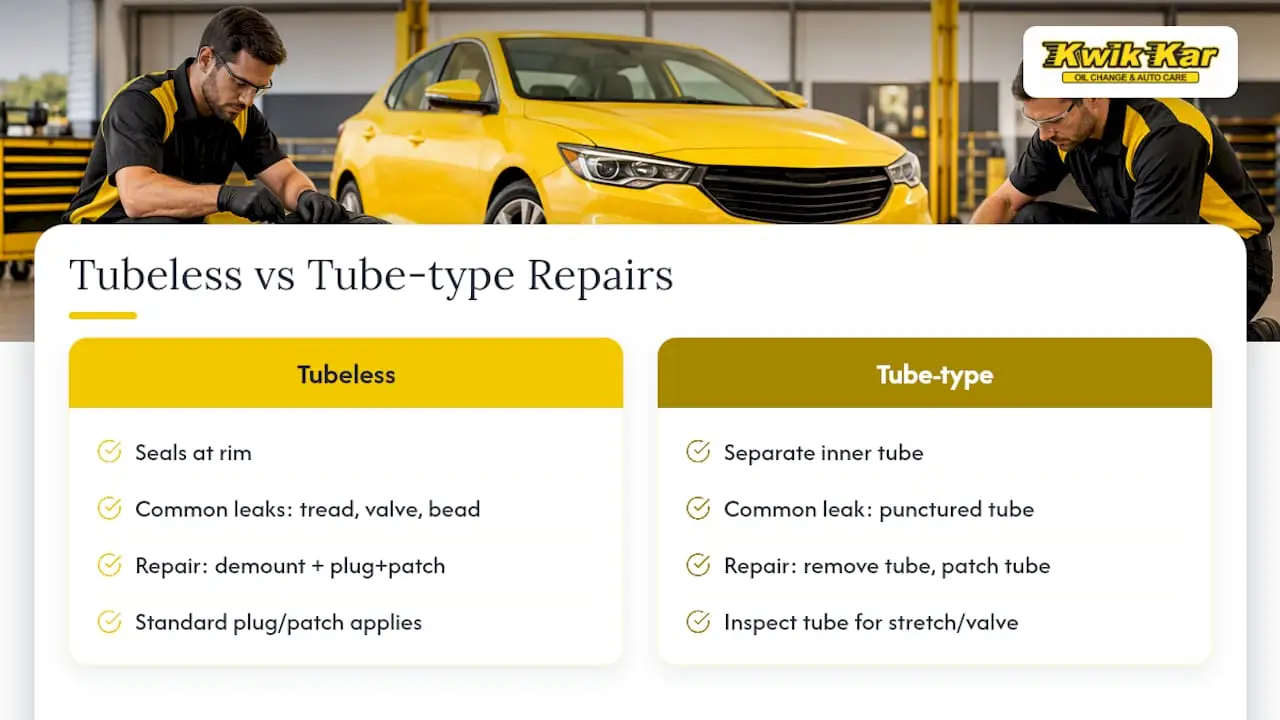
Nearly every passenger vehicle on the road today runs tubeless tires, where the tire itself seals directly against the wheel rim. Slow leaks on these tires usually come from the tread puncture, the valve, or the bead seal against the rim, and the repair standards described earlier, demounting and a combination plug and patch, apply directly.
Tube-type tires, more common on some older vehicles, certain trucks, and specialty equipment, work differently. Air is held inside a separate rubber tube rather than by the tire and rim seal itself. A puncture on a tube-type tire usually means removing the tube entirely rather than plugging the tire casing, and patching the tube requires its own inspection for stretching or damage near the valve.
If you’re not sure which type your vehicle uses, check your owner’s manual or ask a shop before attempting any roadside fix. Using a tubeless-style plug on a tube-type setup, or vice versa, can fail quickly and isn’t a safe substitute for the correct repair method.
How environmental factors can affect tire pressure and perceived leaks
Temperature swings alone can make a healthy tire look like it has a slow leak. Air contracts as it cools, so a tire checked on a 70-degree afternoon and again on a 40-degree morning will read lower even with zero air loss. This is why cold-pressure checks, done before the vehicle has been driven, are the only reliable baseline.
Seasonal shifts compound this. A tire that read fine all summer can show a several-pound drop heading into fall or winter simply because of temperature, not damage. Road conditions play a role too: a pothole strike or a hard curb hit can create a slow leak that shows up gradually over the following days rather than an immediate flat, which makes it easy to blame the weather when the real cause is impact damage.
The practical takeaway is to check pressure at a consistent temperature and time of day, and to treat a drop that persists across a stretch of stable weather as a real mechanical issue worth investigating rather than dismissing it as a cold morning.
Publisher perspective: why we recommend professional inspection for persistent slow leaks
Roadside plugs and sealants have a place, but they’re a bridge to a repair, not the repair itself. Certified mechanics inspect the whole tire, inside and out, following the demount-and-patch standard that a plug from the outside simply can’t match. If a leak keeps coming back, that inspection is worth scheduling before the tire causes bigger problems.
— Kwik Kar
Get your slow tire leak inspected at Kwik Kar Midlothian
You’ve done the soap test, logged your pressure readings, and you’re fairly sure a tire is losing air. That’s exactly the point where a proper shop inspection pays off. Kwik Kar Midlothian’s tire services cover full inspection, valve and bead diagnosis, and repair or replacement recommendations you can trust, backed by warranty coverage on the work performed.

Bring your vehicle in and, if you’ve kept one, your pressure log. It helps our technicians confirm the leak rate faster and recommend the right fix instead of guessing.
| What to bring | Why it helps |
|---|---|
| Vehicle and tire in question | Allows a full demount and internal inspection |
| Pressure log or notes | Confirms leak rate and pattern over time |
| Questions about repair vs. replacement | Gets you a clear, honest recommendation |
Check our current specials before you book, and visit or call Kwik Kar Midlothian to get your tire looked at properly.
Sources
- FMVSS No. 138 — Tire Pressure Monitoring Systems (NHTSA)
- Tire plug vs. patch: get the right tire repair (AAA Automotive)
FAQ
Can you drive with a slow leak in your tire?
You can drive short distances if the tire is only a few pounds under its recommended pressure, but you should reinflate it first and monitor it closely. Professional guidance warns that driving on an underinflated tire, even briefly, can cause internal damage that isn’t visible from outside.
How do you fix a slow leak in your tire?
Start by locating the leak with a soapy water test on the tread, sidewall, valve, and rim edge. A valve-core replacement or a temporary plug can get you to a shop, but a permanent fix requires demounting the tire for a combination patch and plug repair.
What causes a tire to leak slowly?
The most common causes are a small tread puncture, a worn or damaged valve stem, or a leak at the bead where the tire seals against the rim. Sidewall damage and rim corrosion can also cause slow leaks, and these often require replacement rather than repair.
How much does it cost to fix a slow leak in a tire?
Pricing depends on the cause and whether the tire is repairable or needs replacement, so it’s best confirmed with a shop after inspection. Kwik Kar Midlothian’s tire services page has details on booking an inspection to get an accurate estimate.